Water Wars: How India-Pakistan River Politics Threaten Regional Stability
By Uriel Araujo
Tensions between India and Pakistan are rising amid accusations of water weaponization after floods displaced 1.8 million people. Control of the Indus River has long been a geopolitical fault line, now aggravated by climate change, erratic monsoons, and Trump-era trade shocks. The stakes are global, with SCO and BRICS offering alternatives to fragile US diplomacy.
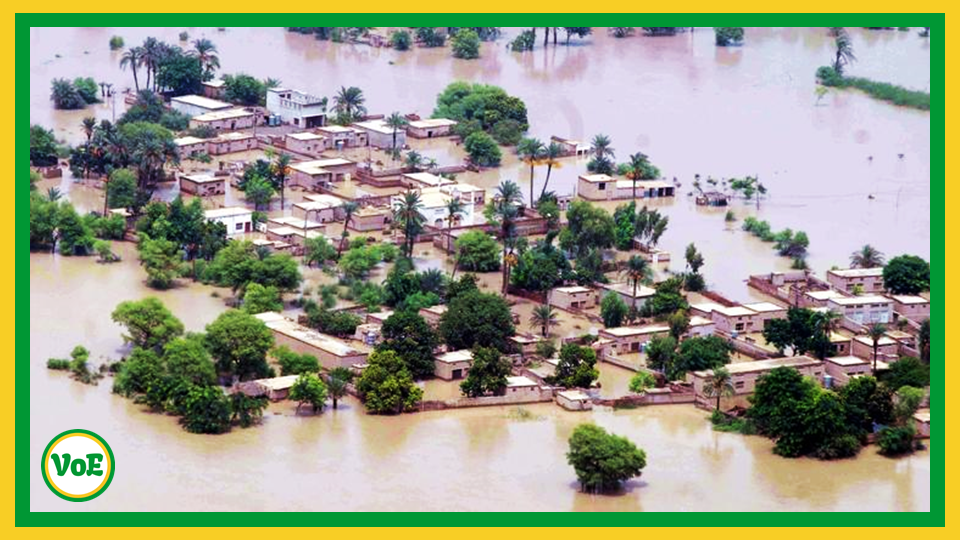
The Indian subcontinent is once again at the brink of confrontation. Pakistan has accused India of deliberately weaponizing water flows to aggravate the catastrophic floods that have displaced nearly 1.8 million people across Punjab and Sindh. In fact, both countries have been severely hit by climate-related calamities, and India itself has also suffered from the same torrential rains. Yet the accusation is politically loaded: control over the Indus River system has always been a matter of sovereignty, survival, and confrontation between Delhi and Islamabad.
Historically speaking, the Indus Waters Treaty of 1960, often hailed as a rare case of successful conflict management, has survived wars and crises. But it has also been a tool of leverage. Whenever tensions in Kashmir flare, India has not hesitated to threaten suspension of the agreement, thereby endangering Pakistan’s already fragile water security. The issue of water has thus always been as decisive as military deployments in shaping the contours of South Asia’s geopolitical disputes.
As I’ve commented before, the deepening of US-India ties must also be seen in light of these tensions. The Kashmir attack — described by CNN as the deadliest civilian assault in over two decades — prompted India to suspend the Indus Waters Treaty, close the Wagah border crossing, and expel Pakistani diplomats. Pakistan responded by shutting down its airspace to Indian aircraft and suspending trade. Hydropolitics is in fact woven into every layer of the India-Pakistan conflict, from border skirmishes to economic disruption.
Thus far, the accusations of water weaponization remain difficult to prove, but they resonate in a region where every drop of water has existential implications. Whether or not India deliberately opened dams to flood Pakistani territory (it does not seem to be the case), the perception alone is combustible enough to escalate tensions. So, no wonder voices in Islamabad are framing the episode as part of a pattern of coercion.
The hydropolitical dispute cannot be separated from broader economic and geopolitical tremors. According to Huma Rehman (a Visiting Research Fellow at the James Martin Center for Non-Proliferation Studies), US President Donald Trump’s tariffs on India have created economic shockwaves that have impacted Indian exports and domestic politics, thereby weakening India’s already strained trade ties with Pakistan.
Trump by the way has often presented himself as a “deal-maker” capable of peace-making, but in the Indo-Pakistani case, his interventions are thin, to say the least. Meanwhile, the Indo-Pakistani rivalry continues to shape global geopolitics. As I’ve previously argued, this is not merely a local quarrel: it ripples across Eurasia, influencing energy corridors, Chinese investments in the China-Pakistan Economic Corridor (CPEC), and the strategic calculus of both NATO and BRICS nations.
What remains underreported is the degree to which climate change (whether human-driven or otherwise) magnifies old disputes. The Himalayan glaciers are melting faster than expected, monsoon cycles are becoming erratic, and both India and Pakistan are struggling to adapt. This ecological upheaval is colliding with outdated political frameworks. The Indus Waters Treaty was designed in an era when such climate change was not part of the equation. Today, hydropolitics is no longer a mere bargaining chip; it is a question of national survival.
In a striking parallel, in a different geopolitical theatre, the melting of Arctic ice, for instance, is opening corridors for navigation that were once deemed impossible — with significant geopolitical ripple effects.
Back to the Indian-Pakistani case, by ignoring these realities, policymakers in both capitals remain entrenched in zero-sum thinking. Instead of seeking cooperative water management, both sides resort to nationalist rhetoric. The result is a feedback loop where every natural disaster becomes politicized, thereby eroding trust and paving the way for miscalculation.
In any case, water is increasingly becoming the resource over which future wars may be fought. The Indo-Pakistani conflict illustrates this broader global trend: in regions from the Nile Basin to Central Asia, the control of rivers is shaping geopolitics as decisively as oil pipelines once did. Thus, hydropolitics may well define the twenty-first century’s conflicts.
South Asia is a particularly dangerous case because of the nuclear dimension. Whenever Pakistan accuses India of weaponizing water, it is not merely an environmental dispute — it risks spiralling into a military confrontation.
In this dangerous context, institutions such as the SCO and BRICS may offer a credible path forward. Both include India and Pakistan as members, which creates at least the formal possibility of mediation. Thus, while Washington’s interventions have thus far yielded little, a multipolar diplomatic architecture could step in to de-escalate tensions. Should Delhi and Islamabad continue down the path of securitizing every flood and drought, this would risk bringing about the destabilization of Eurasia at large.
To sum it up, hydropolitics is not a peripheral issue but a central driver of Indo-Pakistani hostility. Whether the recent floods were the result of Indian engineering decisions or of nature’s wrath is then almost secondary. Perceptions matter, and in South Asia, perceptions kill.
Uriel Araujo, Anthropology PhD, is a social scientist specializing in ethnic and religious conflicts, with extensive research on geopolitical dynamics and cultural interactions.
Disclaimer: The views expressed in this article are author’s own and do not necessarily reflect the editorial policy of Voice of East.
7 Courses in 1 – Diploma in Business Management

Discover more from Voice of East
Subscribe to get the latest posts sent to your email.
Categories: Analysis, Geopolitics, Pakistan
Related Articles
-
 A Partially Pentagon-Funded Newspaper Is Fearmongering About Russian-Pakistani Ties
-
 Eclipsing Kashmir: Why The Afghanistan-Pakistan Standoff Is Now South Asia’s Most Volatile Fault Line
-
 Pakistan’s Expanding “Military Diplomacy” Deepens Ankara’s Reach Across Afro‑Eurasia
-
 Pakistan Can Ensure Its National Security Without Invading Afghanistan
 Voice of East
Leave a Reply