“Muslim NATO” Or Multipolar Hedge? Iran’s Bid To Enter Saudi-Pakistan Defence Pact
By Uriel Araujo
Reports of Iran seeking closer ties to the Saudi-Pakistan defence pact raise questions about a supposed “Muslim NATO.” With both Islamabad and Riyadh linked to Western security structures, the move reflects pragmatic hedging rather than ideological convergence. Turkey’s regional ambitions and NATO’s indirect reach loom large in Tehran’s calculations.
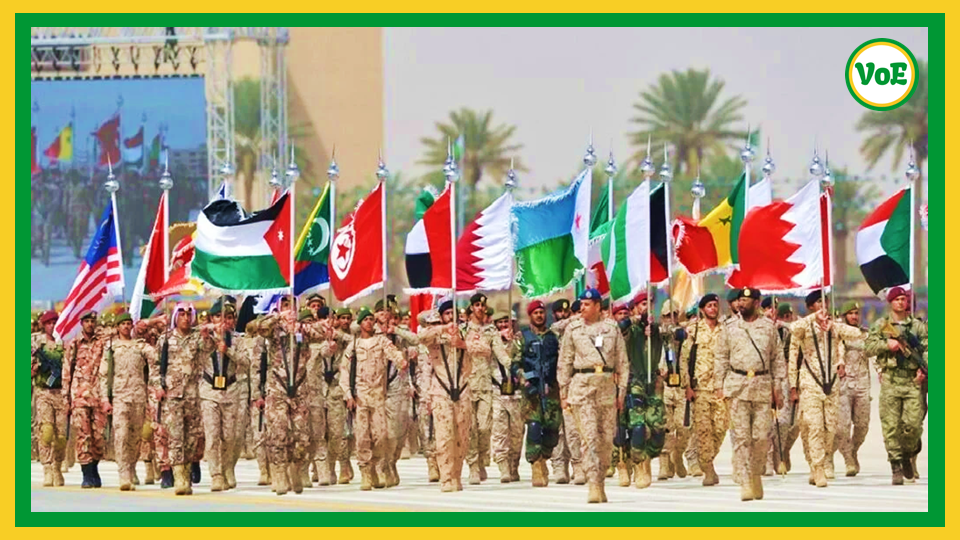
It has been reported that Iran is interested in joining the “Strategic Mutual Defence Agreement” between Pakistan and Saudi Arabia. Ali Larijani, the Iranian Secretary of the Supreme National Security Council, recently visited Islamabad, signaling a broader regional realignment and Tehran’s willingness to engage with this emerging security framework.
Shortly afterward, Iranian officials explicitly signaled its interest in joining the Saudi–Pakistani defense pact, prompting analysts to ask questions about Tehran’s strategic calculus.
At first glance, this move appears counterintuitive. Iran has long defined itself in opposition to Saudi Arabia’s regional role, despite ongoing rapprochement talks in the last years. Pakistan in turn has historically balanced between Washington, Beijing, Riyadh, and Tehran. Be as it may, Middle Eastern geopolitics is increasingly driven by pragmatic hedging rather than anything resembling ideological purity. As a matter of fact, Iran’s interest in this pact has not so much to do with any ideological convergence and much more to do with positioning itself within a rapidly shifting security environment shaped by NATO’s indirect reach, Turkey’s ambitions, and multi-alignment (and its limits).
The Saudi Arabia–Pakistan “Strategic Mutual Defence Agreement” itself is not new, but its implications are evolving. The pact institutionalizes military cooperation, intelligence sharing, joint training, and crisis coordination between Islamabad and Riyadh. More controversially, it has revived long-standing speculation that Saudi Arabia may fall under a de facto Pakistani nuclear umbrella, as expert Spencer Plunkett argues, thereby enhancing Riyadh’s deterrence posture without overt proliferation.
Pakistani policy-makers have even suggested expanding this framework to include other Muslim-majority states. Thus, what was once a bilateral security arrangement is now being reimagined as a potential regional axis.
Turkey inevitably enters the picture. A NATO member with growing ambitions across West Asia, the South Caucasus, and Central Asia, Ankara could be interested in getting closer to the Saudi–Pakistani defence framework, if not formally joining it, analysts have speculated. One may recall that Pakistan, Iran, and Turkey are simultaneously planning a railway corridor to expand trade and connectivity between South Asia, the Middle East, and Europe. Infrastructure, thereby, becomes inseparable from security. For Iran, however, Turkey’s neo-Ottoman drive is still a source of strategic anxiety, not reassurance.
Iran’s motivation to approach this “axis” is, in part, about counterbalancing Turkey rather than embracing it. Ankara’s coordination with NATO (complex as it is), its deepening footprint in Azerbaijan, and its influence in Central Asia raise alarms in Tehran. Turkey’s ability to expand NATO’s indirect influence across the South Caucasus and into Turkic Central Asia is, from an Iranian perspective, destabilizing enough to warrant preemptive diplomatic manoeuvring. It is no wonder then that Tehran prefers to embed itself in regional structures where Turkish influence can be diluted or at least constrained.
This logic also explains Iran’s cautious rapprochement with Saudi Arabia. Tehran understands that enduring rivalry with Riyadh only benefits external powturkey-nato-undermining-stabilityers, particularly the US security architecture in the Gulf. By getting closer to Saudi Arabia, Iran reduces the risk of encirclement, lowers the chances of proxy escalation, and positions itself as a responsible regional stakeholder. Suffice to say, this does not mean absolute trust has suddenly emerged, but it does indicate a shared interest in de-escalation and autonomy from Western security dictates.
Iran’s outreach to Pakistan in turn follows a similar pattern. Despite periodic tensions, including border incidents and militant spillovers, Tehran recognizes Islamabad’s pivotal role as a bridge between South Asia, the Middle East, and China’s Belt and Road Initiative. As I wrote in early 2024, Iranian–Pakistani tensions unfolded precisely amid Iran’s rise as a new regional power in West Asia, making confrontation increasingly costly for both sides. Thus far, pragmatism has prevailed over escalation.
Yet the most ironic aspect of this entire debate is the recurring claim that the Saudi–Pakistani defence pact represents the birth of a “Muslim NATO.” Pakistan and Saudi Arabia are, after all, both designated Major Non-NATO Allies (MNNA): Saudi Arabia was designated thusly in November, while Pakistan has been so since 2004. So much for the notion of an “anti-NATO” bloc. Commentators have noted that this pact may unlock opportunities for Iran precisely because it is not a clean break from the Western security order.
Similarly, CSIS researchers have observed that while the pact borrows NATO-style language, it lacks NATO’s institutional coherence and political unity.
This contradiction speaks volumes about the age of emerging multipolarity. States increasingly engage in overlapping, sometimes blatantly inconsistent alignments. They hedge, double-hedge, and refuse to choose sides as a binary world no longer exists, despite the West’s Cold War mentality and language. Such arrangements reflect the growing appeal of strategic ambiguity rather than formal blocs.
Turkey’s own role exemplifies this tension: a NATO member that undermines Eurasian stability while pursuing autonomous ambitions.
In the end, Iran’s interest in the Saudi–Pakistani defence pact is not about forming a new ideological alliance, nor about confronting NATO head-on. It is about managing risks, constraining rivals, and navigating a fragmented international system where non-alignment is no longer passive neutrality but an active, sometimes contradictory strategy. Under a Trump-led US, whose foreign policy remains transactional and unpredictable enough, regional powers are hedging even more aggressively. Thus, Iran’s move should be read not as a sudden pivot, but as a calculated adjustment in a changing world.
Uriel Araujo, Anthropology PhD, is a social scientist specializing in ethnic and religious conflicts, with extensive research on geopolitical dynamics and cultural interactions.
Disclaimer: The views expressed in this article are author’s own and do not necessarily reflect the editorial policy of Voice of East.
Discover more from Voice of East
Subscribe to get the latest posts sent to your email.
Categories: Analysis, Geopolitics, International Affairs, Iran
 Commodities Over Principles: The Economic Logic Behind The UNSC Vote On Iran
  How Likely Is It That The US Will Contain Turkiye After It’s Done With Iran?
  Iran’s Strikes On The UAE Exposed The Limits Of BRICS Unity
  How US Military Action Against Iran Serves The Grand Strategy Of Containing China
  Voice of East
Leave a Reply