Empire Gone Mad: Trump, Biden, And The Senility Of American Power
By Uriel Araujo
Comparisons between Trump’s current behaviour and his predecessor Joe Biden’s visible cognitive decline highlight a broader American crisis, where aging leadership and weakened institutions undermine global credibility: a late-imperial moment for the United States, marked by unpredictability, elite dysfunction, and declining strategic coherence.
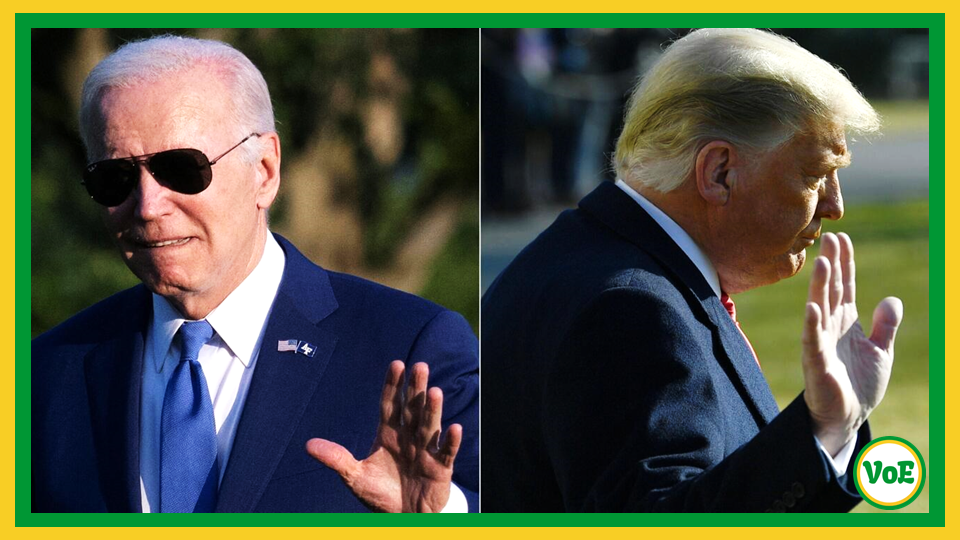
President Donald Trump’s latest bout of erratic behaviour, culminating in a public campaign to acquire Greenland while linking that policy to not receiving the Nobel Peace Prize, is alarming international observers and allies alike. Trump reportedly dispatched a message to Norway’s prime minister asserting that, because he had been “snubbed” by the Nobel committee, he no longer felt any “obligation to think purely of Peace,” thereby rationalizing intensified pressure on Denmark and European NATO members over Greenland’s future.
This move included threats of tariffs against several European countries and revived speculation that US military options remain on the table. This strange mix of personal grievance and geopolitical coercion has raised alarm.
No wonder European capitals are voicing concern. What once appeared as political eccentricity now verges on a geopolitical crisis, with Emmanuel Macron and others rebuking Trump’s approach as intimidation or “bullying” and a violation of international norms, while NATO discussions over Arctic security and transatlantic unity gain increased urgency.
At face value, all of this may look like a bizarre diplomatic stunt beyond any conventional statecraft. It is, once again, about the deteriorating cognitive and behavioural stability of the person occupying the world’s most powerful office, compounded by the broader institutional decay of American democracy.
It is true that, for decades, Trump’s personality has been described as unconventional at best. His blunt, New York gangster-like negotiating style, with his self-styled “Art of the Deal,” and reliance on shock tactics have long defined his political persona. Some analysts even framed this behaviour through the lens of the Madman Theory, whereby apparent irrationality is actually deployed strategically to unsettle rivals.
Supporters of this interpretation have acknowledged that Trump’s unpredictability was usually tethered to tactical goals or domestic political calculations. Be as it may, the current pattern feels different now: his statements and reactions increasingly appear narcissistic, exaggerated, and out of proportion to any clear strategic objective.
As The Atlantic recently noted, there has been a “surprising change in Trump’s behaviour,” marked by a shift from his earlier tendency to retreat and make concessions to a willingness to follow through on even the most strange impulses. This could be more than political theatre. It suggests a growing disregard for consequences, plausibly linked to advanced age and declining executive judgment.
Critics across the political spectrum have taken notice, though often through ridicule rather than sober analysis, with pundits increasingly questioning his mental fitness.
Again, Trump has always been eccentric. His abrasive and sometimes reckless style helped propel his rise and resonated with voters weary of technocratic politics. In this way, his confrontational, anti-establishment rhetoric fractured bipartisan norms and energized a base that viewed him as a blunt instrument against entrenched elites.
However, thus far, such an approach, often buffoonish, still operated within rough strategic limits. What we are witnessing now goes beyond mere bombast, escalating in a way that policy can be overtaken by personal grievance and ego. Or at least in a way that gives this impression, whether the American leader was “joking” or not. Trump’s explicit linkage of territorial ambition to resentment over an award is thus not just diplomatic folly; it seems to sign a deterioration in judgment that is hard to be dismissed as rhetorical excess.
Here history is repeating itself. The circumstances of Trump’s return to power are themselves revealing of a deeper American political crisis. The Republican’s comeback was not simply an electoral surprise; it was driven by a widespread perception that Joe Biden’s presidency had devolved into a sad spectacle of cognitive decline.
As I wrote in July 2024, Biden’s senility was not limited to gaffes but had short-circuited governance itself, raising the question of who was actually governing the country. Advisors unwilling to challenge him, a dynamic highlighted by Ian Bremmer, allowed critical decisions to go unexamined, with serious consequences, including in Ukraine policy, possibly culminating in the 2022 crisis. This vacuum of accountability paved the way for Trump’s resurgence.
That crisis deepened when Biden disappeared from public view for a week in mid-2024 amid health concerns and minimal transparency. Republicans demanded “proof of life,” while analysts spoke of a “conspiracy of silence” shielding the president’s inner circle, with talks of a “triumvirate” actually calling the shots. Far from reassuring the public, the episode further eroded confidence in American institutions.
The broader backdrop is a country whose political legitimacy has been steadily corroding, with institutions like the Secret Service itself falling under suspicion after contradictory accounts surrounding presidential security failures, and comparisons to “banana republics” no longer sounding hyperbolic.
Into this vacuum stepped Trump 2.0: not much younger than Biden, yet propelled by a crusade against the so-called “deep state,” symbolized by his task force to declassify files on JFK, Epstein (this would blow back), and even UFOs.
The unpredictability of a declining American empire has rarely been more acute. Whether attributed to partisan decay, elite dysfunction, or systemic decline, the cognitive and behavioural state of the US President should not be confined to gossip or tabloid material. It is geopolitically consequential.
The capacity to make sound judgments, especially when nuclear weapons, alliances, and global markets are at stake, is decisive. There may well be a deeper cultural and civilizational malaise but it is now embodied, appropriately enough, in two consecutive senile-looking Presidents. The American superpower has gone mad.
The US may thus still project hard power, but its coherence is visibly fraying.
Uriel Araujo, Anthropology PhD, is a social scientist specializing in ethnic and religious conflicts, with extensive research on geopolitical dynamics and cultural interactions.
Disclaimer: The views expressed in this article are author’s own and do not necessarily reflect the editorial policy of Voice of East.
Discover more from Voice of East
Subscribe to get the latest posts sent to your email.
Categories: Analysis, Geopolitics, International Affairs
Related Articles
-
 Putin’s Top Aide Patrushev: The Third Gulf War Could Destabilize Afro-Eurasia for Years
-
 Sri Lanka Wisely Rejected The US’ Request To Station Two Warplanes There
-
 Russia’s Top UN Representative Reminded The World Of The West’s Responsibility To Afghanistan
-
 Foreign Affairs Explained Why The Global South Won’t Fall Under Western Influence
 Voice of East
Leave a Reply