France Pulls $15B In Gold From U.S. As “Transatlantic Divorce” Unfolds Amid Iran War
By Uriel Araujo
France’s withdrawal of $15 billion in gold from US custody should draw attention beyond financial circles. Combined with its Middle East stance and recognition of Palestine, Paris appears to be redefining its strategic alignment. Europe’s growing divergence from Washington suggests deeper structural changes. The transatlantic relationship may be entering a new phase or even ending.
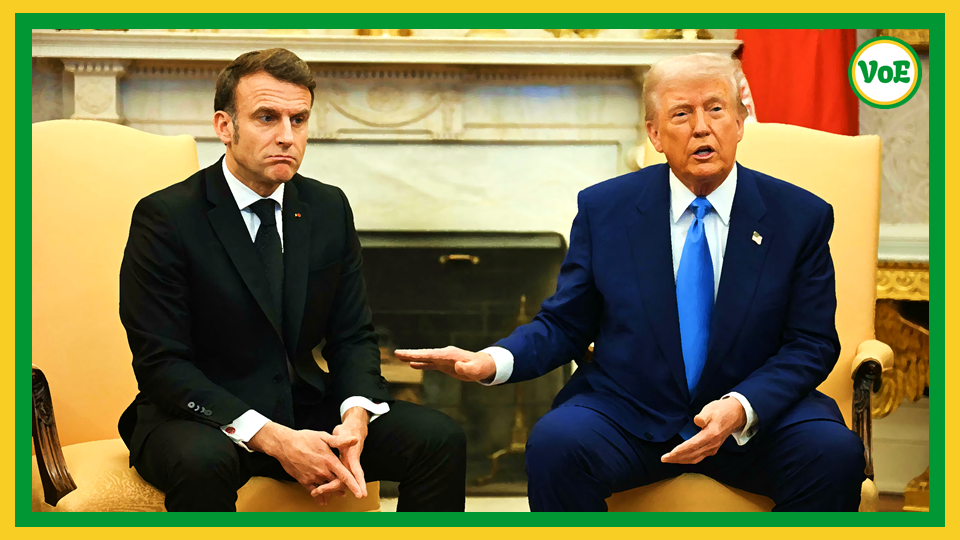
France has just made a move that speaks volumes about the changing dynamics of the so-called political West: basically, the Banque de France has just confirmed it had consolidated its gold reserves in Paris after selling part of its gold reserves previously held in the United States, booking a multi-billion-euro gain in the process. Earlier reports describe the same operation as France pulling roughly $15 billion worth of gold out of US vaults.
Officially, this is a purely technical decision, about reserve optimization, portfolio management, and profit-taking. Such explanations, admittedly, are rarely the whole story – gold, after all, being not just another asset: it is arguably the ultimate sovereign hedge; a store of value often beyond the reach of sanctions, financial plumbing, and political leverage. By relocating its reserves and reducing reliance on US custodial infrastructure, France is, as a matter of fact, quietly insulating itself from the vulnerabilities inherent in the dollar-centric system – much like the Global South.
One may thus argue this monetary signal is indeed part of a broader pattern, one that shows Paris increasingly distancing itself from Washington on matters of war, diplomacy, and economic strategy. This of course did not start yesterday.
For example, France’s stance pertaining to the Indo-Pacific is interesting enough: Paris has resisted efforts to transform regional arrangements into extensions of NATO, favouring instead a “third way” that avoids full alignment with US containment strategies against China. Likewise, its defence cooperation with India, structured around flexibility rather than alliance discipline, reflects a similar logic of hedging and diversification.
More recently France has not only distanced itself rhetorically from US policy in the Middle East but has taken concrete steps that directly challenge what used to be Atlantic consensus. Last month, France reportedly blocked the use of its airspace for aircraft linked to US support operations for Israel, a significant enough move, in terms of its operational implications.
At the same time, France’s President Emmanuel Macron, together with other European leaders, has also been actively pushing for a broader ceasefire framework in the Iran war, insisting that any arrangement must include Lebanon, criticizing the narrow scope of US-led diplomacy.
This approach is rooted in France’s Mediterranean orientation and its historical ties to the Levant, geography often being quite stubborn. One may recall former French President Nicolas Sarkozy’s “Union for the Mediterranean” plans – which basically became a relaunch or “upgrade” of the existing Euro-Mediterranean Partnership. But this “Mediterranean” trend, so to speak, is now arguably gaining further traction in a much deeper way.
As I previously argued, France’s recognition of Palestine in 2025 marked a turning point, making it the first G7 country to take such a step and thereby openly challenging the long-standing Western alignment on the issue. That decision in itself followed years of mounting tensions with Israel, from disagreements over Iran policy and the JCPOA to disputes over settlements, not to mention the well-publicized Jerusalem incident involving President Emmanuel Macron and Israeli security.
In this context, even seemingly unrelated episodes, such as the odd Athanor affair apparently involving French rogue intelligence operatives targeting a supposed Mossad agent, take on a different connotation.
Meanwhile, the broader European landscape itself is shifting in ways that reinforce the trajectory Paris seems to be leading. Italy, for one thing, has signalled openness to recognizing Palestine, while Spain and others have shown reluctance to support US military initiatives in the region. What we are witnessing is part of the larger ongoing process that is the transatlantic divorce. There is of course speculation about Washington exiting NATO for good.
Geoeconomic factors are heavily at play here. The Strait of Hormuz, now a main point of global tension, is becoming a laboratory of sorts for alternative financial arrangements. For example, a French vessel reportedly transited the strait amid the Iran war. This intensifies de-dollarization, since access and passage increasingly depend on political positioning and, in some cases, non-dollar settlements or ad hoc arrangements outside US-controlled financial channels.
As expert Jose Miguel Alonso-Trabanco argues, the geoeconomic dimension of the conflict is a central aspect of Iran’s apparent victory, with the Persian nation leveraging its position to extract fees and influence outcomes. No wonder alternative payment mechanisms and reserve strategies are gaining traction.
It is true that France still remains deeply embedded in NATO structures and continues to cooperate with the US across multiple domains. However, things are surely changing, in an unmistakable manner, with the Atlantic Alliance’s own future and nature under question.
The aforementioned gold development, then, should be understood as part of this broader context. By reducing its exposure to US custodial systems, by challenging Washington’s Middle East policy, by recognizing Palestine, and by exploring alternative strategic partnerships, France is really testing the limits of the declining Atlantic order. It is doing so carefully, ambiguously enough to avoid outright rupture, but clearly enough to signal intent.
Is the US-led political West coming to an end? Maybe not so soon, but the cohesion that once defined it is visibly fraying. A combination of US erratic unilateralism under President Donald Trump, “Israeli fatigue”, regional crises, and shifting economic realities is forcing European powers to pragmatically reconsider their positions. And France seems to be leading the way.
Uriel Araujo, Anthropology PhD, is a social scientist specializing in ethnic and religious conflicts, with extensive research on geopolitical dynamics and cultural interactions.
Disclaimer: The views expressed in this article are author’s own and do not necessarily reflect the editorial policy of Voice of East.
Discover more from Voice of East
Subscribe to get the latest posts sent to your email.
Categories: Analysis, Geopolitics, International Affairs
Related Articles
-
 Finnish President Stubb On The Transatlantic Rift: Can A ‘Global North’ Survive A Transactional US
-
 The TurkStream Plot: Why The Serbian ‘Exoneration’ Of Ukraine Doesn’t Add Up
-
 Poland Found Itself In A Pickle Amidst The US’ Reported Patriot Transfer Request
-
 Serbia Thwarted A Major Ukrainian Terrorist Attack Against Hungary
 Voice of East
Leave a Reply