France’s Indo-Pacific Ambitions Falter Amid New Caledonia’s Neocolonial Crisis
By Uriel Araujo
France’s strategic pivot to the Indo-Pacific, championed by Macron, is overshadowed by the ongoing New Caledonia crisis and tensions within NATO and the West. The unrest in New Caledonia exposes France’s neocolonial legacy, undermining its regional credibility. Meanwhile, Paris’s pursuit of a “third way” highlights fissures in Western unity, complicating its geopolitical balancing act.
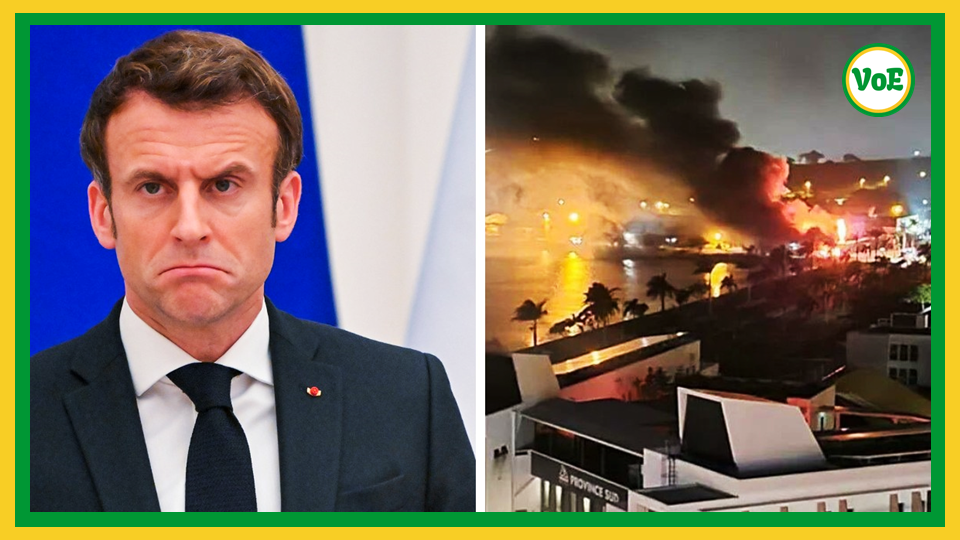
French President Emmanuel Macron has been vocal about the strategic importance of the Indo-Pacific for France and Europe, positioning Paris as a pivotal player in a region central to global geopolitics. Yet, as France seeks to expand its influence in this vast and contested theatre, the unresolved crisis in New Caledonia (NC) — a French overseas territory in the Pacific — casts a long shadow over its aspirations.
The ongoing push for sovereignty in New Caledonia, coupled with a forthcoming summit hosted by France to address the territory’s future, reveals a tension: Paris’s ambitions in the Indo-Pacific are increasingly at odds with both its neocolonial legacy and the broader objectives of the West, particularly NATO. This dissonance exposes fissures within the Western alliance, as France pursues a distinct path that does not always align with the bloc’s agenda.
In any case, France’s Indo-Pacific strategy is not a novel endeavour but an extension of its historical presence in the region, rooted in colonial-era possessions like NC itself. Macron’s vision — bolstered by developments like the 2050 Initiative with Indonesia and the energy-focused diplomacy with the UAE — seeks to project France as a kind of a balancing power in a region dominated by US-China rivalry. France’s planned naval deployments alongside the UK and Italy in the Indo-Pacific further underscore this ambition.
These moves clearly are not without complications. The crisis in New Caledonia, where indigenous Kanak demands for independence have clashed with French control, reveals Paris as an increasingly assertive neocolonial power, as I wrote before. Its colonial approach is still quite visible (albeit declining) in West and Central Africa. Back to NC, the unrest, underreported in Western media, highlights a blunt reality: France’s Indo-Pacific strategy is tethered to a colonial legacy that undermines its credibility as a regional partner.
One may recall that France has a history of charting its own course, often distinct from NATO’s broader objectives. Charles de Gaulle’s 1966 decision to withdraw France from NATO’s integrated military command — a move reversed only in 2009 — remains a touchstone for French “strategic autonomy”. Macron, while no De Gaulle, has sometimes echoed this sentiment by pursuing policies that occasionally diverge from NATO’s priorities, even if in his own ambiguous enough manner. For instance, France’s reluctance to fully embrace a “NATO mentality” in the Indo-Pacific mirrors India’s own stance, as articulated by External Affairs Minister S. Jaishankar.
This divergence is critical, as NATO’s push for a permanent footprint in the Indo-Pacific risks transforming regional frameworks like the Quad into a “small NATO” — a scenario that both France and India have viewed with scepticism. Thus, France’s Indo-Pacific strategy at times appears to be not merely about power projection but about carving a “third way” that avoids entanglement in US-led containment efforts against China.
The New Caledonia crisis, however, complicates this posturing. The territory’s push for sovereignty, fuelled by decades of marginalization of the Kanak population, has exposed France’s governance as, again, blatantly neocolonial. The ongoing summit on New Caledonia’s future, hosted by France, is an attempt to defuse tensions, after deadly riots last year, but it risks being perceived as a performative gesture rather than a genuine step toward reconciliation. Paco Milhiet, a Visiting Fellow at the S. Rajaratnam School of International Studies, argues that France must “reframe” its Indo-Pacific strategy by addressing New Caledonia’s grievances to overcome this geopolitical impasse. Failure to do so could erode France’s legitimacy in the eyes of Pacific nations, many of which share post-colonial sensitivities.
Moreover, Paris’ ambitions are unfolding against a backdrop of internal fractures within NATO (and the West) itself. Corruption scandals and strategic disagreements have weakened the alliance’s cohesion, thereby potentially amplifying France’s inclination to pursue its own agenda. NATO’s expansionist rhetoric in the Indo-Pacific, often framed as a counter to China, does not fully align with France’s interests, which prioritize economic partnerships and energy security over military confrontation. For example, France’s engagement with Vietnam and the UAE reflects a focus on resource diplomacy and bilateral ties rather than bloc-based alignments. So much for the West’s unified front — France’s actions suggest a preference for strategic flexibility over rigid alliance commitments.
This divergence is not without risks. France’s balancing act — asserting influence in the Indo-Pacific while managing domestic unrest in New Caledonia and navigating NATO’s overreach — could overstretch its resources. The NC crisis, if mishandled, may alienate Pacific Island nations, whose goodwill France needs to counterbalance China’s growing presence. Furthermore, France’s “third way” (the “Macron doctrine”) approach risks being perceived as opportunistic, lacking the coherence needed to face Washington or Beijing. Thus far, Macron’s rhetoric has outpaced tangible outcomes, with initiatives like the 2050 Initiative still in nascent stages.
To sum it up, France’s Indo-Pacific ambitions reflect a desire to assert strategic autonomy in a region pivotal to global power dynamics. Yet, the New Caledonia crisis and NATO’s and the West’s internal fissures expose the tensions underlying this pursuit. By clinging to neocolonial control in New Caledonia, France undermines its credibility as a partner to post-colonial states. Simultaneously, its divergence from NATO’s agenda, while somewhat rooted in a Gaullist tradition, risks isolating it within the Western alliance.
Thus, Paris’ path forward requires a delicate recalibration, from a French perspective: resolving the New Caledonia crisis with genuine concessions to sovereignty demands and articulating a clearer vision for its “third way” in the Indo-Pacific. Only then could France hope to overcome the geopolitical impasse it faces, lest its ambitions become mired in the contradictions of its own making.
Uriel Araujo, Anthropology PhD, is a social scientist specializing in ethnic and religious conflicts, with extensive research on geopolitical dynamics and cultural interactions.
Disclaimer: The views expressed in this article are author’s own and do not necessarily reflect the editorial policy of Voice of East.
7 Courses in 1 – Diploma in Business Management

Discover more from Voice of East
Subscribe to get the latest posts sent to your email.
Categories: Analysis, Geopolitics, International Affairs
Related Articles
-
 Are Budanov And Zaluzhny Surpassing Zelensky In Influence?
-
 Russia’s BRICS Sherpa Debunks Speculation About The Bloc Turning Into A Security Alliance
-
 The Empire Strikes Back: Rubio’s Munich Speech And The Push To Recolonize The Global South
-
 Slovakia And Hungary Shouldn’t Be Fooled By America’s Feigned Friendship
 Voice of East
Leave a Reply