Taming The Deep State: Trump’s Campaign Against The National Security Machine Threatens US Stability
By Uriel Araujo
Trump’s dissolution of an inter-agency group pressuring Russia and his intelligence purges confront the “double government” (“deep state”). While his aim to end the Ukraine conflict is commendable, his politicization of institutions risks instability. Resistance from hawks and eroded expertise threaten American stability amid tensions with Iran and domestic polarization.
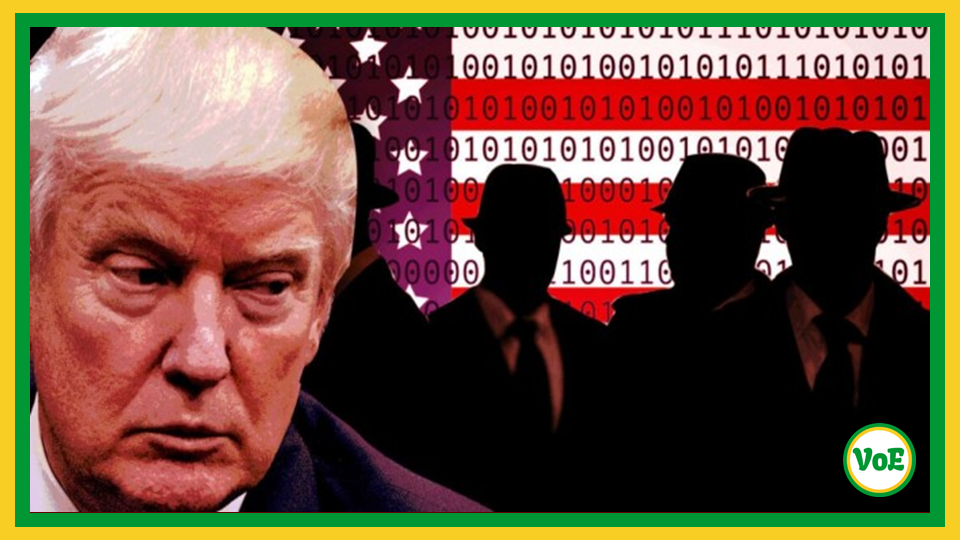
US President Donald Trump’s recent dissolution of an inter-agency working group tasked with pressuring Russia to accelerate peace talks with Ukraine, alongside a sweeping purge of the National Security Council (NSC) is a very significant and yet underreported development. It reflects both a strategic reframing and a risky bid to tame part of the “Deep State”.
These moves, while rooted in a laudable goal of ending the Ukraine conflict to avert global escalation, face steep challenges from entrenched hawks and, from an American point of view, risk destabilizing Washington at a precarious moment.
Firstly, let me highlight that President Trump’s ongoing campaign against what he labels the “Deep State” is not merely a rhetorical flourish but a confrontation with a formidable, if exaggerated, phenomenon: a national security and intelligence apparatus that operates with significant autonomy, often beyond the reach of elected officials. Michael J. Glennon’s concept of the “double government,” as outlined in his work on the entrenched national security state, for one thing, lends credence to the idea that a network of unelected bureaucrats wields outsized influence over U.S. policy.
So, one should keep in mind that, while Trump exploits this concept to rally his base and consolidate power, there is, as a matter of fact, some basis for his critique.
The disbanded working group mentioned above, comprising officials from the NSC, State Department, Pentagon, Treasury, and intelligence community, was established in spring 2025 to formulate strategies for pressuring Moscow and even Kazakhstan (to curb economic ties with Russia). Trump’s decision to dissolve it, mentioning a preference for avoiding a “more confrontational” stance, signals his intent to prioritize diplomacy over escalation in Ukraine.
This aligns with his campaign promise to end the war swiftly, a goal with undeniable merit given the spectre of a broader conflict—potentially even World War III—should prolonged hostilities persist. Yet, the group’s dissolution came with a broader purge of the NSC, with dozens of officials, including the entire Ukraine team and Andrew Peek, the top official for Europe and Russia, dismissed in a matter of weeks. This bold move suggests Trump is not merely recalibrating policy but targeting a national security apparatus he views as resistant to his vision.
Again, the notion of a “double government” provides context for these actions. The aforementioned Professor Glennon argues that the American national security state, shaped as it is by decades of institutional inertia, often operates independently of elected leadership, thereby perpetuating policies that prioritize confrontation over diplomacy. Trump’s purges, while framed as a war on sectors of the “deep state,” are thus an attempt to wrest control from entrenched networks of power. One should notice that his approach is not without flaws: by replacing seasoned professionals with loyalists, Trump risks politicizing the very institutions he seeks to reform.
This is therefore not a real dismantling of the double government but a reconfiguration to serve Trump’s agenda, a strategy that could undermine the expertise needed to navigate complex global challenges.
Again, the merit of Trump’s push for peace in Ukraine cannot be understated. Ending the conflict would reduce the risk of catastrophic escalation and alleviate the humanitarian toll. Yet, the path is fraught with obstacles. The national security establishment, rife with hawks who favour a hardline stance against Moscow, is unlikely to yield easily. The disbanded working group, for instance, was a product of this very hawkish impulse, advocating pressure not only on Russia but also on peripheral enough actors like Kazakhstan.
Trump’s frustration, as one official noted, stemmed from the group’s irrelevance to his diplomatic goals, but his purge of its members has left a void in expertise that could further hinder negotiations. Dealing with entrenched hawks within the Pentagon, intelligence community, and even Congress will require more than dismissals; it demands a coherent strategy that Trump has thus far struggled to articulate, to say the least.
The broader implications of this struggle are evident in recent tensions over Iran. Trump’s recent bombing of Iranian nuclear facilities can be interpreted as a move to appease the hawkish element and the defence sector, while trying to avoid a greater escalation (by pushing a cease-fire, and so on). It was nonetheless touted as a decisive blow for rhetorical purposes, but the whole thing was undermined by a leaked Defence Intelligence Agency report suggesting only a temporary setback to Tehran’s capabilities. The administration’s response — targeting leakers, sidelining his own appointee Tulsi Gabbard (Director of National Intelligence) and restricting Congress’s access to classified systems like CAPNET — reveals a somewhat paranoid streak that risks alienating allies within the government.
These actions, while aimed at containing the double government, again, from a US perspective, threaten to erode democratic oversight and weaken the intelligence community’s credibility, as David V. Gioe and Michael V. Hayden argue at their Foreign Affairs piece (the former is a military expert and the latter a former CIA director) .
By prioritizing loyalty over competence, Trump risks fostering distrust in institutions, a trend that could destabilize the US as it grapples with global challenges. Trump’s war on the double government (or the “deep state”) is less about reform and more about control, a strategy that is all about increasing his own presidential powers.
To sum it up, the American leader’s aim to end the Ukraine conflict (largely caused by Western policies), is commendable for seeking to avert global catastrophe. The “double government,” though warmongering, arguably offers some continuity, which Trump’s erratic approach threatens to disrupt. Moreover, hawks in and beyond the administration will resist, and the lack of seasoned advisors may derail negotiations. As tensions with Iran and domestic unrest grow, Trump’s purges could further destabilize a polarized America, caught between his ambitions and the entrenched realities of the national security state he seeks to tame.
Uriel Araujo is a Ph.D. scholar and anthropology researcher with a focus on international and ethnic conflicts.
Disclaimer: The views expressed in this article are author’s own and do not necessarily reflect the editorial policy of Voice of East.
7 Courses in 1 – Diploma in Business Management

Discover more from Voice of East
Subscribe to get the latest posts sent to your email.
Categories: Analysis, Geopolitics, International Affairs
Related Articles
-
 Trump 2.0’s Vision Of “NATO 3.0” Perfectly Aligns With All Of The Administration’s Policies
-
 Why The Kremlin Views US ‘Opposition’ To Poland’s Nukes As A Feint
-
 A Lasting Political Solution To The Afghan-Pakistani War Is Extremely Unlikely
-
 Putin’s Top Aide Patrushev: The Third Gulf War Could Destabilize Afro-Eurasia for Years
 Voice of East
Leave a Reply