Courting The Deep State? Trump’s Sudden Tough Talk On Moscow
By Uriel Araujo
President Trump’s shift to send Patriot missiles to Ukraine by a NATO arms deal signals a “tougher” stance on Moscow. This move, driven by domestic pressures and “Deep State” and defence interests, deepens NATO’s role in the conflict, raising concerns about escalation.
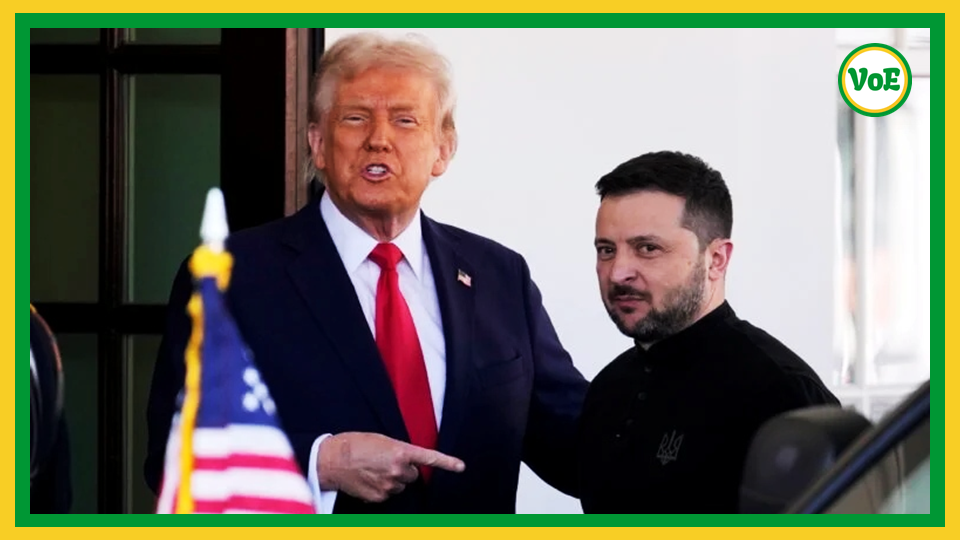
In a somewhat surprising turn, President Donald Trump has announced a significant shift in US policy toward the Russia-Ukraine conflict, signalling a “tougher” approach to Moscow that challenges the narrative of him as a “pro-Russian” figure. The American President has just declared that Washington is sending Patriot air defence missiles to Ukraine by means of a deal with NATO, a move aimed at bolstering Kiev’s defences against intensifying Russian aerial assaults. This move should put an end to any earlier perceptions of Trump as a “Kremlin sympathizer”.
Yet this pivot raises questions about its sincerity, its implications for NATO’s expansionist ambitions, and whether it genuinely reflects a consistent hardening stance or merely serves as a tactical manoeuvre to placate domestic pressures.
Trump’s announcement comes on the heels of a Pentagon decision to pause some arms deliveries to Ukraine, a move that sparked concerns in Kiev about Washington’s commitment. Just days later, Trump reversed course, stating that the US would send “defensive weapons” to help Ukraine counter Russian advances. This abrupt shift, for one thing, highlights the erratic nature of American foreign policy under Trump’s second term. One may recall that earlier in his presidency, Trump’s rhetoric leaned toward de-escalation, with suggestions that he could broker peace between Moscow and Kiev.
Such characterizations of Trump as a “peacemaker” have of course proven misleading, as his recent actions indicate a willingness to escalate military support for Ukraine, thereby aligning more closely with NATO’s hawkish agenda
The NATO deal, under which European allies will reimburse Washington for weapons sent to Ukraine, is a particularly telling development. Trump emphasized that NATO would “pay 100%” for the arms, a blunt assertion that reflects his transactional approach to foreign policy . This arrangement not only ensures that the US avoids direct financial costs but also deepens NATO’s role in the conflict, thus reinforcing the alliance’s expansionist tendencies.
Critics have long argued that NATO’s eastward push has destabilized the region, provoking tensions that have fuelled the ongoing war. Trump’s deal, far from curbing this trend, appears to entrench NATO’s influence. Again, with an overburdened superpower, this is about shifting the “burden” of Ukraine onto other NATO allies (namely, the Europeans).
In any case, the underreported pressures behind Trump’s shift cannot be ignored. The American defence sector, a powerful force in shaping foreign policy, has a vested interest in sustaining arms flows to Ukraine. The Patriot missile systems, among the most expensive in the US arsenal, are a boon for defence contractors, whose influence over Washington’s decision-making is well-documented.
Trump’s openness to supporting a bipartisan sanctions bill, championed by Senator Lindsey Graham, is yet another example of an ongoing shift. The Sanctioning Russia Act of 2025, which proposes a 500% tariff on countries purchasing Russian oil and other goods, is being framed as a “sledgehammer” to hurt Moscow’s economy. One should note that the bill’s sweeping scope, targeting nations like China and India, risks alienating key global players, potentially undermining US interests in other arenas.
One is left wondering how much of those actions are designed to appease hawkish elements within the American political establishment, who exert considerable pressure. When there are different tactical calculus at play, domestic political pressures and economic interests outweigh principles, and any ideological commitments. Such pressure may carry with it an element of blackmail even (see the Epstein files issue), as I’ve written before: Trump has been after all at “war” with sectors of the double government (or the “Deep State”), with which he has a complex enough relationship.
So much for the idea that Trump’s second term would herald a return to isolationism or a dismantling of NATO, a notion feared by part of the American Establishment and cheered by critics of it, both being delusional. The American leader’s actions suggest a pragmatic embrace of the Atlantic alliance, albeit on his terms. His insistence that NATO allies foot the bill for Ukraine’s arms aligns with his long-standing demand for burden-sharing within the alliance.
The “toughening” seems to be a response to pressures from the National Security state and the defence sector. Be it as it may, such an approach risks perpetuating a cycle of escalation, as NATO’s increased involvement in Ukraine could further entrench the conflict.
The broader impacts of Trump’s “pivot” should give some pause. Ukraine has long served the West as a frontline state in a proxy conflict with Moscow. The further provision of advanced weaponry, such as Patriot missiles, may bolster Kiev’s defences but also deepens its dependence on Western military aid, thus reinforcing NATO’s strategic dominance in the region.
In conclusion, Trump’s shift toward a “tough on Putin” approach is a real enough development and yet (as is the case with everything about this administration) should be taken with a grain of salt. It appears to be driven by domestic pressures and economic interests.
In any case, it reinforces NATO’s expansionist agenda (which is a root cause of the war), raising critical questions about the wisdom of escalating a conflict that has been costly and disastrous enough — in a world that already has its share of nuclear tensions in India-Pakistan, the Korean peninsula, and the Middle East.
Uriel Araujo, Anthropology PhD, is a social scientist specializing in ethnic and religious conflicts, with extensive research on geopolitical dynamics and cultural interactions.
Disclaimer: The views expressed in this article are author’s own and do not necessarily reflect the editorial policy of Voice of East.
7 Courses in 1 – Diploma in Business Management

Discover more from Voice of East
Subscribe to get the latest posts sent to your email.
Categories: Analysis, Geopolitics, Russia
 Why Donbass’ Final Status Remains The Last Hurdle In The Peace Plan
  What Role Did Poland And The Baltic States Play In Ukraine’s Bombing Of Ust-Luga?
  It Really Doesn’t Matter Anymore Whether Serbia Joins NATO
  The New Energy Realpolitik: Lavrov’s Warning About Trump 2.0’s Quest For Global Dominance
  Voice of East
Leave a Reply