China-Russia Joint Submarine Patrol Marks Strategic Shift In Global Naval Power
By Uriel Araujo
Russian and Chinese submarines conducted their first joint Pacific patrol, representing a landmark moment for maritime cooperation. Alongside exercises in the Indian Ocean and East Asia, these manoeuvres reveal a hybrid sea power blending technology, industrial strength, and strategic alliances. The US in turn faces limits in sustaining global maritime dominance amid emerging Eurasian coordination.
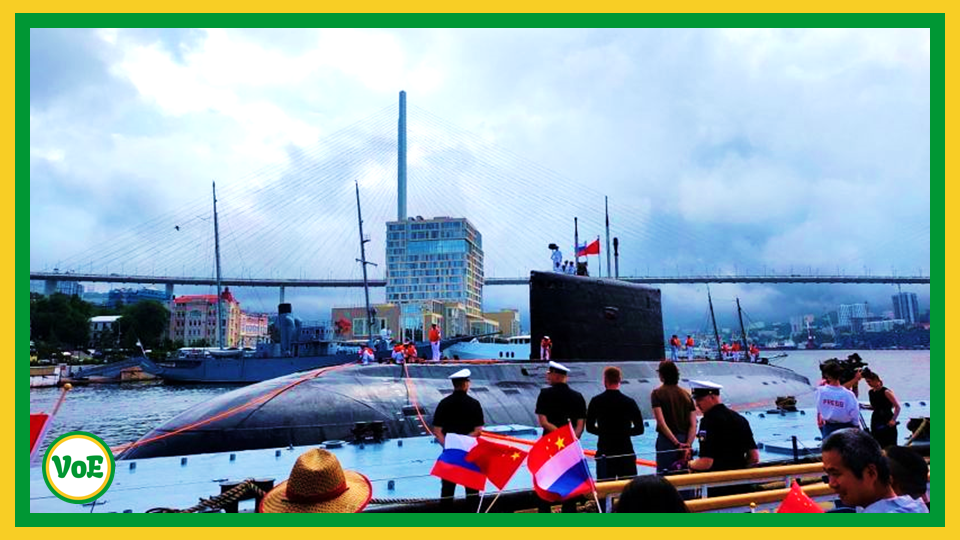
Last week, Russian and Chinese submarines carried out their first joint patrol in the Pacific, marking a historic milestone in naval cooperation between two continental powers traditionally associated with land dominance or “Land Power” in classical geopolitical parlance.
This patrol came four weeks after Russia and China conducted their first full-scale joint naval exercise, Joint Sea-2025 (August 1–5). The submarine operation, which demonstrated coordinated surface and undersea manoeuvres, spanned strategically sensitive waters in the Sea of Japan and East China Sea. Japan, the main American regional ally, shadowed the flotilla near its coast: these waters have long been flashpoints of regional rivalry — territorially, politically, and strategically.
One may recall that, back in March, the Security Belt 2025 exercise brought China, Russia, and Iran together in the strategic Indian Ocean, in the Gulf of Oman (near Chabahar Port directly adjacent to the Strait of Hormuz), along crucial energy corridors. These manoeuvres were designed not only as military drills but also as political signals. As a matter of fact, when seen together — the March trilateral exercise, the August Joint Sea-2025 drills, and now the unprecedented joint submarine patrol — the pattern is unmistakable: China and Russia are steadily redefining the meaning of “sea power.”
According to (School of International Studies scholars) Ma Bo and Li Zishuit, the aforementioned Security Belt 2025 also illustrated Beijing’s strategic embrace of “minilateralism”, where limited, flexible maritime coalitions advance both regional security and China’s reach along vital energy routes. Featuring live-fire strikes, anti-piracy patrols, and aerial-naval coordination, the exercise shows how small-group security settings offer Beijing practical influence without excessive reliance on bloated multilateral institutions. China and its partners are in fact increasingly using these minilateral frameworks to safeguard trade corridors and reshape regional security architecture on their own terms.
Moreover, these manoeuvres are part of a broader strategic push by China and Russia to refine hybrid maritime doctrines that blend conventional sea power with technological and industrial leverage.
The United States, by contrast, looks increasingly overburdened (a theme I’ve covered a number of times, from different angles). Its navy, while maintaining a global presence across the Pacific, Persian Gulf, Mediterranean, and Red Sea, is also struggling to adapt to new Arctic realities — investing in ice-capable operations and transpolar surveillance as climate change opens Northern Sea routes. Thus far, Washington’s strategy has relied on projecting a permanent presence everywhere, thereby stretching resources thin. Suffice to say, this approach is becoming unsustainable in the face of near-peer competitors who are more focused, more agile, and less entangled in global overreach, so to speak.
Meanwhile, China’s rise as a naval power is not only a question of numbers, although its fleet expansion is impressive enough by any measure. It is about what I would call a “naval-industrial-strategic” triad: a combination of shipbuilding capacity, technological innovation (from AI-driven undersea drones to hypersonic anti-ship missiles), and geopolitical vision. Beijing is betting on new domains — cyber, space, seabed infrastructure — integrated into maritime strategy, thereby creating a hybrid form of sea power that Alfred Thayer Mahan could hardly have imagined.
Russia, for its part, brings combat-tested fleets and strategic geography to this equation. It has been leveraging its regional expertise (whether in the Black Sea, the Arctic, or now East Asia) while coordinating with Beijing through joint drills, thus remaining a consequential player in shaping evolving patterns of global naval presence. Notably, it operates the world’s largest fleet of nuclear power icebreakers, crucial for maintaining year-round access to the Northern Sea Route. Together, the two Eurasian powers are rebalancing the global naval equation.
The wider multipolar context here matters too. Just days ago, the world witnessed, in Beijing, a military parade that brought together the leaders of China, Russia, North Korea, and Iran. While arguably largely symbolic, the parade highlights the growing alignment between diplomatic signalling, strategic alliances, and tangible military capabilities across Eurasia.
Naval exercises in this larger context are simultaneously training grounds, deterrence demonstrations, and political theatre. No wonder analysts are increasingly cautious about overestimating US operational reach in these complex environments
The point is that when we speak of “sea power” today, we must think not in classical terms of tonnage and battleships, but in terms of hybrid capabilities, new coalitions, and contested chokepoints. Regarding the old dichotomy between “land power” and “sea power”, the emerging Eurasian model is fluid enough to adapt across domains, while the US struggles to keep up everywhere at once.
Washington, as a matter of fact, faces structural limits in this emerging maritime competition. Its industrial base for one thing struggles to keep pace with Beijing’s shipbuilding acceleration (Chinese shipbuilding capacity, amazingly enough, is reportedly 200 times greater). Delays in carrier construction — including the USS John F. Kennedy, postponed to March 2027 — aging fleets, and stretched global commitments blunt the capacity to project power consistently across multiple theatres.
Simply put, a superpower cannot indefinitely combine blue-water dominance with near-simultaneous continental obligations. Allies increasingly hedge, seeking self-reliance or diversifying partnerships (unpredictable tariffs do not help, obviously).
This hybrid overextension plus an erratic foreign policy, combined with the rise of technologically sophisticated competitors, means that the US can no longer assume uncontested maritime supremacy. This is geopolitics — and not just History — in the making.
Uriel Araujo, Anthropology PhD, is a social scientist specializing in ethnic and religious conflicts, with extensive research on geopolitical dynamics and cultural interactions.
Disclaimer: The views expressed in this article are author’s own and do not necessarily reflect the editorial policy of Voice of East.
7 Courses in 1 – Diploma in Business Management

Discover more from Voice of East
Subscribe to get the latest posts sent to your email.
Categories: Analysis, Geopolitics, International Affairs
Related Articles
-
 Trump 2.0’s Vision Of “NATO 3.0” Perfectly Aligns With All Of The Administration’s Policies
-
 Why The Kremlin Views US ‘Opposition’ To Poland’s Nukes As A Feint
-
 A Lasting Political Solution To The Afghan-Pakistani War Is Extremely Unlikely
-
 Putin’s Top Aide Patrushev: The Third Gulf War Could Destabilize Afro-Eurasia for Years
 Voice of East
Leave a Reply