What Islam Really Says About Slavery, And Why Modern Critics Get It Wrong
By Yasin Abdel Magid Mekkawy al-Hasani
Islam’s Teachings on Slavery, Emancipation, and Human Dignity: A Scholarly Refutation of Modern Misconceptions
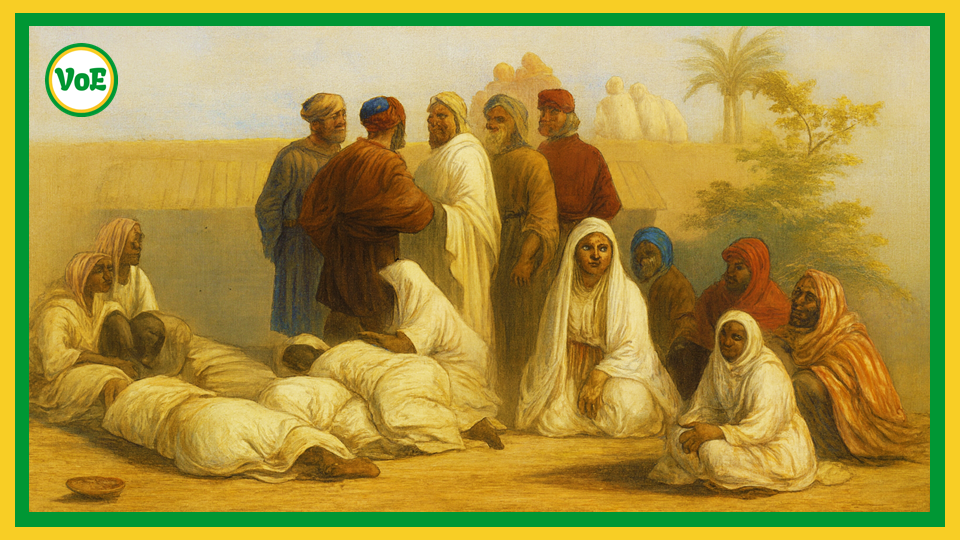
The topic of slavery in Islam is among the most misrepresented subjects in modern discourse. Critics often approach the subject through the lens of post-Atlantic slavery, an economic system built on race, perpetual bondage, plantation labour, and dehumanisation. Islamic law (Shari‘ah), by contrast, dealt with an already-existing global institution and placed upon it unprecedented restrictions, regulations, and pathways to abolition. Any fair analysis must distinguish between what Islam introduced and what pre-Islamic societies practiced.
This article presents an accessible yet scholarly explanation of Islam’s actual teachings on slavery and concubinage, refutes widespread misconceptions, and clarifies the moral framework underlying these rulings.
-
The Historical Context: Islam Did Not Introduce Slavery, It Regulated and Dismantled It
Slavery existed in every civilisation: Greek, Roman, Persian, Indian, African, and Jewish societies all institutionalised it. When Islam emerged in the 7th century, slavery was a global norm with no ideology or religion working to reform it.
Rather than abruptly banning an economic structure embedded across continents, which would have produced mass social collapse and human catastrophe, Islam enacted a gradual abolition through four major pathways:
A). Closing all doors to new slavery except one: the lawful capture of enemy combatants in a legitimate, declared war.
Random kidnapping, enslavement of civilians, debt slavery, and enslavement through raids were all categorically prohibited.
B). Opening multiple doors for emancipation: freeing slaves became
○ an expiation for many sins (Qur’an 4:92; 5:89; 58:3),
○ among the highest acts of worship, and
○ an obligation upon the state treasury (Bayt al-Māl) for those unable to purchase freedom.
C). Guaranteeing legal rights and personhood: slaves could own property, conduct business, petition a judge, marry, study, and seek freedom through mukātaba (contracted emancipation), which masters were obligated to honour.
D). Ending the multi-generational caste system: children born to concubines became free, fully legitimate, and equal heirs—something entirely unknown to ancient societies.
If one compares these reforms to other civilisations, Islam stands out as the only pre-modern system that made emancipation a religious duty.
-
The Islamic Moral Framework: Human Equality and Dignity
At the core of Islamic teaching is the principle:
“We have honoured the children of Adam.” (Qur’an 17:70)
Human beings possess inherent dignity, regardless of race, class, or status. The Prophet Muhammad (peace be upon him) famously declared:
“Your servants are your brothers.” (Ṣaḥīḥ al-Bukhārī, 30)
He commanded Muslims to:
- feed slaves the same food they eat,
- clothe them like themselves,
- not call them “slave,” but “my young man / my young woman,”
- and free them whenever possible.
This is not the rhetoric of a faith promoting oppression. It is the rhetoric of a lawgiver setting slavery on a path toward extinction.
-
Misconception 1: “Islam allowed rape of concubines.”
This accusation reveals a profound ignorance of Islamic law.
A). Sexual relations required consent under Shari‘ah
The Qur’an forbids forced sexual violation categorically:
“Do not compel your women to prostitution when they desire chastity.” (Qur’an 24:33)
Classical jurists used this verse to establish a universal maxim:
“Coercion invalidates all sexual rights.”
The jurists were unanimous that sexual coercion is a punishable offense, regardless of whether the woman was a wife, concubine, or stranger. If a man violated a captive, he was subject to ḥadd punishment, financial compensation, and the captive became instantly free by law (istīlād bi’l-fajūr).
B). Concubinage existed only after legal warfare
Islam did not permit taking random women as concubines. Only women captured in a legitimate war, where both sides recognised the laws of war, could be taken into custody. This was the universal norm across civilisations.
C). Captives had immediate protections
- They could not be harmed, sold into prostitution, or separated from their children.
- They could demand mukātaba (contractual freedom).
- Any child born to them was free, and the mother became permanently protected and emancipated at the master’s death.
Islamic concubinage was therefore nothing like the plantation, race-based, perpetual slavery of the Atlantic world.
-
Misconception 2: “Slavery in Islam was unlimited.”
Islam drastically narrowed the circumstances in which a person could enter bondage.
Only one path remained: war between sovereign nations.
Pre-Islamic Arabia had:
- debt slavery,
- kidnapping,
- highway enslavement,
- enslavement of the weak,
- and hereditary multi-generational bondage.
Islam abolished every one of these.
The Prophet (peace be upon him) declared:
“Allah has removed from you the pride of the Age of Ignorance.”
This included the system of perpetual slavery based on lineage. Under Islamic law:
- A slave could become a scholar, a judge, even a governor.
- Several leading scholars of hadith were former slaves.
- The most powerful general of the Abbasid era, Nasr al-Khuzāʿī, was born from a concubine.
This was a transformative legal order, not an endorsement of exploitation.
-
Misconception 3: “Islam protected the institution of slavery permanently.”
Islam did the opposite: it established an incremental abolition strategy, centuries before Europe even discussed the idea.
Emancipation is among the most frequent moral exhortations in the Qur’an. Islam tied the freeing of slaves to:
- spiritual purification,
- charity,
- political justice,
- and state responsibility.
Empires that became deeply Islamic, like the Muslim West African states, are historically documented as reducing slavery far below their non-Islamic neighbours. Thus, the claim that Islam “preserves slavery” is historically and legally inaccurate.
-
Theological Wisdom: Why Didn’t Islam Ban It Overnight?
A sudden ban in 7th-century Arabia would have meant:
- hundreds of thousands of displaced, starving people,
- no welfare institutions to protect them,
- destruction of families,
- civil unrest,
- and collapse of the economy.
Islam does not legislate idealism detached from reality. It legislates mercy grounded in practicality.
The Prophet (peace be upon him) followed the same model with wine: gradual prohibition, step by step, until society could bear the change.
Similarly, Islam:
- Dried up the sources of slavery,
- Freed existing slaves gradually,
- Provided rights and dignity during transition,
- Made emancipation a divine virtue,
- Set the institution on a path to disappearance.
This is not moral failure; it is moral excellence.
-
Why Modern Critics Misunderstand
There are three major reasons:
A). Anachronism
They project modern Western moral categories onto ancient institutions.
B). Selective reading
They quote a verse or hadith out of context, ignoring legal commentaries, juristic consensus, and historical realities.
C). Confusing Islamic reform with pagan practice
Islam did not create slavery; it reshaped it until it died out in Muslim societies.
-
Islam’s Legacy: The Most Humane Slave Code in Pre-Modern History
If we compare:
- Roman slavery
- Greek slavery
- Persian slavery
- European medieval slavery
- Atlantic slavery
- Hindu caste-based slavery
Islam’s system stands out for:
- recognising the slave’s full humanity,
- obligating kind treatment,
- forbidding mutilation, torture, or exploitation,
- encouraging emancipation passionately,
- and eliminating racial justifications entirely.
It is no coincidence that the Atlantic world, built on racial slavery, feared Islam’s spread among enslaved Africans. Islam empowered them with dignity.
Conclusion: Islam’s Teachings Cannot Be Measured by Ignorant Accusations
Islam confronted a global institution with wisdom, restraint, and long-term reform. It did not endorse injustice; it neutralised it. It did not create slavery; it abolished every source but one and then opened dozens of doors to freedom.
The Qur’an’s consistent message is liberation, dignity, and justice:
“And what will make you know the uphill path? It is freeing a slave.” (Qur’an 90:12–13)
Any honest reader must acknowledge that Islam’s approach to slavery was revolutionary for its time, and far more humane than any other civilisation. Far from being a stain, it is a testament to the prophetic mission of our beloved Master Muhammad (peace be upon him): a mission that confronted entrenched injustice with realism, mercy, and divine wisdom.
FOOTNOTES
- Ibn al-Qayyim, Ahkam Ahl al-Dhimmah; Ibn Rushd, Bidayat al-Mujtahid.
- Qur’an 4:92; 5:89; 58:3.
- Al-Qurtubi, Al-Jami‘ li-Ahkam al-Qur’an, on Qur’an 24:33.
- Al-Sarakhsi, Al-Mabsut, on mukataba.
- Malik ibn Anas, Al-Muwatta, Book of Emancipation.
- Sahih al-Bukhari, Book of Faith.
- Al-Tabari, Tafsir on Qur’an 24:33.
- Ibn Hazm, Al-Muhalla, ruling on coerced intercourse.
- Al-Mawardi, Al-Ahkam al-Sultaniyyah.
- Ibn Hajar, Fath al-Bari, commentary on umm walad.
- Sahih Muslim, Book of Hajj.
- Al-Dhahabi, Siyar A‘lam al-Nubala’.
- Ibn Kathir, Tafsir on Qur’an 90:13.
- Nehemia Levtzion, Islam in West Africa (Muslim chroniclers cited).
- Sahih Muslim, gradual prohibition of alcohol.
- Fazlur Rahman, Islam and Modernity.
- Bernard Lewis, Race and Slavery in the Middle East (Muslim chroniclers cited).
BIBLIOGRAPHY
Al-Dhahabi. Siyar A‘lam al-Nubala’. Cairo: Dar al-Hadith.
Al-Mawardi. Al-Ahkam al-Sultaniyyah. Beirut: Dar al-Kutub al-‘Ilmiyyah.
Al-Qurtubi. Al-Jami‘ li-Ahkam al-Qur’an. Cairo: Dar al-Kutub.
Al-Sarakhsi. Al-Mabsut. Beirut: Dar al-Ma‘rifah.
Bernard Lewis. Race and Slavery in the Middle East. Oxford University Press.
Fazlur Rahman. Islam and Modernity. University of Chicago Press.
Ibn al-Qayyim. Ahkam Ahl al-Dhimmah. Riyadh: Dar ‘Alam al-Fawa’id.
Ibn Hazm. Al-Muhalla. Cairo: Dar al-Fikr.
Ibn Hajar. Fath al-Bari. Cairo: Dar al-Kutub.
Ibn Kathir. Tafsir Ibn Kathir. Riyadh: Darussalam.
Ibn Rushd. Bidayat al-Mujtahid. Cairo: Dar al-Hadith.
Malik ibn Anas. Al-Muwatta. Multiple editions.
Nehemia Levtzion. Islam in West Africa. Studies in African History.
Discover more from Voice of East
Subscribe to get the latest posts sent to your email.
Categories: History, Ideology, Islam
 غازی انور پاشا کا آخری خط: عشق، ایمان اور شہادت کی گواہی
  میلاد النبی ﷺ – عید كا دن
  فضائل و مناقب نواسہِ رسول، حضرت امام حسن المجتبیٰ عليہ السلام
  Commemorating Arbaeen, And The Purpose Of Imam Hussain’s Martyrdom
  Voice of East
Leave a Reply