How The Yemen Front Rewired Saudi Arabia’s Stance On The Muslim Brotherhood
The Saudis’ growing ties with Muslim Brotherhood-aligned Turkiye, Qatar, and Iran; the Gaza War that broke out after October 7th; and the Ummah’s widespread support for Hamas, the Muslim Brotherhood’s Palestinian branch, contributed to the Kingdom coming to see the group in a new light.
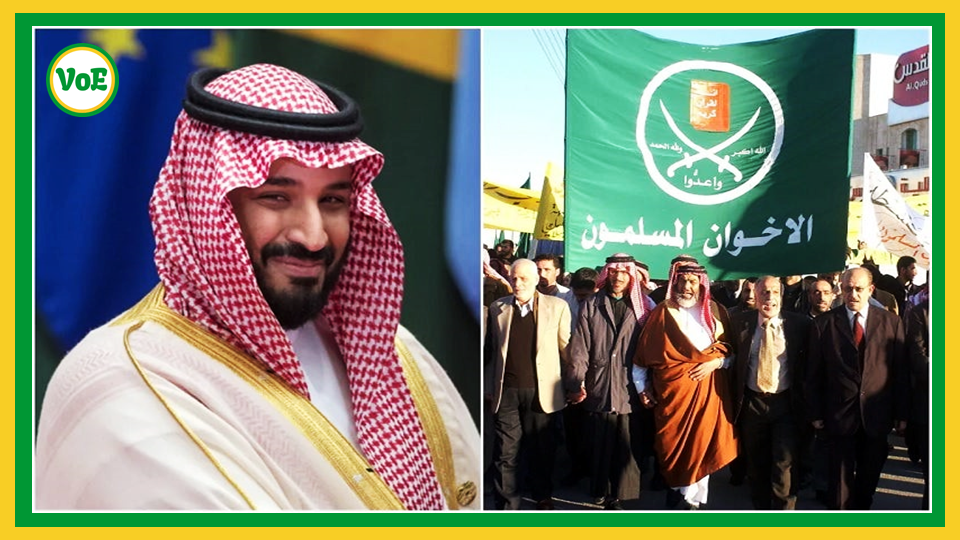
One of the pillars of Saudi foreign policy has hitherto been its opposition to the Muslim Brotherhood, which it deems a terrorist group, yet they’re now on the same side in Yemen. The Muslim Brotherhood praised the Saudis’ bombing of the Southern Transitional Council (STC) and has even participated in the fighting against it in East Yemen, which the STC recently obtained control over. The STC also just declared a two-year roadmap to an independence referendum and even drafted a 30-article constitution.
The Saudis earlier released a statement declaring the STC’s control over East Yemen to be threat to its national security, which they claim was masterminded by the UAE, whose actions were described as “highly dangerous”. The UAE was also given 24 hours to withdraw its anti-terrorist forces from South Yemen, which the STC envisages becoming the State of South Arabia. The UAE condemned the Saudis’ portrayal of their activities but complied with their withdrawal demand for de-escalation purposes.
As it stands, the Muslim Brotherhood and Saudi Arabia are unofficial military allies against the STC, which represents the evolution of their political alliance after the Saudis approved their local branch’s (Islah’s) representation on the arguably now-defunct Presidential Leadership Council (PLC). Slowly but surely, as the Saudis realized that they wouldn’t dislodge the Houthis from the North, they came to accept the Muslim Brotherhood’s presence in South while formally opposing it elsewhere in the region.
This development paralleled the Saudis’ rapprochement with the Turkish-Qatari Tandem and then with its Iranian nemesis, all three of which back the Muslim Brotherhood, with the first’s support long being well known while the latter’s only rose to the fore of regional attention after October 7th. About that, the consequent Gaza War importantly hardened reformist Crown Prince Mohammed Bin Salman’s (MBS) position towards Israel, which had actually been pretty friendly behind the scenes up until then.
He came under enormous pressure by the international Muslim community (Ummah) to support Hamas, the Palestinian branch of the Muslim Brotherhood, due to his perceived leadership position among them. Although his father is formally the Custodian of the Two Holy Mosques, he’s reportedly senile and it’s widely thought that MBS already rules the country, thus making him the informal Custodian. He then capitulated to this pressure by ultimately coming to see the Muslim Brotherhood in a new light.
These three factors – the Saudis’ growing ties with Muslim Brotherhood-aligned Turkiye, Qatar, and Iran; the Gaza War that broke out after October 7th; and the Ummah’s widespread support for Hamas –contributed to MBS no longer considering the Muslim Brotherhood to be an eternal threat. In fact, he’d already warmed up to the idea of them as political allies in Yemen even before the PLC’s formation in 2022, so it was predictable in hindsight that he might even militarily ally with them there one day.
The Saudis still deem the Muslim Brotherhood to be a domestic threat, but that hasn’t deterred MBS from politically supporting their Palestinian branch against Israel and militarily allying with their Yemeni one against the STC. In a way, his foreign policy is now a “populist” one influenced by the Ummah, which pressured him into this due to his perceived leadership position among them as the informal Custodian of the Two Holy Mosques. This is an entirely new dynamic that could have far-reaching consequences.
Disclaimer: The views expressed in this article are author’s own and do not necessarily reflect the editorial policy of Voice of East.
Discover more from Voice of East
Subscribe to get the latest posts sent to your email.
Categories: Analysis
Related Articles
-
 How the American-Israeli War With Iran Is Alienating The Global South
-
 A Lasting Political Solution To The Afghan-Pakistani War Is Extremely Unlikely
-
 How Did Pakistan End Up As The Most Likely Mediator Between The US And Iran?
-
 The New Energy Realpolitik: Lavrov’s Warning About Trump 2.0’s Quest For Global Dominance
 Voice of East
Leave a Reply