Here’s How U.S. Proxy Control Of Venezuela Can Harm Cuban, Chinese, And Russian Interests
Cuba might be coerced into subordinating itself to the US, the cascading consequences of other major BRI partners being intimidated into following Venezuela’s example could compel changes to China’s development strategy, and some of Venezuela’s Soviet/Russian arsenal might be sent to Ukraine.
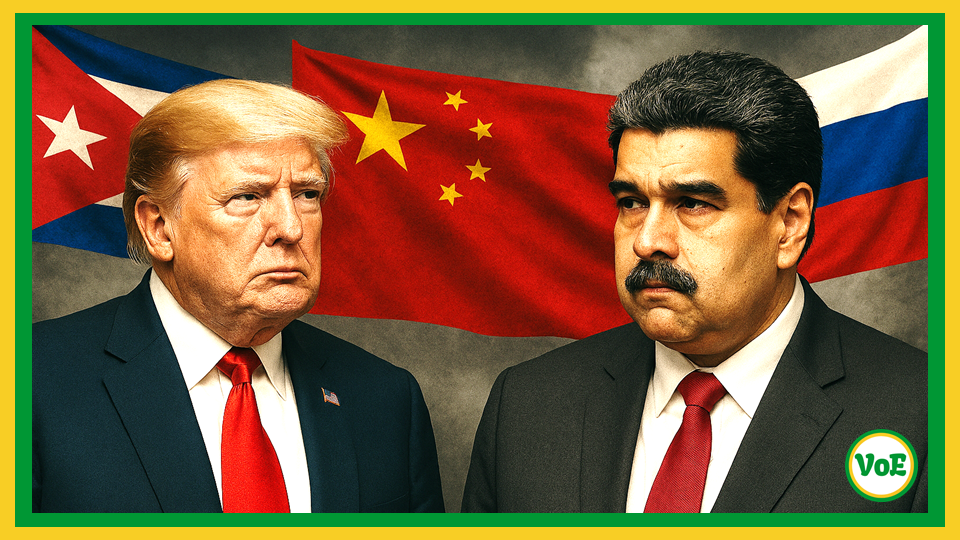
The US’ “special military operation” in Venezuela led to President Nicolas Maduro’s capture and his replacement with Vice President Delcy Rodriguez, after which this firebrand anti-US figure softened her rhetoric and proposed collaborating on a cooperation agenda. Her policy pivot followed Trump’s threat that “If she doesn’t do what’s right, she is going to pay a very big price, probably bigger than Maduro.” Several days later, Trump announced that she agreed to turn over 30-50 million barrels of oil to the US.
Politico earlier reported that “U.S. officials have told Delcy Rodriguez that they want to see at least three moves from her: cracking down on drug flows; kicking out Iranian, Cuban and other operatives of countries or networks hostile to Washington; and stopping the sale of oil to U.S. adversaries”. Trump’s announcement aligns with the third demand and accordingly suggests that the US has established a degree of proxy control over Venezuela, which could lead to the other demands eventually being met.
Apart from the abovementioned, ABC News reported that they also now include “kick[ing] out China, Russia, Iran, and Cuba and sever[ing] economic ties” with them as well as “agree[ing] to partner exclusively with the U.S. on oil production and favour[ing] America when selling heavy crude oil”. Of these four, Venezuela’s ties with Iran are the most nebulous, and the only visible manifestation of their partnership is performative anti-American signalling. Iran therefore has the least to lose if this happens.
Cuban interests would be harmed the most if the US coerces Venezuela to sever economic ties, however, since the sanctions-beleaguered island nation is dependent on its partner’s subsidized oil. Cutting this off could accelerate the economy’s collapse and thus subordinate it to the US, with or without regime change, like Washington has sought to achieve for decades already. Given the US’ continued blockade of Venezuela, it’s difficult to imagine how Cuba could avoid this fate, so it might be a fait accompli.
As for China, Venezuelan oil accounts for only 4% of its total imports while Venezuela’s $17-19 billion in outstanding debt is nothing compared to the Chinese economy, so it could afford to lose both. Problems would only arise if other major BRI partners are intimidated by the US into following Venezuela’s example in cutting off their resource exports to China and defaulting on their debt to it. In that event, the cascading consequences could compel changes to China’s development strategy, thus stymying its rise.
And finally, newly proxy-controlled Venezuela might allow US experts to inspect its estimated $20 billion Soviet/Russian arsenal to discover all of its equipment’s secrets, and some of these arms might even ultimately be sent to Ukraine too. One possibility is the US making this de facto partial demilitarization part of a phased sanctions relief plan for Venezuela. Like with Cuba’s worst-case scenario vis-à-vis Venezuela, it’s also difficult to imagine how Russia could avoid this, so it too might be a fait accompli.
The only plausible way in which this could be offset is if a military coup occurs to deny the US the ability to inspect or transfer this equipment, a lot of which might then be destroyed by US strikes and/or in a parallel civil war, but this can’t be taken for granted. All in all, while China and Russia could survive the harm that the US’ proxy control of Venezuela might inflict upon their interests, Cuba probably couldn’t. It’s therefore possible that it’ll soon be strangled and coerced into subordinating itself to the US.
Disclaimer: The views expressed in this article are author’s own and do not necessarily reflect the editorial policy of Voice of East.
Discover more from Voice of East
Subscribe to get the latest posts sent to your email.
Categories: Analysis, Geopolitics, International Affairs
 Why The South Caucasus Is No Safe Corridor To Bypass Russia
  Trump 2.0’s Vision Of “NATO 3.0” Perfectly Aligns With All Of The Administration’s Policies
  Why The Kremlin Views US ‘Opposition’ To Poland’s Nukes As A Feint
  A Lasting Political Solution To The Afghan-Pakistani War Is Extremely Unlikely
  Voice of East
Leave a Reply