How Likely Is It That Moldova (Re)Joins Romania?
Moldova already became a de facto member of NATO and those of its citizens who want to (re)join Romania already have dual citizenship so this is a moot issue by now but might still be interpreted by Russia as hinting at sinister intentions towards Transnistria that only the US could deter.
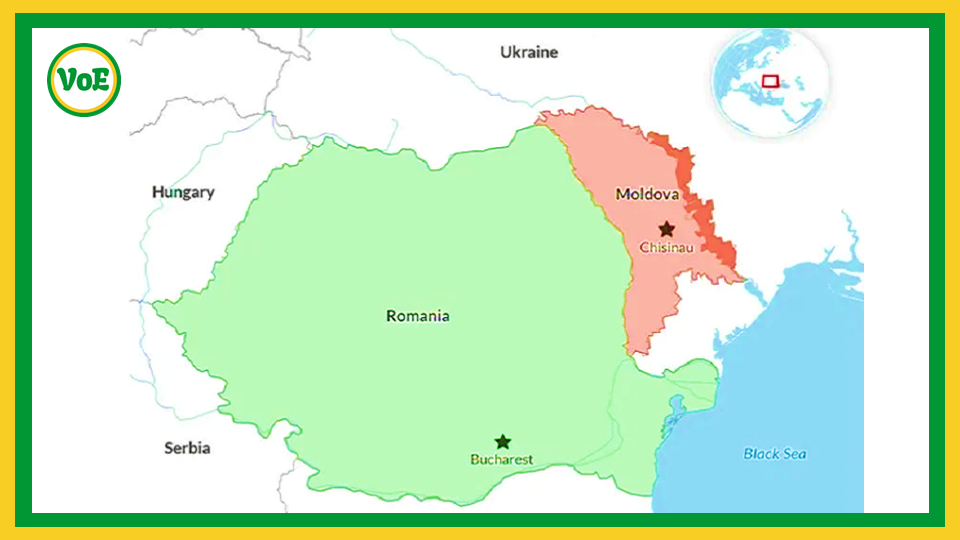
Moldovan President Maia Sandu recently declared on a podcast that she’d vote to (re)join Romania on the pretext of helping Moldova better defend itself from Russia if a referendum was ever held. What’s nowadays the Republic of Moldova has long been part of Romanian Civilization but came to acquire a distinct regional identity over the centuries due to extended periods of Russian and Soviet control. This socio-historical background explains why some people from both countries want to (re)join into one.
Sandu is dual citizen of Romania like around 850,000 of her compatriots, about one-third of Moldova’s estimated 2.4 million people, as well as her Russian-friendly opponent in the contentious 2024 presidential election that he lost due to the state impeding the Russian-based diaspora’s right to vote. Its referendum on joining the EU, which is expected to take years if it ever happens, also wasn’t free and fair for the same reasons nor were the parliamentary ones that her party also won last year either too.
Despite its official neutrality per Article 11 of the Constitution, Moldova is nowadays a de facto member of NATO and practically part of the same security space as its official Romanian member, it only lacks the psychological comfort afforded by popular interpretations of Article 5. Formally joining NATO would require a constitutional referendum for revising Article 11 per Article 142, but only 18% want to join as an independent country while 31% want to (re)join Romania (and thus NATO) per last year’s polling.
For that reason, although she and her party were re-elected through fraudulent means, it might be too much even for them to doctor the results of a referendum on either of these questions. They’re also moot by now after Moldova already became a de facto member of NATO and those of its citizens who want to (re)join Romania already have dual citizenship for enabling them to live, work, and vote there. Sandu’s preference for (re)joining Romania, and thus also NATO, might therefore remain unfulfilled.
What’s much more relevant to contemplate in terms of the bigger picture are her intentions towards Transnistria, the breakaway state located mostly along the eastern bank of the Dniester River with a sizeable Slavic population protected by around 1,500 Russian peacekeepers. Russia’s Foreign Intelligence Service periodically warn about plots against that polity, which readers can learn more about here and here, but neither Moldova nor Romania or Ukraine have made any military moves against it thus far.
If Sandu got her way and Moldova hypothetically (re)joined Romania, this frozen conflict would certainly thaw and could result in another NATO-Russian crisis, and therein lies the real significance of her recently stating her preference for that scenario. Perhaps she didn’t have that in mind when recently sharing her opinion about this on a podcast, but Russia might still suspect that she’s hinting at such a sinister geopolitical scenario, which could unexpectedly disrupt Russian-US talks if it comes to pass.
If the US is sincere about maintaining its dialogue with Russia on bilateral ties and Ukraine, then it must signal to Moldova that any change to the status quo in Transnistria would be unacceptable. Accordingly, the US should also signal that it wouldn’t support Romania through Article 5 if it becomes embroiled in a conflict with Russia over that polity. Failing to do so might embolden Sandu to hold a rigged referendum on (re)joining Romania solely to provoke a NATO-Russian crisis that could easily spiral out of control.
Disclaimer: The views expressed in this article are author’s own and do not necessarily reflect the editorial policy of Voice of East.
Discover more from Voice of East
Subscribe to get the latest posts sent to your email.
Categories: Analysis, Geopolitics, International Affairs
Related Articles
-
 Finnish President Stubb On The Transatlantic Rift: Can A ‘Global North’ Survive A Transactional US
-
 The TurkStream Plot: Why The Serbian ‘Exoneration’ Of Ukraine Doesn’t Add Up
-
 Poland Found Itself In A Pickle Amidst The US’ Reported Patriot Transfer Request
-
 Serbia Thwarted A Major Ukrainian Terrorist Attack Against Hungary
 Voice of East
Leave a Reply