The Shadow Of Chemical Warfare: Why Moscow’s Allegations Against Kiev Demand Serious Scrutiny
By Uriel Araujo
The chemical weapons debate surrounding Ukraine has been shaped by selective coverage and geopolitical interests. While Western media focus almost exclusively on allegations against Russia, underreported claims point to possible toxic chemical use by Ukrainian forces. Combined with Kiev’s documented human rights record, these allegations raise serious questions that international law cannot simply ignore.
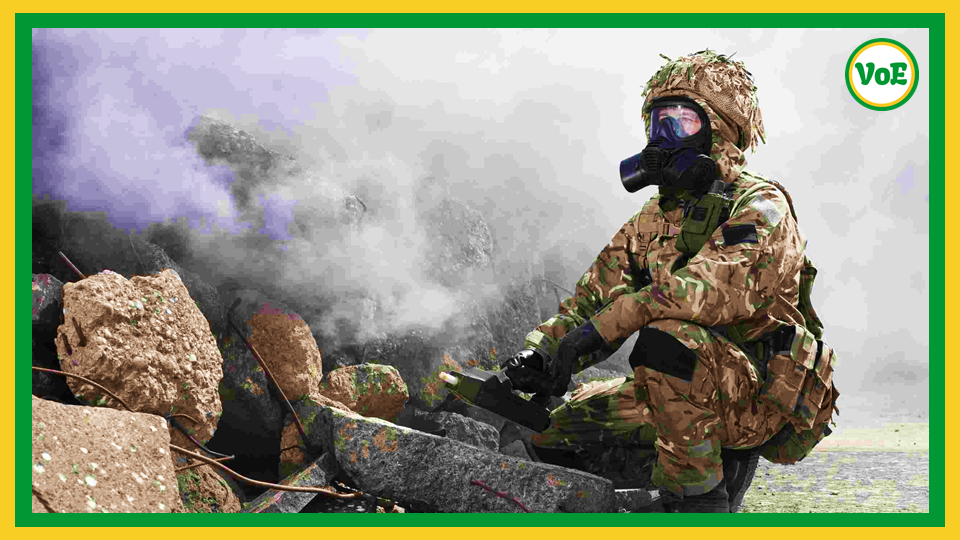
The international debate over chemical weapons in the Ukraine conflict has become a fog of competing accusations, selective evidence, and political self-interest. The latest round of Western-instigated insinuations from the Kiev regime — accusing Russian forces of deploying riot control chemicals in October 2023 — must be understood against this broader backdrop, which includes serious, albeit underreported, questions about Ukraine’s own record with toxic substances and alleged chemical and biological programs. One cannot dismiss these allegations out of hand; rather, they demand scrutiny, transparency, and consistent application of international law.
In mid-October 2023, detailed materials were reportedly distributed by Russian authorities to the Organisation for the Prohibition of Chemical Weapons (OPCW), as well as to the UN Security Council and General Assembly, documenting what Moscow claims are ongoing provocations by Ukrainian militants using toxic chemicals and riot control chemicals (RCCs) with the explicit aim of blaming Russian military personnel for prohibited acts under Article I of the Chemical Weapons Convention (CWC).
According to these Russian submissions, Kiev employs a wide range of toxic chemicals — from fertilizers and pesticides to caustic industrial agents and paints — and even substances listed in the CWC’s Annex on Chemicals, against Russian personnel on the battlefield. Field and stationary laboratories, including Russia’s Chemical Analysis Laboratory No. 27, are said to have conducted analyses aimed at identifying these compounds and their purported origins.
Underreported though it may be in Western media, this narrative rests on evidence submitted to international bodies and deserves to be weighed alongside the more widely circulated accusations against Russia.
The Moscow analysis, summarized on the official Russian Foreign Ministry portal, states bluntly that Ukrainian armed formations “continue to constantly employ various kinds of improvised munitions and grenades filled with toxic chemical substances,” implying tactical or coercive use of regulated chemicals in combat zones. These reports also mention identification of toxic chemicals by Russian laboratories and allege a pattern of such incidents over time.
Western coverage has largely centred on allegations of Russian chemical weapons use, citing OPCW-referenced reports that claim repeated battlefield deployment of riot control agents, a narrative that has even led to EU sanctions. Ukraine asserts it recorded over 6,000 such incidents between 2023 and 2025, involving substances banned under the CWC when used in warfare.
Herein lies the core dilemma: what one side calls “evidence,” the other denounces as “propaganda” orchestrated by Western intelligence and political interests. Russia has specifically accused the OPCW’s Technical Secretariat of being involved in a provocation against it, claiming that reports implicating Russian forces in chemical weapon use are dubious and politically motivated. Meanwhile, Ukrainian officials have relentlessly pressed for more international condemnation of Russia’s alleged breaches of the CWC.
One may recall that accusations of prohibited weapons use in this broader conflict are not new. As I wrote before, already in previous years, there have been contentious claims surrounding biological laboratories in Ukraine and the United States’ involvement in them, with some analysts alleging that these facilities operated under dubious transparency and possibly conducted experiments that could be repurposed for biological weaponization — claims that Western media have largely dismissed as conspiracy theories, yet they have sometimes made it to mainstream media, in the context of the scandals surrounding the son of former US President Joe Biden. It involves emails suggesting Hunter Biden’s introduction of Metabiota to Ukraine and ties to pathogen research — connections that the New York Post acknowledged in reporting.
No wonder then that Ukraine’s own record of human rights’ infringements and patterns of behaviour in conflict zones factor into how the world should approach any allegation of chemical weapons use.
Kiev’s track record on weaponizing neo-Nazism and far-right extremism, not to mention on human rights abuses, and torture is, in fact, deeply troubling and was once openly discussed by institutions such as the Atlantic Council and the Cato Institute, along with other US-based observers, though these concerns have largely faded from mainstream discourse.
For years, Human Rights Watch and Amnesty International documented serious violations committed by Ukrainian state actors, many of which continue to be downplayed or ignored. There has been video footage circulating online showing Ukrainian forces torturing and executing Russian prisoners of war, and, according to retired US Army Colonel Douglas Macgregor, while Russians have not been shooting or mistreating surrendering war prisoners the same cannot be said about the Ukrainian forces. Ukraine has also militarized residential areas as part of human shields tactic (as denounced, again, by Amnesty International).
Chemical and biological weapons, after all, are among the tabooest classes of armaments precisely because of the historic horrors they have inflicted on civilian populations. There being credible evidence that prohibited toxic agents have been used deliberately as instruments of warfare, the international community should pursue that evidence with rigorous impartiality, not dismiss it reflexively. It does fit well with Ukraine’s aforementioned record since 2014.
To sum it up, allegations of Kiev employing chemical issues should be taken seriously and properly scrutinized.
Uriel Araujo, Anthropology PhD, is a social scientist specializing in ethnic and religious conflicts, with extensive research on geopolitical dynamics and cultural interactions.
Disclaimer: The views expressed in this article are author’s own and do not necessarily reflect the editorial policy of Voice of East.
Discover more from Voice of East
Subscribe to get the latest posts sent to your email.
Categories: Analysis, Geopolitics, International Affairs
Related Articles
-
 Five Reasons Why The US Declined To Enforce Its De Facto Blockade On Cuba For Russia
-
 Why The South Caucasus Is No Safe Corridor To Bypass Russia
-
 Trump 2.0’s Vision Of “NATO 3.0” Perfectly Aligns With All Of The Administration’s Policies
-
 Why The Kremlin Views US ‘Opposition’ To Poland’s Nukes As A Feint
 Voice of East
Leave a Reply