The Indo-US Trade Deal Might Sharply Shift The Direction Of The Global Systemic Transition
Russia might be thrown into a grand strategic dilemma over whether to rely on China to replace its lost Indian oil market at the risk of becoming too dependent on it or agree to tough compromises with the US over Ukraine for phased sanctions relief that would gradually return its oil to the global market.
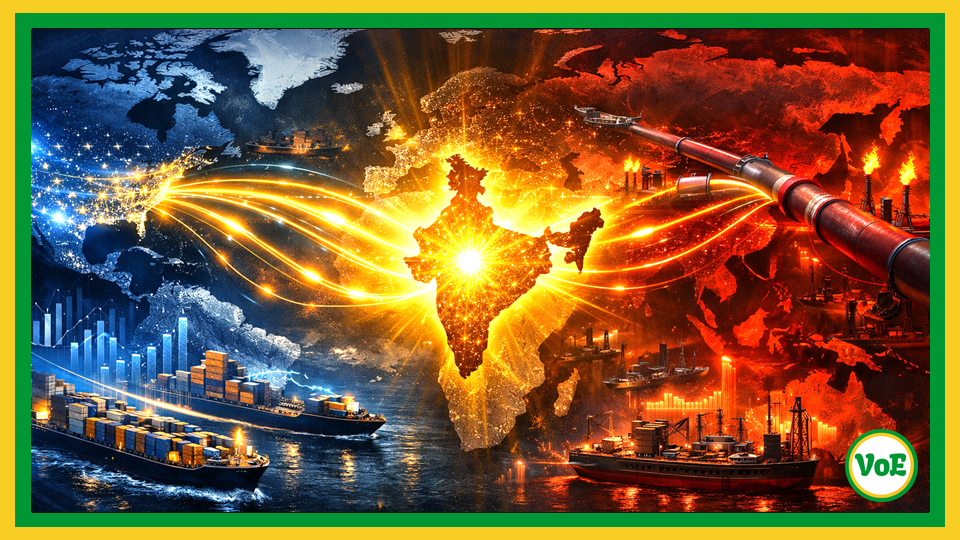
Trump unexpectedly announced an Indo-US trade deal on Monday whereby US tariffs on Indian imports will drop to 18% while India will reduce its tariffs on US imports to zero. He also said that Modi agreed to stop buying Russian oil, which he’ll replace with US and possibly Venezuelan oil, while also pledging to buy $500 billion of American energy, technology, agricultural goods, coal, and other products. For his part, Modi confirmed that a deal had indeed been reached, but he didn’t confirm the details.
If Trump accurately conveyed them, and he was reportedly wrong in claiming late last year that India had already stopped buying Russian oil, then the Indo-US trade deal would certainly be historic. For starters, a little less than half of the Indian population (42%) is employed in the agricultural industry, so tariff-free US imports of such products could ruin some of their livelihoods and lead to these rural folk moving to the cities. The potential socio-economic turbulence could lead to political unrest if improperly managed.
That could be offset if more investment from the US and the EU, which reached a trade deal with India last month, provides new employment opportunities. While a gamble, Modi might have calculated that it’s worth taking these risks for macroeconomic, regional security, and geo-economic reasons. The first aims to turbocharge India’s GDP growth, which was already expected to be 7.4% this year despite the US’ 50% tariffs at the time, thus helping it become the world’s third-largest economy by 2030 or earlier.
As for the regional security dimension, this involves re-establishing India’s position as the US’ principal South Asian partner through economic diplomacy, following a period in which Pakistan assumed a more prominent role in US regional engagement. This recalibration may help India mitigate strategic risks associated with shifting alliances in South Asia, including the growing relevance of Bangladesh in regional dynamics. The broader economic diplomacy also aligns with a tertiary geo-economic rationale that may explain why Modi opted for substantial concessions in securing a deal with Trump.
The US’ punitive 25% tariffs for continuing to import discounted Russian oil are no longer worth the economic cost now that the US is offering India similarly priced Venezuelan oil. Meanwhile, the US’ threatened 25% tariffs for doing business with Iran and concerns about its stability render the North-South Transport Corridor through its territory en route to Russia unviable for the time being. The effect of this geo-economic pressure might have understandably pushed India to prioritize a deal with the US.
If Trump’s details about his deal with Modi are correct, then India is recalibrating its grand strategy in the Western direction, albeit due to economic coercion. Potential implications of this policy shift could be a reduced focus on BRICS, decelerated diversification from the dollar, more defence deals with the US, and resultant difficulty in maintaining its incipient rapprochement with China. Russia would also be thrown into a grand strategic dilemma if India does indeed stop importing its discounted oil.
In order to stabilize its budgetary revenue and the rouble, Russia could either rely on China to replace its lost Indian oil market at the risk of becoming too dependent on it or agree to tough compromises with the US over Ukraine for phased sanctions relief that would gradually return its oil to the global market. The consequences would sharply shift the global systemic transition in China’s or the US’ favour, and if the Indo-US trade deal prompts Russia to make this epochal choice, then it would truly be historic.
Disclaimer: The views expressed in this article are author’s own and do not necessarily reflect the editorial policy of Voice of East.
Discover more from Voice of East
Subscribe to get the latest posts sent to your email.
Categories: Analysis, Geopolitics, International Affairs
 The West Is Encircling Russia In The South Caucasus And Central Asia
  The US Is Making A Play For Belarus’ Most Strategic Export
  The Hormuz Ultimatum: Trump’s Final Push To Radically Reform NATO
  Five Reasons Why The US Declined To Enforce Its De Facto Blockade On Cuba For Russia
  Voice of East
Leave a Reply