Armenia’s Western Turn And the Domestic Upheaval It Could Trigger
Armenia might have to accept the return of the ~200,000 Azeris who fled during the chaotic Soviet collapse (and the descendants), grant them equal language rights, teach in schools that they consider Armenia to be “Western Azerbaijan”, and possibly agree to a Schengen-like deal with Azerbaijan.
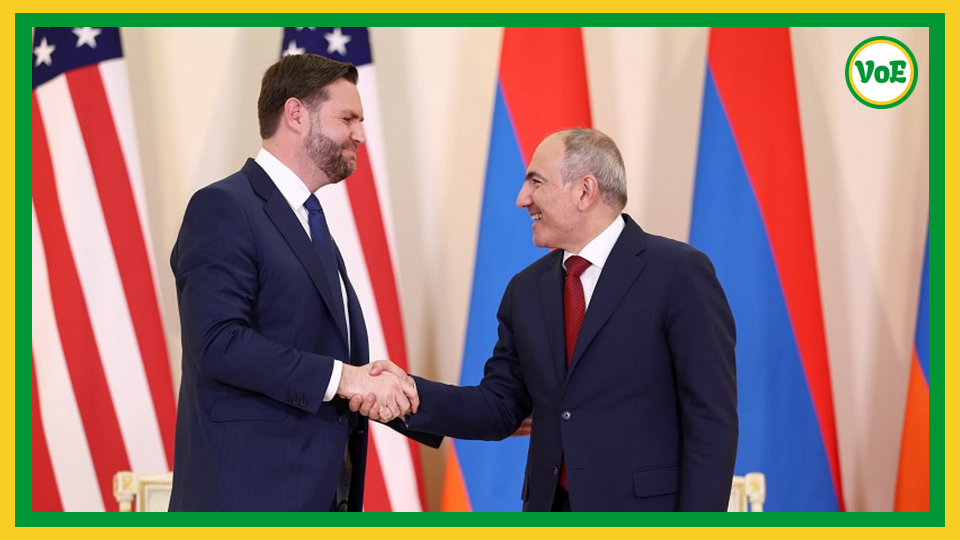
Vice President JD Vance’s trip to Armenia ended with three highly strategic agreements on a $9 billion nuclear energy partnership, a chip deal that led to a contentious AI datacentre project scaling its investment there by a factor of eight to $4 billion, and an $11 million surveillance drone sale. They also discussed implementing the “Trump Route for International Peace and Prosperity” (TRIPP), the strategic significance of which was elaborated on here, and parallel pipeline construction from the Caspian Sea.
That last detail wasn’t expanded upon apart from Vance declaring that “a lot of private capital is going to flow” into it, but this is assumedly part of a larger future plan to either risk Russia and Iran’s ire by building an underwater pipeline from Central Asia to Azerbaijan or a tanker fleet for the same purpose. In any case, the importance is that Armenia is poised to play a crucial role in facilitating transregional logistics between the US/EU/Turkiye and Central Asia, which challenges Russia’s regional influence.
Prime Minister Nikol Pashinyan is now on the verge of completing Armenia’s pro-American pivot, which he initiated after rising to power in a Colour Revolution in early 2018 and then unprecedentedly accelerated after Armenia’s loss in its latest war with Azerbaijan in late 2020. It’s with this in mind that the US rewarded Armenia by sending it these technologies, the symbolic importance of which Vance drew attention to prior to endorsing Pashinyan ahead of June’s next parliamentary election.
About that, “Armenia’s Next Parliamentary Elections Are Shaping Up To Be Another Flashpoint” since “Pashinyan’s potential democratic ouster could complicate and possibly even suspend TRIPP, thus plugging the geostrategic gap through which Turkiye is expected to inject Western influence along Russia’s entire southern periphery. Likewise, him retaining power would keep this gap open.” This explains why the US wants Pashinyan to win re-election and complete Armenia’s pro-American pivot.
That scenario would likely be followed by the replacement of most Russian companies’ shares in the Armenian market by their American rivals. Some might swiftly be forced out per the Venezuelan precedent that Foreign Minister Sergey Lavrov recently complained about and others like those in the energy sector might only be squeezed out after some time since a rapid replacement isn’t realistic. The triple purpose would be to harm Russian companies, reduce Russian influence, and expand US influence.
While the US is promising Armenia material prosperity, this might come with radical socio-cultural costs. Its subordination as a “Neo-Ottoman sanjak” might be inevitable if Pashinyan is re-elected, after which Azerbaijan and Turkiye could coerce him to “Turkify” society. This could begin by accepting the return of the ~200,000 Azeris who fled during the chaotic Soviet collapse (and their descendants), granting them equal language rights, and teaching in schools that Armenia is known to them as “Western Azerbaijan”.
If a Schengen-like deal is also agreed to between Armenia and Azerbaijan, perhaps even with Turkiye too if ties with Armenia are normalized under US mediation, then Armenia’s post-Soviet monoethnic society could become a thing of the past. As identity becomes a more important factor in contemporary politics at the domestic and international levels, many Armenians might feel uncomfortable with such a change if more become aware of its likelihood, which could lead to them tanking Pashinyan’s re-election bid.
Disclaimer: The views expressed in this article are author’s own and do not necessarily reflect the editorial policy of Voice of East.
Discover more from Voice of East
Subscribe to get the latest posts sent to your email.
Categories: Analysis, Geopolitics, International Affairs
Related Articles
-
 Putin’s Top Aide Patrushev: The Third Gulf War Could Destabilize Afro-Eurasia for Years
-
 Sri Lanka Wisely Rejected The US’ Request To Station Two Warplanes There
-
 Russia’s Top UN Representative Reminded The World Of The West’s Responsibility To Afghanistan
-
 Foreign Affairs Explained Why The Global South Won’t Fall Under Western Influence
 Voice of East
Leave a Reply