Poland’s Anxiety Grows Over The Future Of U.S. Troops On Its Soil
Policymakers fear that Trump might agree to reduce or even fully withdraw US troops from NATO’s Eastern Flank as part of a deal with Putin, which is why Poland wants a permanent American base.
Poland’s publicly financed TVP World reported on journalist Dorota Gawryluk’s claim that President Karol Nawrocki considered proposing a quid pro quo to Trump in Davos whereby his country would join the Peace Board in exchange for agreement on a permanent US military base. She’s unsure whether he did so, and in any case, his rival Prime Minister Donald Tusk ultimately decided against joining. Nevertheless, reading between the lines, Poland is apparently anxious about the future of the US troops on its soil.
TVP World reminded readers that “As of early 2026, there are around 10,000 U.S. troops stationed in Poland, primarily on a rotational basis.” The continued rotational aspect of their deployment has de facto resulted in a permanent deployment but can still lead to their withdrawal in the future in spite of Trump publicly considering sending more there during September’s meeting with Nawrocki in DC. The larger context concerns Polish fears about the ultimate outcome of the ongoing Russian-US talks.
Policymakers are worried about the possibility of the US agreeing to reduce its regional military presence or even fully withdraw all of its troops from there (including from Poland) as part of a deal with Russia, perhaps in exchange for it removing Oreshniks and/or tactical nukes from Belarus. That could facilitate a US-Russian Non-Aggression Pact that would de facto function as a NATO-Russian one given the US’ outsized role in the bloc and thus reform the European security architecture without Polish input.
For historical reasons, Poland fears that such a scenario could lead to a Russian invasion, after which the US might abandon Poland if it by then acquires stakes in Russia’s strategic resource sector per some of the deals that those two are discussing. Other reasons could be the US’ new prioritization of the Western Hemisphere and its secondary one of containing China in Asia. It unimportant that the preceding scenario is unlikely since all that matters is that this possibility shapes the formulation of Polish policy.
Poland’s Eastern Flank partners in Sweden, Finland, Estonia, Latvia, Lithuania, Romania, and Bulgaria share its concerns about this as proven by part of the first clause in the joint declaration that followed their inaugural summit in mid-December. It reads that “Russia’s strategic goals remain unchanged: to create a buffer zone stretching from the Arctic region through the Baltic and Black Seas to the Mediterranean”, the outcome of which they plan to thwart by hyper-militarizing NATO’s Eastern Flank.
Even if they foil Trump’s speculative plan to cede this “buffer zone” to Putin as part of the “New Détente” that they’re negotiating, that still wouldn’t resolve their subjective concerns about the US’ reduced or even fully withdrawn military presence from the Eastern Flank. In fact, it could even backfire by accelerating the aforesaid process if the US then concludes that the Eastern Flank can now ensure its own security without American troops. It’s for this reason why Poland wants a permanent US base.
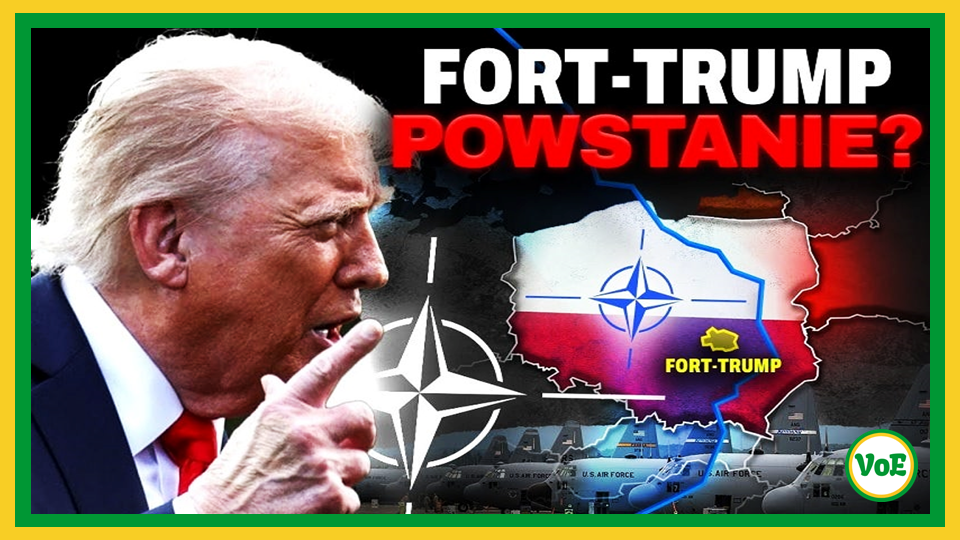
Defence Minister Wladyslaw Kosiniak-Kamysz claimed right before Davos that “Fort Trump” will be built in southwestern Poland, yet he clearly jumped the gun ahead of Nawrocki’s reportedly considered quid pro quo proposal by taking for granted that it’ll be shared with Trump and agreed to. It can’t be ruled out that this might happen, but as it stands, nothing of the sort is in the cards. Poland will therefore remain anxious about the future of US troops on its soil and all that entails for its perceived long-term security.
Disclaimer: The views expressed in this article are author’s own and do not necessarily reflect the editorial policy of Voice of East.
Discover more from Voice of East
Subscribe to get the latest posts sent to your email.
Categories: Analysis, Geopolitics, International Affairs
Related Articles
-
 Trump 2.0’s Vision Of “NATO 3.0” Perfectly Aligns With All Of The Administration’s Policies
-
 Why The Kremlin Views US ‘Opposition’ To Poland’s Nukes As A Feint
-
 A Lasting Political Solution To The Afghan-Pakistani War Is Extremely Unlikely
-
 Putin’s Top Aide Patrushev: The Third Gulf War Could Destabilize Afro-Eurasia for Years
 Voice of East
Leave a Reply