A Senior Russian Expert Outlines Moscow’s Assessment Of India’s Pro‑US Shift
His last words imply that Russia’s response to its potential loss of billions of dollars a year in energy and maybe also military-technical exports to India, which could be due to India prioritizing its own interests amidst unprecedented US pressure, might also displease India.
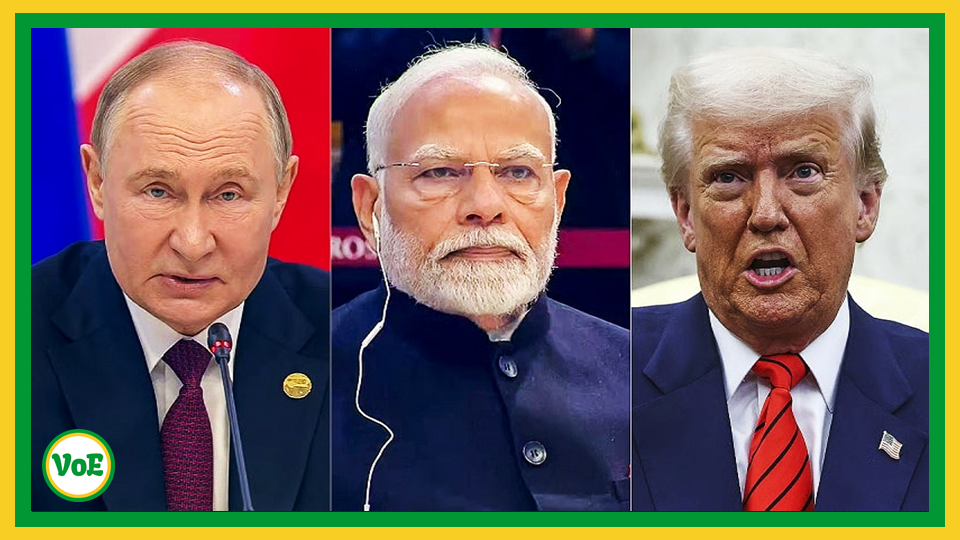
RT translated and republished a recent article by Fyodor Lukyanov on the subject of India’s real sovereignty. He’s widely considered to be one of Russia’s top experts, if not the number one, and is famous for moderating Putin’s Q&A sessions at every fall’s annual Valdai Club meeting. His article’s context concerns “India’s New Perceptible Alignment With Some Of The US’ Interests” in the energy, maritime, and military-technical domains in the weeks following early February’s Indo-US trade deal.
Approximately half of his article is devoted to describing the broader context with respect to Trump 2.0’s envisaged new world order, the US’ desired role for India therein, and a description of its multi-alignment policy between competing poles like the US and Russia. Lukyanov appears to go out of his way to be respectful of India in order to preemptively avoid offending its officials and representatives. Only then does he share his assessment of its real sovereignty in this very difficult international context.
In his words, “Moscow, too, is watching uneasily as India trims Russian oil purchases under US pressure. From a Russian perspective, such manoeuvring – one might more bluntly call it opportunism – can look like a lack of sovereignty, a willingness to accommodate another power’s interests at one’s own expense.” He then quickly adds, “But this judgment reflects a specifically Russian understanding of sovereignty”, which is “rigid and uncompromising”, and admits that it’s “increasingly rare” nowadays.
About that, Russia’s understanding of sovereignty is arguably due in large part to its natural resource wealth which enables it to achieve autarky if the decision is made, albeit possibly at the expense of falling behind in today’s tech race with uncertain consequences for its overall future competitiveness. In any case, having clarified that part of Lukyanov’s article, it’s important to report the next part where he then writes that “India’s understanding (of sovereignty), like that of many other states, is different.”
In his understanding of this national school, “Sovereignty does not necessarily mean refusing to bend under pressure; it means finding ways to realize one’s interests under less-than-ideal conditions. The core of those interests is internal stability and continued development, priorities that have become even more urgent amid global turbulence.” He thus concluded that “This is the practical reality of what is often called a multipolar world…look after your own first.”
Lukyanov’s closing advice is, “When dealing with partners, a calm, unsentimental approach is therefore essential. Acting in one’s own interest is not cynicism; it is normal state behaviour. Russia must do the same; steadily, confidently, and without illusions. Whether others approve is secondary. What matters is trusting one’s own judgment and acting accordingly.” As can be seen, he and by extension the Russian expert community that he represents are displeased with what India has done, but they understand it.
His last words imply that Russia’s response to its potential loss of billions of dollars a year in energy and maybe also military-technical exports to India, which could be due to India prioritizing its own interests amidst unprecedented US pressure, might also displease India. The only realistic scenarios in which Indian representatives might feel that way are if Russia ramps up energy and military-technical exports to China, not to mention explores doing the same with Pakistan, both of which can’t be ruled out.
Disclaimer: The views expressed in this article are author’s own and do not necessarily reflect the editorial policy of Voice of East.
Discover more from Voice of East
Subscribe to get the latest posts sent to your email.
Categories: Analysis, Geopolitics, International Affairs
 The Moment Of Truth Is Arriving In Russian-Armenian Relations
  The West Is Encircling Russia In The South Caucasus And Central Asia
  The US Is Making A Play For Belarus’ Most Strategic Export
  The Hormuz Ultimatum: Trump’s Final Push To Radically Reform NATO
  Voice of East
Leave a Reply