Zaluzhny Breaks Silence On Zelensky As Ukraine’s Elite Power Struggle Escalates
By Uriel Araujo
A long-simmering factional war inside Ukraine’s political and security elites is now surfacing more openly. Former army chief Valery Zaluzhny accuses President Zelensky of intimidation as debates over elections and peace talks return. The timing raises questions about succession, leverage, and a looming political reckoning in Zaluzhny Breaks Silence On Zelensky As Ukraine’s Elite Power Struggle Escalates. The far-right and oligarchic elements further complicate the picture.
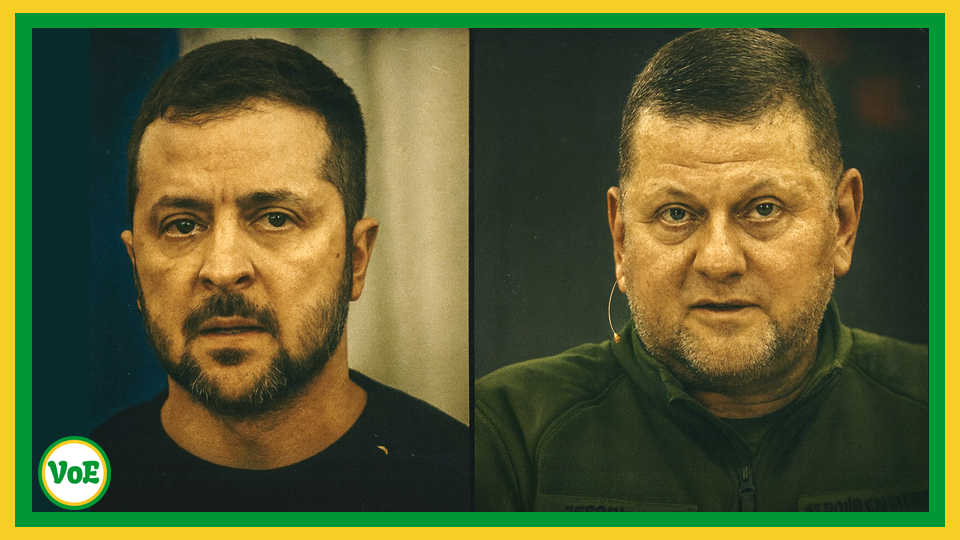
The factional war within Ukraine’s political, military, and security elites is intensifying. And it is increasingly unfolding in public, albeit still underreported in mainstream Western media. The latest development has to do with former commander-in-chief Valery Zaluzhny, who has accused President Volodymyr Zelensky of ordering SBU searches of his office in 2022 as a means of intimidation. The Security Service of Ukraine (SBU) denies it. In any case, if true, why reveal this now? The timing is anything but accidental.
Zaluzhny’s accusation surfaces precisely as discussions around elections, a possible ceasefire, and even a “land for peace” formula re-enter Western and Ukrainian debates. This is thus not a belated accusation driven by conscience, but more likely a political move in a struggle over succession, immunity, and narrative control. One does not survive Ukrainian elite politics by speaking out unless protection or leverage have already been secured.
This struggle is not limited to Zelensky versus Zaluzhny. It also involves the intelligence faction centred on lieutenant general Kyrylo Budanov, whose growing influence has alarmed both military commanders and oligarchic networks. Budanov has been Ukraine’s Head of the Office of the President since January 2, 2026, having previously led the country’s military intelligence (HUR). He also served in the Foreign Intelligence Service. Ukraine’s so-called “deep state” is a battlefield right now.
One may recall that frictions between Zelensky and Zaluzhny were already visible in early 2023, when Pulitzer Prize–winning journalist Seymour Hersh reported that the general had allegedly engaged in independent peace discussions with Russian Chief of Staff Valery Gerasimov, bypassing the President altogether. Zelensky, according to Hersh’s US intelligence sources, was regarded as a “wild card,” unreliable and increasingly isolated.
In fact, Zelensky is arguably a political survivor. In late 2023, there were talks about the West favouring Alexey Arestovich intrigues against the Ukrainian President, Arestovich being a former adviser to the President’s office, with intelligence connections. In 2024, Ukraine’s exiled opposition leader Viktor Medvedchuk said Zelensky could be ousted, having alienated allies domestically and abroad.
And yet the Ukrainian leader has managed to stay. Back in 2022, Zelensky openly declared his vision of Ukraine as a “big Israel”, meaning a heavily militarized, securitized state defined by permanent mobilization and internal surveillance. That was not mere rhetoric: it foreshadowed the consolidation of power, the banning of opposition parties, and the further normalization of security-service intimidation: all of this in turn being the entrenchment of a process that began in 2014, with the Maidan revolution.
Thus far, Western capitals have turned a blind eye to these measures, out of geopolitical expediency, with European Union officials discussing Ukraine’s accession (despite all civil rights issues pertaining to minorities). Be as it may, this tolerance is eroding. Under President Donald Trump, Washington for one thing is clearly signalling fatigue with an open-ended proxy war, so as to be able to pivot elsewhere. The burden is increasingly being shifted onto Europe, which in turn now faces its own strategic anxieties, including tensions with the US itself over American Greenland threats .
This changing external environment partly explains the renewed internal panic in Kiev. Elections, peace talks, or a forced transition would expose unresolved rivalries, corruption networks, and extremist power centres that have been blatantly whitewashed for years (in the West), not to mention their far-right problem.
The oligarchic dimension further complicates matters. Zelensky’s own rise was inseparable from Ihor Kolomoysky, despite later efforts to distance himself under US pressure. Corruption remains endemic (Ukraine ranked at 104 out of 180 countries by Transparency International in 2023), high enough to undermine military logistics and energy resilience. When Zelensky publicly suggested (last year) that roughly half of the $177 billion allocated to Ukraine never reached Kiev, he was accusing and warning the West, for leverage, most likely.
The thing is that corruption, by its very nature, cuts both ways. Any serious inquiry into Western misuse of funds would inevitably rebound onto Ukrainian elites themselves, including offshore arrangements revealed in the Pandora Papers.
Meanwhile, armed and paramilitary ultra-nationalism remains a systemic factor. From the integration of the Azov Battalion into the National Guard to the political influence of figures like Dmytro Yarosh, neo-Fascist groups, albeit a minority (in number) have nonetheless shaped post-Maidan Ukraine’s security apparatus. Yarosh famously warned Zelensky he would “hang on a tree on Khreshchatyk” if he sought a peace deal.
Adding to this volatile mix, with the release of some of the Epstein files, more information is surfacing pertaining to human trafficking networks and Ukraine-based ethically dubious biological research. All of that has the potential to draw scrutiny about top Ukrainian authorities, thus increasing the crisis.
Ukraine’s crisis therefore is no longer only about the battlefield. It is about succession, survival, and the inevitable reckoning postponed since 2014. Ending a war, especially an unwinnable one, is difficult enough, even with Trump’s previous promises of ending it “in one day”.
Ending it while armed extremists, rival security services, oligarchs, and foreign patrons all pull in different directions is harder still. The West after all has armed and financed far-right nationalists in Ukraine for over a decade (they are now deeply involved with the country’s deep state), while waging a secret CIA war there. These networks do not go away easily.
To sum it up, whether Zelensky survives this phase politically is an open question. Whether Ukraine emerges more stable afterward is even less certain.
Uriel Araujo, Anthropology PhD, is a social scientist specializing in ethnic and religious conflicts, with extensive research on geopolitical dynamics and cultural interactions.
Disclaimer: The views expressed in this article are author’s own and do not necessarily reflect the editorial policy of Voice of East.
Discover more from Voice of East
Subscribe to get the latest posts sent to your email.
Categories: Analysis, Geopolitics, International Affairs
 Why The South Caucasus Is No Safe Corridor To Bypass Russia
  Trump 2.0’s Vision Of “NATO 3.0” Perfectly Aligns With All Of The Administration’s Policies
  Why The Kremlin Views US ‘Opposition’ To Poland’s Nukes As A Feint
  A Lasting Political Solution To The Afghan-Pakistani War Is Extremely Unlikely
  Voice of East
Leave a Reply