Russia’s Setbacks Abroad Aren’t Due To The Special Operation: A Critique of the “Decline” Narrative
This popular narrative, which Foreign Affairs was one of the latest to push, is very misleading.
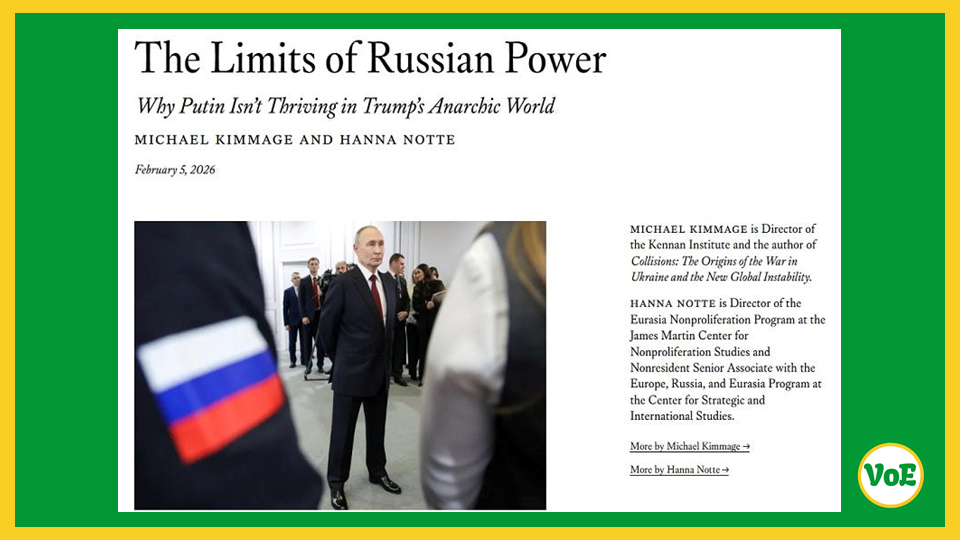
Foreign Affairs, the official magazine of the powerful Council on Foreign Relations that’s widely read among Western policy influencers and policymakers, recently published a piece about “The Limits of Russian Power”. The subtitle shows that it’s about “Why Putin Isn’t Thriving in Trump’s Anarchic World”. The narrative agenda is to portray the special operation as the catalyst of Russia’s supposedly irreversible decline by exaggerating its setbacks in Syria, Iran, Armenia–Azerbaijan, and Venezuela to that end.
The aforesaid setbacks, which many in Alt-Media dishonestly deny to this day, are then contrasted with the geostrategic status quo ante bellum for dramatic effect in order to maximally impress this narrative upon the reader. This preconditioning sets up the climax of fearmongering that Russia might risk World War III out of desperation to achieve some sort of victory in Ukraine “by striking Ukraine’s supply routes in eastern Europe or by attacking the U.S.-owned satellites that provide targeting information to Kyiv.”
This narrative might be convincing to some since it’s built upon the fact of Russia experiencing some setbacks over the past four years of its special operation, which Foreign Minister Sergey Lavrov alluded to in a recent interview, but their causes are misattributed and the consequence fearmongered about. They’re not due to the conflict but to the preexisting limits that had hitherto been underdiscussed such as Russia’s reasonable unwillingness to risk war with Turkiye, Israel, and the US over third countries.
Instead of typically cautious Putin inexplicably risking World War III by authorizing direct kinetic action against NATO despite already restraining himself after so many provocations worthy of such a response, however, he’ll likely continue what Lavrov’s friend Pepe Escobar coined the “snail offensive”. In parallel, far-reaching reforms might be planned for after the special operation ends to repair broken feedback loops within the military, intelligence, and diplomatic bureaucracies that perpetuated “wishful thinking”.
Even though Russia wasn’t ever going to risk war with Turkiye, Israel, and the US over Syria, Iran, and Armenia-Azerbaijan and Venezuela respectively, it might have been able to avert some of these setbacks had members of those institutions recognized strategic threats before they materialized. Instead, it looks like the same “wishful thinking” in which Putin cautioned his CIA analogue against indulging in summer 2022 remained a problem, thus explaining with cogency why Russia was caught flat-footed each time.
These systemic challenges to which attention was drawn during the special operation, which isn’t responsible for them since they far predate it, are reparable if there’s political will and proper oversight. Russia could then more effectively and flexibly adapt to them upon excising “wishful thinking” from the minds of its “deep state” members. Some future setbacks might also be averted while the policymaking basis would then be solidly established for sustainably restoring Russia’s lost influence in those regions.
Continued “wishful thinking” within Russia’s military, intelligence, and diplomatic bureaucracies, worsened by its “global media ecosystem’s” creation of alt-realities (“Potemkinism”) further tainting their already broken feedback loops, is responsible for its setbacks, not the special operation. Likewise, the consequence won’t be Putin attacking NATO out of desperation for some sort of victory in Ukraine, but him continuing the “snail offensive” and maybe planning far-reaching reforms after the conflict ends.
Disclaimer: The views expressed in this article are author’s own and do not necessarily reflect the editorial policy of Voice of East.
Discover more from Voice of East
Subscribe to get the latest posts sent to your email.
Categories: Analysis, Geopolitics, International Affairs
Related Articles
-
 Finnish President Stubb On The Transatlantic Rift: Can A ‘Global North’ Survive A Transactional US
-
 The TurkStream Plot: Why The Serbian ‘Exoneration’ Of Ukraine Doesn’t Add Up
-
 Poland Found Itself In A Pickle Amidst The US’ Reported Patriot Transfer Request
-
 Serbia Thwarted A Major Ukrainian Terrorist Attack Against Hungary
 Voice of East
Leave a Reply