The DROP Act Is An Unprecedented Weapon Of Financial Warfare Against Russia
Russia’s oil clients would be coerced under pain of sanctions into dumping it or scaling support for Ukraine if this bill passes.
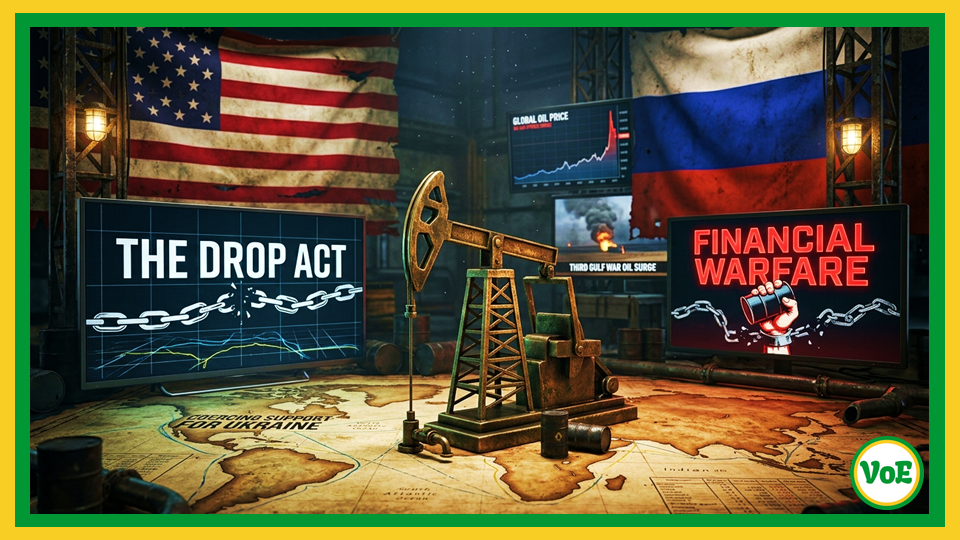
Anti-Russian hawk Michael McCaul, who importantly serves as the Chairman of the House Foreign Affairs Committee, announced the introduction in the House in early February of the bipartisan “Decreasing Russian Oil Profits” (DROP) Act that was earlier introduced in the Senate last December. If it passes, then Trump would have the power to impose targeted sanctions against anyone buying, importing, or facilitating the export of Russian oil, with exceptions only possible under one of three conditions.
The first is that the funds owed to Russia for such purchases must be credited to an account in their country, can only be used “to facilitate transactions in agricultural commodities, food, medicine, or medical devices”, and their government must commit to significantly reduce its purchase of Russian oil. The second is that such funds are used to either arm or rebuild Ukraine, while the third is that the government of their country provides significant economic or military support to Ukraine.
The first two conditions are unacceptable to Russia, but the third isn’t since it’s already selling oil to countries that significantly support Ukraine. The condition of providing significant economic and military support to Ukraine, which is an arbitrary distinction since no minimum level of each is described, in exchange for no targeted sanctions could lead to more arms and funds flowing into Ukraine. That could in turn impede the fulfilment of Russia’s goals and perpetuate the conflict unless Russia compromises.
Therein lies the purpose of the DROP Act: its authors envisage the US successfully coercing Russia’s remaining oil clients across the world into replacing their imports with other suppliers’ (since Russia wouldn’t realistically continue exports under the first two conditions) or scaling support for Ukraine. This makes it an unprecedented weapon of financial warfare, which could also be paired with Indian-like punitive tariffs if legal workarounds are employed, thus likely raising the number of parties that comply.
Market factors are the only real limits to this policy with respect to the targeted person’s/country’s exposure to the US’ financial market, which makes them susceptible to the DROP Act’s threatened sanctions, and the oil market’s ability to replace lost Russian exports. Therefore, even if most of Russia’s remaining oil clients are exposed to the US’ financial market, there might not be enough oil on the market for them to replace their imports so they might scale support for Ukraine instead of dump Russia.
That’s the most likely scenario amidst the oil price surge caused by the Third Gulf War and the US’ resultant flexibility in temporarily waiving its sanctions on India’s import of Russian oil, the primary target of its financial warfare in this regard thus far, for maintaining the viability of its partner’s market. The quid pro quo for sanctions waivers to other major trade partners could be a pledge to allocate some funds for arming Ukraine or rebuilding it once the oil crisis passes and they can more comfortably do so.
In any case, regardless of whether they dump Russia or scale support for Ukraine, the DROP Act is designed to create problems for Russia. They might not materialize as expected, or even at all in any significant way, but the takeaway is that this is a very hostile piece of legislation. Trump 2.0’s wielding of this unprecedented weapon of financial warfare against Russia, in the event that it passes (which isn’t guaranteed), could further complicate ties with Russia and possibly ruin their nascent rapprochement.
Disclaimer: The views expressed in this article are author’s own and do not necessarily reflect the editorial policy of Voice of East.
Discover more from Voice of East
Subscribe to get the latest posts sent to your email.
Categories: Analysis, Economy, Russia
Related Articles
-
 Rouble Emerges As Top-performing Currency, Signalling BRICS’ Challenge To Dollar Dominance
-
 Putin’s Economic Envoy Helped Break The Russian-US Impasse On Ukraine
-
 Beyond Geopolitics: Russian-Pakistani Ties Aren’t Aimed Against India
-
 Russia’s Potential Ban On Critical Mineral Exports To The West Likely Won’t Change Much
 Voice of East
Leave a Reply