The Shadow Front: How the Iran Crisis Is Fuelling The New Af-Pak Conflict
By Uriel Araujo
The deadly Kabul hospital strike signals a dangerous escalation in the Afghanistan-Pakistan conflict. As global attention centres on Iran, a parallel crisis deepens. Economic isolation, insurgency, and regional rivalries are converging in an already volatile region.
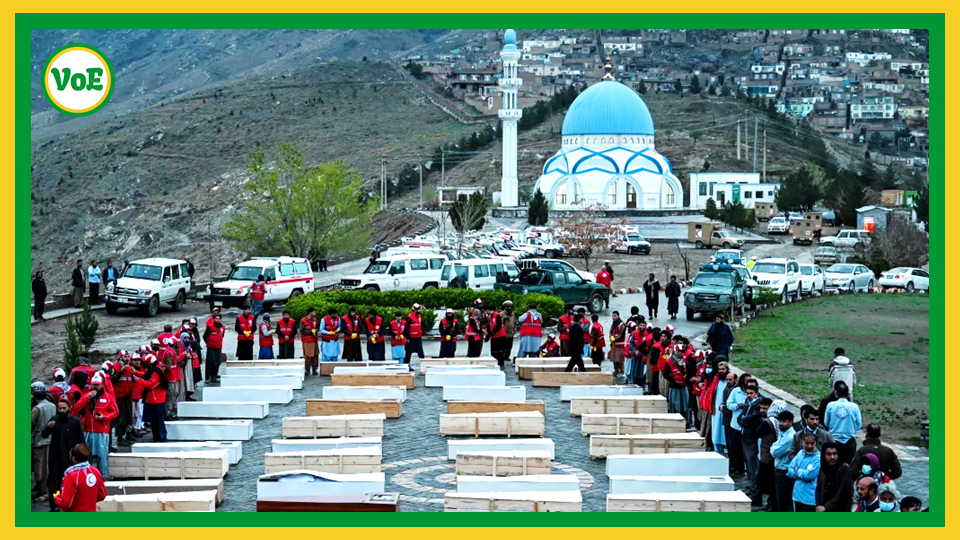
While global attention remains focused on the escalating confrontation involving Iran, a far less reported but deeply consequential crisis is nonetheless unfolding. Last week’s deadly strike on a hospital in Kabul, the worst single incident thus far in the Pakistan-Afghanistan conflict, made the news.
Michael Kugelman (a senior fellow for South Asia at the Atlantic Council) has described the Kabul hospital strike as emblematic of a conflict spiralling beyond control. He notes that tensions between the Pakistan authorities and the Taliban-led government in Afghanistan have intensified over Pakistan’s accusations that Kabul harbours Tehrik-e-Taliban Pakistan (TTP) militants.
In response, Pakistan has escalated with airstrikes inside Afghan territory, thereby further normalizing a pattern of cross-border retaliation. Kugelman emphasizes that both sides face internal pressures that make de-escalation politically costly, even as the humanitarian toll rises. The risk of miscalculation is growing.
As I have previously argued, the Afghanistan-Pakistan border is emerging as a new South Asia/Central Asia epicentre of instability, in what is being described as the new “Af-Pak” conflict. Earlier tensions between Iran and Pakistan had already demonstrated how quickly localized insurgencies can trigger interstate confrontation. In fact, as I wrote back in 2024, the reciprocal missile exchanges between Iran and Pakistan laid bare the underlying vulnerabilities in the region’s security framework.
Today the situation has deteriorated considerably. The ongoing war involving Iran has effectively isolated Afghanistan economically, as Mustafa Saqib (a visiting scholar at Rutgers University-Camden) argues. Trade routes through Iran, particularly via the Chabahar corridor, have been severely disrupted, choking Kabul’s already fragile economy. Thus, Afghanistan is becoming something of an economic island, with all the predictable consequences: rising prices, scarcity of essential goods, and increasing dependence on unstable cross-border trade with Pakistan.
The implications, however, go far beyond economics. The Iran crisis is actually amplifying the Af-Pak conflict in multiple manners.
Firstly, for one thing, it diverts global diplomatic attention, in a way. Mediators who might otherwise focus on Kabul and Islamabad are now mostly preoccupied with preventing a broader Middle Eastern war centred in Iran/Israel.
Secondly, Pakistan itself is under mounting pressure. As various analyses note, Islamabad is walking a “tightrope” (in Kamal Alam’s, a Fellow at The Institute for Statecraft, words) in the Iran conflict, balancing its ties with Tehran and its strategic alignment with Saudi Arabia and, to a lesser extent, the US.
Saudi Arabia reportedly has sought stronger commitments from Pakistan under a 2025 defence pact, which raises fears of deeper entanglement. Some analysts speculate that the Saudi authorities in Riyadh would seek to “proxify” Pakistan into attacking Iran. Pakistan then appears overstretched.
This overstretch is particularly dangerous in Balochistan, a region that connects Pakistan, Iran, and Afghanistan through porous borders. This area has long been a hub for overlapping insurgencies. Groups such as the Baloch Liberation Army (BLA) and Jaish al-Adl operate across borders, exploiting weak state control. The current Iran war has weakened Tehran’s grip over its Sistan-Baluchestan province, thereby emboldening such militant networks.
At the same time, Pakistan faces intensified insurgent activity at home. The BLA’s renewed campaign, alongside persistent TTP attacks, has strained security forces already engaged in cross-border operations in Afghanistan. Thus, a kind of feedback loop clearly emerges: external conflict weakens internal stability, which in turn reduces the capacity to manage external threats.
Adding another layer of complexity is the role of transnational jihadist groups such as the Islamic State Khorasan Province (ISKP) and its “war” against Balochi separatists, for instance. The convergence of militant actors across the “Greater Balochistan” region creates fertile ground for coordinated attacks that could radiate outward into Central Asia, India, or beyond. ISKP has already demonstrated its reach with high-profile attacks, including inside Iran in recent years.
Economically, the dual crises are devastating. Border closures between Afghanistan and Pakistan, ongoing since late 2025, have already disrupted trade flows. With Iranian routes now compromised, Afghanistan’s options are severely limited. This isolation drives inflation and exacerbates humanitarian suffering. Refugee flows are also likely to increase, placing additional strain on neighbouring countries.
Geopolitically, the implications are equally troubling. Pakistan’s multi-front challenges reduce its strategic flexibility, particularly at a time when it must navigate complex regional dynamics involving Iran, Saudi Arabia, and the US. As one analysis puts it, Islamabad risks being “stuck between allies” in the Iran conflict.
Meanwhile, broader regional initiatives, from energy corridors to infrastructure projects, face disruption. Saudi diplomatic consultations with regional partners, including Pakistan, highlight how seriously the escalation is being discussed across the region.
The US and Israel seem bent on setting the Middle East ablaze. Washington’s disastrous decision to join the Israeli campaign against Iran has obvious repercussions beyond the Middle East, affecting the whole of Eurasia and global markets.
In this context, thus far, the Afghanistan-Pakistan conflict remains the “other war the world is ignoring.” But for how long? The interplay between the Iran crisis and the Af-Pak theatre is not incidental; it is structural.
Each conflict clearly feeds into the other, thereby creating a cycle of instability that is very difficult to break. Underreported enough though it may be thus far, this interconnected crisis demands urgent attention from Eurasian actors and frameworks.
Uriel Araujo, Anthropology PhD, is a social scientist specializing in ethnic and religious conflicts, with extensive research on geopolitical dynamics and cultural interactions.
Disclaimer: The views expressed in this article are author’s own and do not necessarily reflect the editorial policy of Voice of East.
Discover more from Voice of East
Subscribe to get the latest posts sent to your email.
Categories: Analysis, International Affairs, Pakistan
Related Articles
-
 India-Pakistan Conflict Escalates, Entangled In Middle Eastern And Caucasian Geopolitical Rivalries
-
 Top Pakistani Officials Made Two Self-Discrediting Claims About The Pahalgam Terrorist Attack
-
 Here Is Why Russian-Pakistani Defence Cooperation Will Likely Remain Limited
-
 Here’s Why Other South Asian States Are Unlikely To Join The Pakistan Stream Gas Pipeline
 Voice of East
Leave a Reply