Why Donbass’ Final Status Remains The Last Hurdle In The Peace Plan
Provided that Zelensky and Ukrainskaya Pravda right before him are telling the truth, then it looks like the most meaningful elements of a Russian-Ukrainian peace deal and subsequent Russian-US “New Détente” were already agreed to in Anchorage, but contingent on Ukraine withdrawing from Donbass.
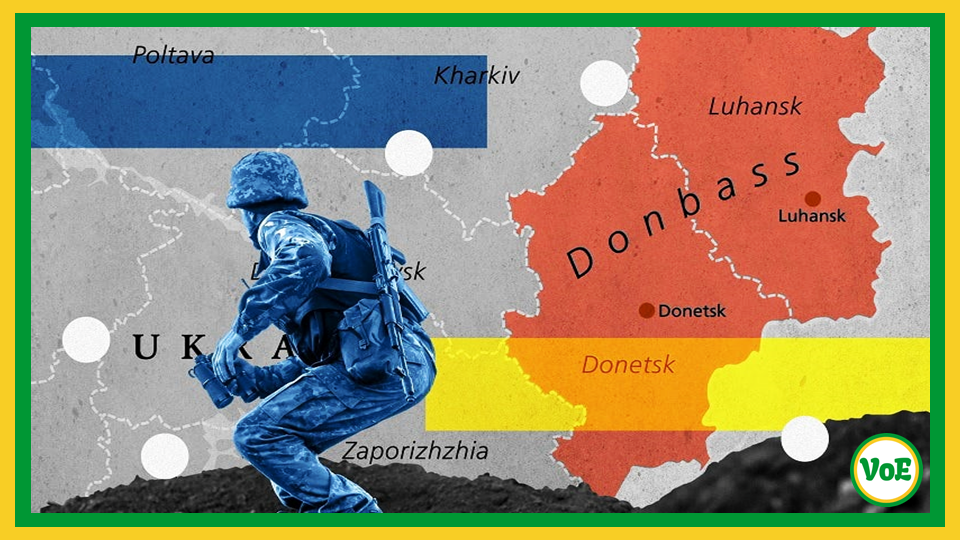
Zelensky confirmed to Reuters last week that reports about the US offering Ukraine security guarantees in exchange for it ceding Donbass to Russia are true but insisted that he’s not interested in such a deal. This follows Ukrainskaya Pravda earlier reporting the same, though they added that the US also promised Ukraine “a golden flood of money for reconstruction” that would turn it into a “paradise”. According to them, Putin and Trump agreed on this in Anchorage, but the Kremlin hasn’t confirmed it.
Nevertheless, Russian officials’ regular reference to the “Spirit of Anchorage” does indeed hint that some deal was agreed to, and Foreign Minister Sergey Lavrov recently accused the US of “suggesting that we make more concessions, and vast economic opportunities will open up to us after that.” This in turn can be interpreted as indirectly confirming that Russia already made some “concessions”, to use Lavrov’s parlance, though they were likely compromises in exchange for something from the US and Ukraine.
In any case, Zelensky’s confirmation to Reuters that the US is offering Ukraine security guarantees in exchange for ceding Donbass to Russia lends credence to the 28-point Russian-Ukrainian peace deal framework that circulated in the media late last year, some points of which align with precisely this idea. The same goes for the US providing reconstruction assistance to Ukraine. Given all that’s unfolded since then, especially after the Third Gulf War began, the following briefings will refresh readers’ memories:
* 8 March 2025: “Ukraine Already Kinda Has Article 5 Guarantees From Some NATO Countries”
* 21 November 2025: “Analysing All 28 Points Of The Leaked Russian-Ukrainian Peace Deal Framework”
* 14 January 2026: “Why’d The US Signal Support For NATO Troops In Ukraine?”
* 5 February 2026: “What Are The Odds Of Russia Agreeing To A Three-Tiered Ceasefire Enforcement Plan In Ukraine?”
* 16 March 2026: “What Did Peskov Mean When He Said That ‘Reality Changed’ Since The Istanbul Accords?”
In summary, the bilateral security agreements that Ukraine reached with a raft of NATO states all throughout 2024 for resuming their present level of military-logistical support in the event of another conflict already suffice for Article 5-like guarantees, which don’t obligate the dispatch of troops. In recent months, the US has been ramping up pressure on Russia despite rhetoric about wanting a deal, and this might be due to the potentially game-changing consequences of last August’s regional US megaproject.
The “Trump Route for International Peace & Prosperity” (TRIPP) will expand Western – including NATO – influence through the South Caucasus, the Caspian, and Central Asia via this trans-Armenian corridor linking NATO member Turkiye and its Azerbaijani ally. Readers can learn more about TRIPP here, which tightens the US’ encirclement of Russia in an unprecedented way. More than likely, the US expects Russia to “make more concessions” as a result to quote Lavrov, though it’s unclear whether it ultimately will.
Provided that Zelensky and Ukrainskaya Pravda right before him are telling the truth, then it looks like the most meaningful elements of a Russian-Ukrainian peace deal and subsequent Russian-US “New Détente” were already agreed to in Anchorage, but contingent on Ukraine withdrawing from Donbass. Therein lies the crux since Trump hasn’t yet coerced Zelensky into doing so, possibly hoping that Russia will “make more concessions” to incentivize him, but Putin might refuse and instead keep fighting.
Disclaimer: The views expressed in this article are author’s own and do not necessarily reflect the editorial policy of Voice of East.
Discover more from Voice of East
Subscribe to get the latest posts sent to your email.
Categories: Analysis, Geopolitics, Russia
 What Role Did Poland And The Baltic States Play In Ukraine’s Bombing Of Ust-Luga?
  It Really Doesn’t Matter Anymore Whether Serbia Joins NATO
  The New Energy Realpolitik: Lavrov’s Warning About Trump 2.0’s Quest For Global Dominance
  Beyond Pragmatism: Dmitry Trenin’s Sceptical Turn On Trump 2.0
  Voice of East
Leave a Reply