Trump 2.0’s Vision Of “NATO 3.0” Perfectly Aligns With All Of The Administration’s Policies
To be clear, NATO’s “return to factory settings” won’t automatically entail the success of the US’ grand strategy, but it must be understood in the context thereof as part of Trump 2.0’s global power play.
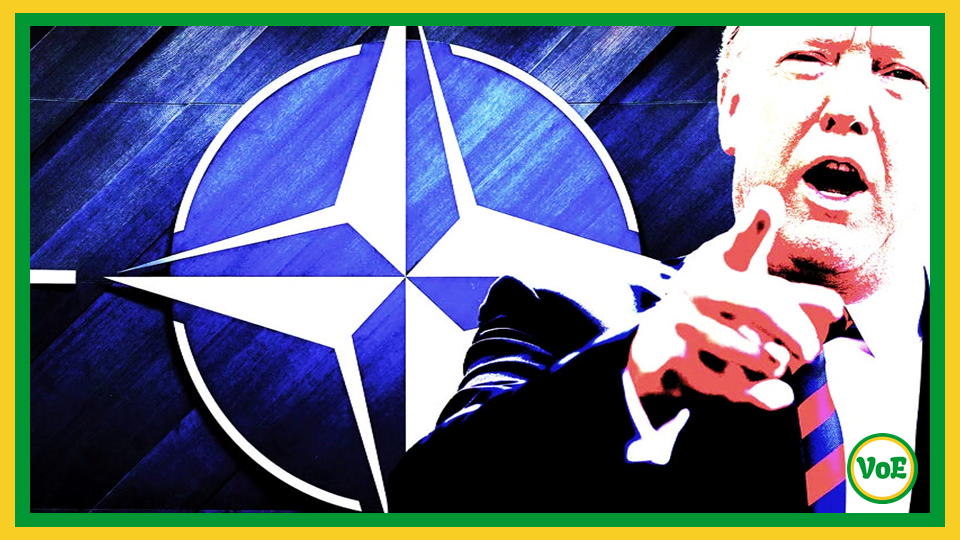
Politico reported in late February that the US wants NATO to “return to factory settings”, something that Under Secretary of War for Policy Elbridge Colby described as “NATO 3.0” earlier in the month, which they wrote about here. The idea is that NATO should return to focusing on defending itself instead of overextending itself in the Indo-Pacific, West Asia, Eastern Europe, and elsewhere. Trump 2.0 accordingly doesn’t want Australia, Japan, New Zealand, South Korea, or Ukraine invited to this summer’s summit.
Those five – the first four of which are the bloc’s official Indo-Pacific partners while the last is already an unofficial member of NATO as was argued here – would “still be invited to side events” and cooperation will continue, but NATO won’t focus on them as much as during its present “NATO 2.0” phase. The guiding vision is for NATO to shoulder more of the so-called burden of defending itself vis-à-vis Russia so that the US can refocus its military-strategic efforts on the Western Hemisphere and the Western Pacific.
Trump 2.0 doesn’t consider Russia to be a major threat like the Biden Administration did, but rather a manageable one, while the Western Hemisphere is assessed as having drifted too uncomfortably far from the US and China still represents its only systemic rival for shaping the ongoing global transition. This explains his team’s proposal for reforming the division of labour between the US and its allies within NATO, which perfectly aligns with all of their policies that can be reviewed by readers below:
* 14 November 2025: “The Pentagon’s European Drawdown Won’t Alleviate Russia’s Security Concerns”
* 6 December 2025: “The US’ New National Security Strategy Details How Trump 2.0 Will Respond To Multipolarity”
* 12 January 2026: “The ‘Trump Doctrine’ Is Shaped By Elbridge Colby’s ‘Strategy Of Denial’”
* 24 January 2026: “The US’ New National Defence Strategy Calls For A World War-Like Military Build-Up”
* 17 February 2026: “Rubio’s Munich Speech Detailed Trump 2.0’s Envisaged New World Order”
To summarize, the US has already begun gradually drawing down its force presence in Central & Eastern Europe, but it’s not expected to withdraw from this strategic space entirely since the plan appears to be to support the revival of Poland’s long-lost Great Power status as a regional bulwark against Russia. As for the rest of the continent, the National Defence Strategy declares that “European NATO dwarfs Russia in economic scale, population, and, thus, latent military power”, it just needs to be properly managed.
Therein lies the purpose of the bloc “returning to factory settings” as “NATO 3.0”, which is essentially “NATO 1.0” but adapted to the contemporary geostrategic situation in Europe. As NATO begins shouldering more of the so-called burden for defending itself vis-à-vis Russia, the US will keep placing pressure along its Chinese systemic rival’s periphery through trade deals and other forms of coercion to curtail or even outright deny its access to the markets and resources that it requires to continue rising.
The end goal is for China to agree to a lopsided trade deal with the US that would derail its superpower trajectory and consequently institutionalize its new junior partner status after “rebalance[ing] China’s economy toward household consumption” per the National Security Strategy. To be clear, this doesn’t mean that NATO’s “return to factory settings” will automatically entail the success of the US’ grand strategy, but it must be understood in the context thereof as part of Trump 2.0’s global power play.
Disclaimer: The views expressed in this article are author’s own and do not necessarily reflect the editorial policy of Voice of East.
Discover more from Voice of East
Subscribe to get the latest posts sent to your email.
Categories: Analysis, Geopolitics, International Affairs
Related Articles
-
 Why The Kremlin Views US ‘Opposition’ To Poland’s Nukes As A Feint
-
 A Lasting Political Solution To The Afghan-Pakistani War Is Extremely Unlikely
-
 Putin’s Top Aide Patrushev: The Third Gulf War Could Destabilize Afro-Eurasia for Years
-
 Sri Lanka Wisely Rejected The US’ Request To Station Two Warplanes There
 Voice of East
Leave a Reply