The West Is Encircling Russia In The South Caucasus And Central Asia
Timofei Bordachev insists that “a new Great Game is not in sight”, mostly because the West supposedly has no such intentions to compete with Russia along its southern periphery due to the existing challenges in competing with it elsewhere, but TRIPP debunks his assessment.
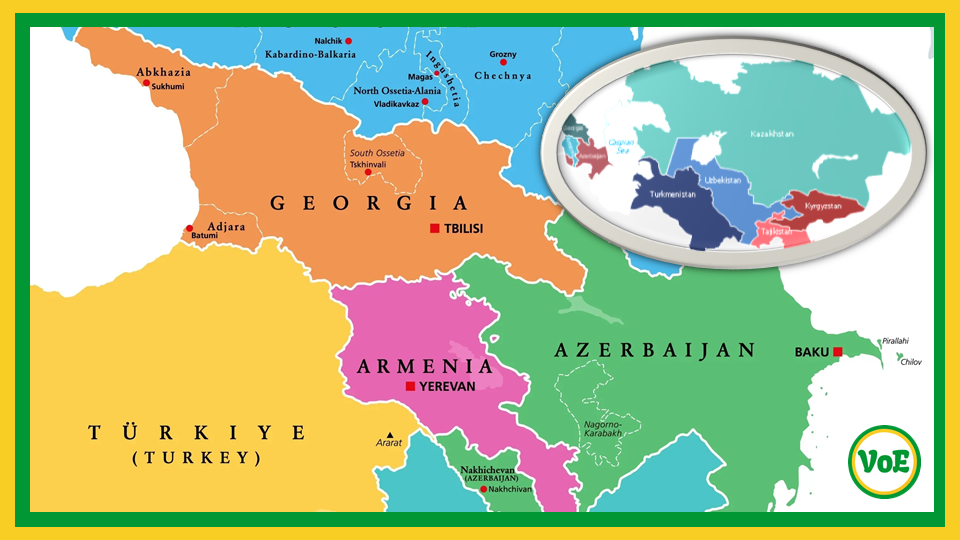
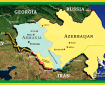
Top Russian expert Timofei Bordachev published another article on the South Caucasus and Central Asia titled “Eurasia’s Ghosts of the Great Game”. It follows his earlier piece that was responded to here. Just like that one, his latest conspicuously avoids even passive reference to last August’s “Trump Route for International Peace and Prosperity” (TRIPP), which is poised to expand Western – including NATO – influence into the South Caucasus and Central Asia. This will further the West’s encirclement of Russia.
In his latest article, Bordachev seeks to “dispel myths of great power rivalry in Central Asia, highlighting that sober, coequal engagement with the region will do Russia more good than a competition-centric approach ever could. Despite the fears, worries, and rhetoric, a new Great Game is not in sight.” His argument boils down to the West supposedly having no such intentions to compete with Russia in Central Asia due the existing challenges in competing with it elsewhere. TRIPP, however, debunks that.
The earlier-cited response to Bordachev’s prior piece on this subject enumerates five background briefings that readers should review to bring themselves up to speed. In short, TRIPP represents an economic corridor with dual military purposes for expanding Western influence along Russia’s entire southern periphery. More Central Asian trade with the West can lead to the creation of new elites and the co-opting of incumbent ones, and where trade goes, political and then military ties can easily follow.
Bordachev claims that “Russia’s principal adversaries either lack sufficiently important interests or are simply incapable of maintaining a physical presence that Moscow could consider a threat to its security interests.” That’s disproven by Kazakhstan’s announcement last December that it’ll begin producing NATO-standard shells, the implications of which were analysed here, the most important being that Kazakhstan might soon follow Azerbaijan’s lead in having its armed forces conform to NATO standards.
The creeping pace at which this might progress could deter Russia from preemptively thwarting it out of concern that whatever response it might ultimately employ could be spun as an “overreaction” and thus further accelerate this process if it fails to resolve the issue. It’s already troubling enough that there’s one NATO-standardized army on its southern periphery, which is also allied with NATO member Turkiye, but having another one along what’s the longest land border in the world would be even more troubling.
TRIPP serves as a military logistics corridor for advancing this goal, and if Iran is subordinated to the US upon the end of the Third Gulf War, then the North-South Transport Corridor’s eastern branch could be repurposed as a complementary one. The same goes for if “Major Non-NATO Ally” Pakistan subordinates Afghanistan, in which case US troops could return to Bagram Airbase for meddling in Central Asia, emboldened as they’d be by the opening of this other military logistics corridor to this landlocked region.
Even if TRIPP remains the West’s only military logistics corridor to Central Asia, it’s nevertheless a strategic threat to Russia’s national security interests, one which Bordachev still hasn’t addressed. Either he’s out of the loop, thinks that TRIPP is too sensitive for an expert of his calibre to publicly opine upon to avoid a regional overreaction, or concluded that Russia has entered a period of “managed decline”. Whatever the reason may be, its omission from his work is glaring, and it prompts worried speculation.
Disclaimer: The views expressed in this article are author’s own and do not necessarily reflect the editorial policy of Voice of East.
Discover more from Voice of East
Subscribe to get the latest posts sent to your email.
Categories: Analysis, Geopolitics, International Affairs
 The US Is Making A Play For Belarus’ Most Strategic Export
  The Hormuz Ultimatum: Trump’s Final Push To Radically Reform NATO
  Five Reasons Why The US Declined To Enforce Its De Facto Blockade On Cuba For Russia
  Why The South Caucasus Is No Safe Corridor To Bypass Russia
  Voice of East
Leave a Reply