Dmitry Trenin, A Top Russian Expert Issues A Clarion Call For Correcting Foreign Policy Misperceptions
It’s exceedingly rare for a Russian expert to constructively critique their country’s foreign policy.
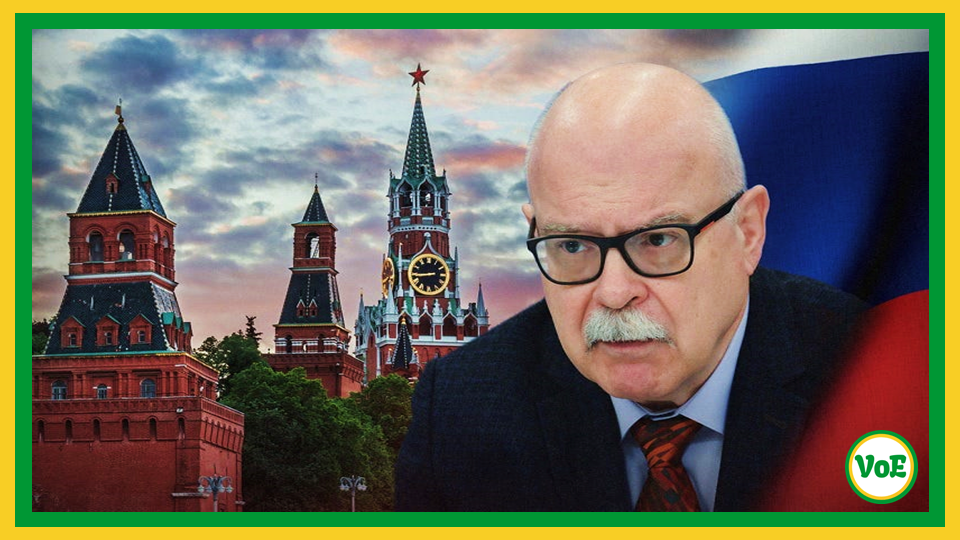
Top Russian expert Dmitry Trenin was just elected President of the Russian International Affairs Council (RIAC), one of his country’s top think tanks, and gave his first interview since then to Kommersant wherein he issued a clarion call for correcting foreign policy misperceptions. Constructive critiques of any sort are verboten among those who work in this field in Russia, with most instead preferring to tell their superiors whatever they expect to hear, thus leading to broken feedback loops with all that entails.
Trenin believes that Russia is in a “new world war” against “a significant part of the Collective West”, but he emphasized the “new” aspect of this conflict to differentiate it from the prior two about which the public has certain preconceptions that haven’t materialized in this one. These stakes justify him breaking the taboo of critiquing Russia’s foreign policy establishment. In his words, “a significant portion of foreign policy expertise—and not only in Russia—is either uninteresting or out of touch with reality.”
He then advised that “An expert in international relations must focus first and foremost on their own country—its needs in relation to the outside world, and the opportunities and risks that this world poses for it.” The next priority is adversaries like Ukraine and Europe. About the first, he said that “We need to better understand the roots of its behaviour. For example, why haven’t they surrendered yet? Clearly, external factors play a significant role here, but there are also internal ones.”
As regards the second, Trenin said that “Ever since the Soviet era, we’ve viewed Europeans as a kind of hostage to the US, poor, weak-willed vassals on whom Washington imposes its will. At the same time, there was a strong belief that they were pragmatic and wouldn’t sacrifice business for politics.” This perception was discredited during the special operation. Likewise, perceptions of Russian partners are also outdated, and the priority for updating them should proceed from concentric circles around Russia.
Thus, “We need to get to know the countries of the Caucasus, Kazakhstan, and Central Asia much better, and not simply dwell on memories of vacations in Pitsunda or strolls through Registan. We need to take this seriously, because our own ignorance or misunderstanding of our neighbours will create completely unnecessary problems in our immediate vicinity. Ukraine demonstrates how dangerous such an approach can be.” Next come China and India, other Asian states, and finally Africa and Latin America.
Trenin concluded by calling for a recalibrated foreign policy balance that “support[s] our partners and allies (against shared Western adversaries) while preserving the freedom to manoeuvre” between all sides. In connection with this, he warned against becoming China’s junior partner and also about Western plots to turn India against China. Ties with former Soviet Republics should also be reformed “in such a way that they bring far more benefit to Russia than the previous ‘center-periphery’ model.”
It’s exceedingly rare for a Russian expert to constructively critique their country’s foreign policy, let alone as sharply as Trenin just did through his innuendo that misperceptions about Ukraine “create[d] completely unnecessary problems in our immediate vicinity.” This also applies to Armenia-Azerbaijan and Kazakhstan might be next. Trenin’s election as President of RIAC might therefore lead to the long-overdue and likely painful repair of Russia’s broken feedback loops that have caused it so much trouble.
Disclaimer: The views expressed in this article are author’s own and do not necessarily reflect the editorial policy of Voice of East.
Discover more from Voice of East
Subscribe to get the latest posts sent to your email.
Categories: Analysis, Geopolitics, International Affairs
 The Moment Of Truth Is Arriving In Russian-Armenian Relations
  The West Is Encircling Russia In The South Caucasus And Central Asia
  The US Is Making A Play For Belarus’ Most Strategic Export
  The Hormuz Ultimatum: Trump’s Final Push To Radically Reform NATO
  Voice of East
Leave a Reply