Finnish President Stubb On The Transatlantic Rift: Can A ‘Global North’ Survive A Transactional US
He believes that the US leads what he now calls the Global West, which is more transactional, while the EU leads the Global North that wants to restore the liberal world order.
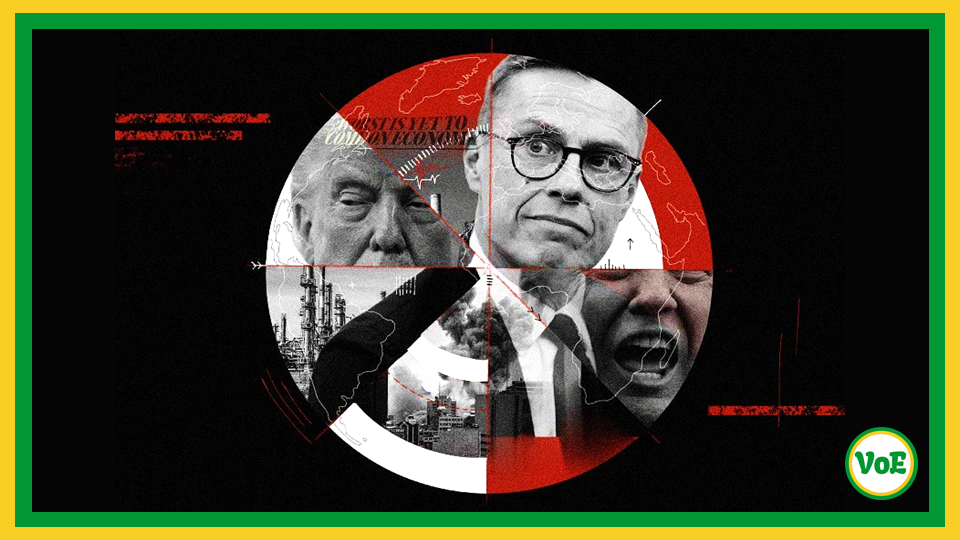
Finnish President Alexander Stubb has presented himself as a leader with outsized influence in the West due to his close friendship with Trump and the loud opinions that he often shares about global affairs. Last December, he published a lengthy piece at Foreign Affairs about “The West’s Last Chance: How to Build a New Global Order Before It’s Too Late”, which was analysed here. The takeaway is that he divides the world into the US-led Global West, the Chinese-led Global East, and the Global South.
Stubb just updated his model in a brief interview with Politico and now believes, after the US’ capture of Maduro and its decision to spark the Third Gulf War, that “We are probably seeing not a rupture, but a rift in the transatlantic partnership. So the global north takes the role of defending the liberal world order, whereas the global west becomes the U.S. that is more transactional.” He didn’t elaborate any further, but it’s still possible to extrapolate from that and assess his updated model.
While it can’t be known for sure, Stubb might be trying to separate the EU from the US with respect to how the Global South perceives the West as a whole in order to associate negative perceptions thereof with the latter, which he now describes as the Global West. It’s possible that he was influenced by Singaporean diplomat Kishore Mahbubani’s response to his Foreign Affairs article, “The Dream Palace of the West: Why the Old Order Is Gone for Good”, which was published in February and analysed here.
Mahbubani’s argument boils down to the West discrediting itself through its double standards towards the Ukrainian Conflict and the Gaza War, continuing to pursue counterproductive ideologically driven policies, and still arrogantly refusing to implement any meaningful reforms to global governance. By laying the blame for all that on Trump and differentiating the EU from the US as the Global North half of the West, Stubb probably believes that the vision articulated in his December’s article can still unfold.
The problem is that the EU isn’t powerful, influential, nor wealthy enough to convince the Global South to abandon multipolarity and restore the liberal world order instead of opting for China’s model of multipolarity or whatever one describes the US’ model as under Trump 2.0. There’s no European Army to coerce reluctant states, the EU’s soft power pales behind the US’, Russia’s, China’s, and even middle powers like Turkiye’s, and managing the global energy crisis will remain the EU’s fiscal priority for a while.
Nevertheless, Stubb is arguably correct in differentiating the EU and the US in terms of their approaches to global affairs right now as it’s indeed true that the first wants to restore the liberal world order while the second “is more transactional”, and this could even lead to friction between them with time. Some European leaders’ rhetoric inspired by their ideological paradigm risks enraging Trump like German Chancellor Friedrich Merz’s quip that the Third Gulf War “is not our war” just recently did.
Trump retorted that “Well, Ukraine’s not our war, we helped, but Ukraine’s not our war”, which ominously hints at hanging Ukraine out to dry at the expense of the EU’s perceived (keyword) interests. Going forward, while Stubb’s model accurately describes the differences between the US and the EU right now, the EU mustn’t forget that it’s the US’ junior partner and not its equal. Making the same mistake that Merz did could provoke Trump into teaching them a lesson that they’ll never forget.
Disclaimer: The views expressed in this article are author’s own and do not necessarily reflect the editorial policy of Voice of East.
Discover more from Voice of East
Subscribe to get the latest posts sent to your email.
Categories: Analysis, Geopolitics, International Affairs
Related Articles
-
 The TurkStream Plot: Why The Serbian ‘Exoneration’ Of Ukraine Doesn’t Add Up
-
 Poland Found Itself In A Pickle Amidst The US’ Reported Patriot Transfer Request
-
 Serbia Thwarted A Major Ukrainian Terrorist Attack Against Hungary
-
 Dmitry Trenin, A Top Russian Expert Issues A Clarion Call For Correcting Foreign Policy Misperceptions
 Voice of East
Leave a Reply