Will Trump Be “Neutralized” By The Deep State Amid Iranian Disaster?
By Uriel Araujo
The removal of top generals during the Iranian war chaos has triggered alarm over politicization of the US military. At the same time, tensions between Trump and the national security establishment appear to be intensifying. The question of governability is becoming increasingly difficult to ignore: the risk of institutional confrontation or of a “Watergate” or even “JFK” solution is no longer unthinkable.
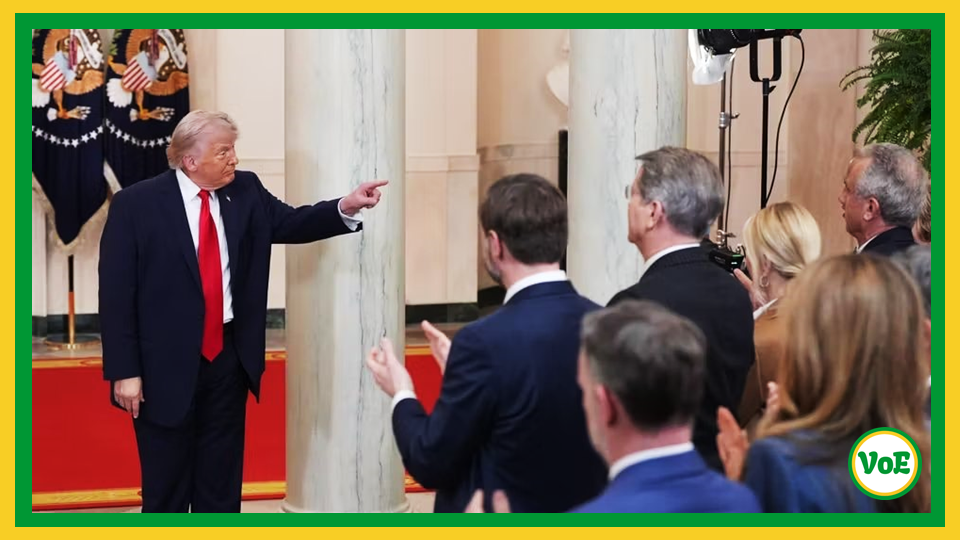
The United States is once again confronting a crisis of command at the highest levels of its military establishment, during an increasingly risky foreign war that threatens world peace and the global economy. One wonders then whether Trump can effectively govern and for how long.
Defence Secretary Pete Hegseth (now called “Secretary of War”) has recently overseen the removal of multiple top officers, including Army Chief of Staff Gen. Randy George and other senior commanders, amid reported disagreements over the conduct and scope of the disastrous war in Iran. In truth, there has been a pattern of dismissals inside the Pentagon for a while (and in the wider federal administration, by the way), signalling broader efforts to reshape the military, and civilian, hierarchy along ideological lines: the Iranian war intensified it.
The ongoing operation in Iran in any case has entered an even more dangerous phase, with mounting warnings from military professionals about the risk of escalation, potential ground operations, and the possibility of catastrophic losses. Retired Army Generals and others have described such a scenario as an “absolute disaster”. The International Energy Agency and economists warn of a “major threat” to the global economy, with potential GDP hits, supply chain disruptions, and recessionary pressures.
Thus, the stakes are not only military but civilizational even, from an American perspective, touching on the (already declining) credibility of US global leadership and the stability of the international system itself.
Tensions between civilian leadership and the military are of course hardly new in American history. Yet the current episode is something else. While President Donald Trump has openly pushed the idea of “regime change” in Iran, a regime change of sorts seems to be unfolding within the American state itself, ironically enough.
For a long time, analysts have described a “double government” operating in the US. The concept, articulated by Michael Glennon, refers to the enduring influence of the national security bureaucracy, which operates with a degree of continuity regardless of electoral outcomes. This structure, sometimes labelled the “Deep State,” has long been a source of friction with elected presidents, particularly those who seek to challenge entrenched policies or institutional prerogatives.
Trump’s governance, both in its first and current administration, has been defined by an overt confrontation with part of this very apparatus. His efforts to declassify sensitive files, overhaul intelligence agencies (with “purges” even), and reshape foreign policy priorities have been interpreted by supporters as a necessary corrective (“drain the swamp”). Critics, however, see them as destabilizing; they have also been part of his quest to enlarge his own presidential powers.
Historical precedents suggest that such conflicts can have far-reaching consequences. In fact, elements within the intelligence apparatus have, at times, acted to constrain, weaken or neutralize presidential authority. The fact that sectors of the intelligence community (“double government”) were involved in sabotaging and exposing the Nixon administration (via Watergate) is well documented, having long been studied by authors such as Jim Hougan, Shane O’Sullivan and Chris Collins. Likewise, there are circumstantial pieces of evidence — drawn from the HSCA (1979) and recently declassified JFK assassination files plus other documents — suggesting that rogue or individual elements within the intelligence community (particularly CIA) may have intersected with organized crime in the events that lead to the neutralization of President Kennedy.
Considering the stakes, a scenario where Trump would be “watergated”, “bidened” or even somehow “kennedied” is therefore not too far-fetched.
The current combination of internal purges, military pressure, and institutional mistrust creates a volatile environment at the very least. The possibility of constitutional pushback, including impeachment proceedings or other devices (even questioning the Commander-in-Chief sanity, for instance) cannot be dismissed outright. Nor can the more subtle forms of bureaucratic resistance, ranging from leaks to operational slowdowns or sabotage, for one thing.
The United States has in fact been experiencing a steady erosion of political legitimacy in recent years. The controversies surrounding former President Joe Biden’s cognitive condition and the reports about a “triumvirate” governing in his stead were serious enough. Trump’s return to power (after three still unresolved assassination attempts) did not resolve these concerns.
Meanwhile, the disruption of the Strait of Hormuz has already triggered significant shocks in global energy markets, with oil prices surging and inflationary pressures mounting. Economists warn of a potential global downturn, while analysts highlight the strain on US alliances and military resources. In such a context, coherent leadership is a hard necessity.
The United States, albeit declining, is still the world’s most powerful nation, and it finds itself navigating a moment of profound uncertainty today. The outcome of the ongoing Iranian war will not only shape the trajectory of this conflict but also arguably determine the future of American governance itself.
One may recall that Trump himself has, not so subtly, flirted with “coup” ideas, regarding the upcoming elections, with talks about “taking over” it. A full-blown coup against his own erratic presidency amid a war remains unlikely thus far. It remains to be seen how and when the American system (including the “double government”) will seek to correct its own dangerous path.
Uriel Araujo, Anthropology PhD, is a social scientist specializing in ethnic and religious conflicts, with extensive research on geopolitical dynamics and cultural interactions.
Disclaimer: The views expressed in this article are author’s own and do not necessarily reflect the editorial policy of Voice of East.
Discover more from Voice of East
Subscribe to get the latest posts sent to your email.
Categories: Analysis, International Affairs, Iran
 Commodities Over Principles: The Economic Logic Behind The UNSC Vote On Iran
  How Likely Is It That The US Will Contain Turkiye After It’s Done With Iran?
  Iran’s Strikes On The UAE Exposed The Limits Of BRICS Unity
  How US Military Action Against Iran Serves The Grand Strategy Of Containing China
  Voice of East
Leave a Reply