Polish-German Reparations Dispute: Poland’s Military-Industrial Complex As A Strategic Claim
Germany could subsidize Poland’s military-industrial complex as a form of reparations.
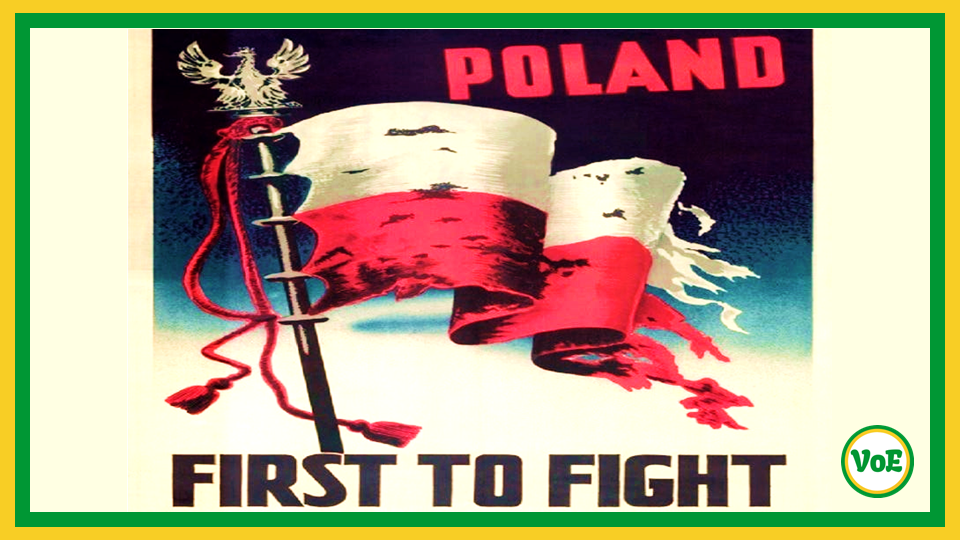
Poland’s “Law & Justice” (PiS) party, which is its leading (but very imperfect) conservative-nationalist force, has in recent years revived the issue of German World War II reparations to Poland. This was unsuccessfully pushed with gusto back when they controlled the presidency and parliament, but nowadays they only retain hold of the first through Karol Nawrocki, their nominally independent ally. It was he who just brought this issue up once again during his trip to Germany in mid-September.
He creatively proposed that “Germany could start paying reparations by building the potential of the Polish arms industry and strengthening NATO’s eastern flank. This is not a whole recipe, but a beginning.” For background, Germany considers the issue closed after the “Polish People’s Republic” waived its right to reparations in 1953 in exchange for recognition of their new border, but PiS argues that this was illegitimate due to what post-communist Poland considers having been the Soviet occupation back then.
They also more compellingly point to German reparations to Holocaust survivors and Namibia (for the colonial-era genocide) as proof of a double standard that they hope will embarrass Germany enough to get it to finally pay reparations to Poland too. Polish Foreign Minister Radek Sikorski, who represents the liberal-globalist “Civic Coalition”, lamented that “although morally Poland deserves redress for German crimes during World War Two, legally the matter is unfortunately hopeless.”
As a reminder, approximately 6 million Poles were killed by the Nazis during World War II, amounting to around 1/5 of the pre-war population, the largest percentage of any country. Poles were also the first victims of the Nazis’ genocides, having been targeted for physical extermination even before the blitzkrieg of 1 September 1939 as proven by the Special Prosecution Book – Poland, which led to Operation Tannebnerg and the Intelligenzaktion. These predate the “Final Solution” for genociding Jews.
While some claim that Germany’s cession of what Poland considers to be the “Recovered Territories” was a form of reparations, this was actually agreed to by the Allies at Potsdam as compensation for Poland’s loss of what it considers having been the “Kresy”, or “Eastern Borderlands”. This half of interwar Poland was divided between the now-former Soviet Republics of Lithuania, Belarus, and Ukraine. It was the homeland of many kings, military leaders, and cultural figures who shaped Poland’s civilization-state.
Returning to the present, Nawrocki’s creative solution to the Polish-German reparations dispute that his PiS allies revived in 2022 aims to have Germany redistribute to Poland some of the wealth that it earmarked for remilitarization, thus more quickly modernizing his country’s military-industrial complex. Referencing NATO’s eastern flank is meant to suggest that Germany has a shared military-strategic interest (at least as its elite see it) in strengthening Poland’s role as the bloc’s anti-Russian vanguard.
It now commands NATO’s third-largest army after its own militarization and spends more of its GDP on defence than any other member, but this could be financially burdensome to maintain, ergo the proposal for much wealthier Germany to subsidize this on reparations pretexts. Germany might still refuse for reasons of national prestige, but if Nawrocki convinces his ally Trump that Poland can lead Russia’s containment in Europe after the Ukrainian Conflict ends, then the US might coerce it into compliance.
Disclaimer: The views expressed in this article are author’s own and do not necessarily reflect the editorial policy of Voice of East.
7 Courses in 1 – Diploma in Business Management

Discover more from Voice of East
Subscribe to get the latest posts sent to your email.
Categories: Analysis, Geopolitics, International Affairs
Related Articles
-
 Brazil-Russia Nuclear Diplomacy Challenges Washington’s Hemispheric Dominance
-
 Trump 2.0 Must Urgently Declare Its Position Towards Poland’s Nuclear Weapons Plans
-
 A Venezuelan‑Style Iran Oil Blockade Could Let The US Divide And Rule RIC
-
 Poland’s Anxiety Grows Over The Future Of U.S. Troops On Its Soil
 Voice of East
Leave a Reply