Why Russia’s Syria Strategy Goes Far Beyond Protecting Its Military Bases
They’re all connected to its role in jointly building the “New Syria”.
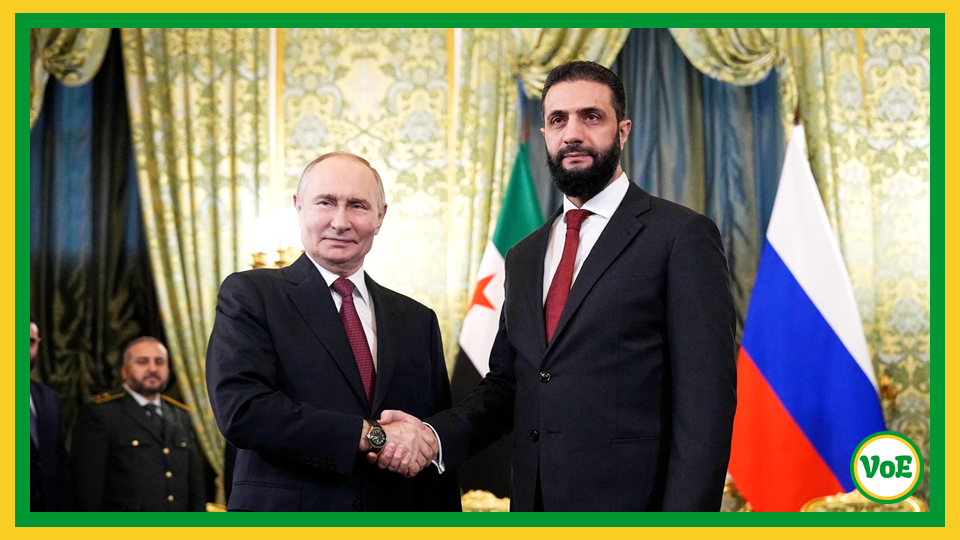
Syrian President Ahmed “Jolani” al-Sharaa’s second trip to Moscow in several months was widely interpreted as having to do with the future of Russia’s air and naval bases there. That may be true, especially since they play a practically irreplaceable logistical role for Russia’s “Africa Corps” that’s active in several places across the continent, but its interests in Syria go far beyond that. As Sharaa himself emphasized during his first meeting with Putin, he envisages Russia helping to build the “New Syria”.
This grand goal was analysed here at the time and can be summarized as a joint post-modern “nation-building mission” similar in spirit to the dozens that Russia’s Soviet predecessor was famous for across the Global South during the Old Cold War. Replicating this approach in today’s Syria advances several interconnected Russian interests, not least of which is the preservation and expansion of its business activity there. This is of outsized significance nowadays given the US-led West’s anti-Russian sanctions.
Making money is important, but benefiting Syria and its people in the process would prove that Russian businesses can be relied upon to assist other conflict-afflicted countries with their reconstruction, thus deepening Russia’s ties with such states and ideally widening its range of partnerships. This respectively concerns the Central African Republic and the Alliance of Sahelian States where Russia already enjoys such ties and the Democratic Republic of the Congo and Sudan whose reconstruction it hopes to aid.
What’s so remarkable about Russia’s role in jointly building the “New Syria” is that many expected the loss of its influence there shortly after Assad’s downfall. Sharaa’s partnership with Putin in this regard therefore serves as an example to other states where Russia might also experience similar setbacks, such as post-Maduro Venezuela and possibly soon Iran, that they too can benefit by preserving and expanding its influence. The Syrian precedent shows that the US won’t always force them to cut ties with Russia.
Post-Maduro Venezuela might be coerced to reduce them due to much greater US pressure upon it driven by the “Donroe Doctrine” of dominating the Americas, but it’s notable that Russia confirmed that diplomatic ties remain intact and military-technical cooperation continues. Those newly US-aligned states that follow the pragmatic model pioneered by Sharaa can more effectively avert disproportionate dependence on the US and their other patrons and thus maximize their political flexibility.
This demonstration effect is expected to be attractive to many countries, both those in similar situations as Syria (whether newly US-aligned and/or conflict-afflicted) and those that aren’t (such as geopolitically neutral and relatively stable Global South countries), which can aid Russia’s geopolitical balancing act. Russia’s soft power might also rise within the international Muslim community, or Ummah, after its state and non-state members alike witness mutually beneficial cooperation between Islamist Syria and Russia.
To wrap it all up, Russia’s role in jointly building the “New Syria” advances many more of its interests than retaining its military bases there, though that’s not to say that the latter aren’t important. What Russia wants to do is preserve and expand its business activity there, inspire a wide range of countries to partner with it after seeing the benefits that its businesses can bring to newly US-aligned and/or conflict-afflicted states, and strengthen its soft power in the Ummah. These goals are reasonable and achievable.
Disclaimer: The views expressed in this article are author’s own and do not necessarily reflect the editorial policy of Voice of East.
Discover more from Voice of East
Subscribe to get the latest posts sent to your email.
Categories: Analysis, Geopolitics, International Affairs
 The US Is On The Brink Of Subordinating Cuba
  Five Insights Into The Trilateral Russian-Ukrainian-US Talks
  The Shadow Of Chemical Warfare: Why Moscow’s Allegations Against Kiev Demand Serious Scrutiny
  Nawrocki Sounds Alarm on German Hybrid Warfare Targeting Polish Sovereignty
  Voice of East
Leave a Reply