Russia’s BRICS Sherpa Debunks Speculation About The Bloc Turning Into A Security Alliance
The timing comes amidst continued dialogue with the US and its role in mediating between Russia and Ukraine, which could abruptly end if temperamental Trump’s threat perception of BRICS is once again exacerbated given how capricious he’s proven himself to be, ergo the need to assuage his fears.
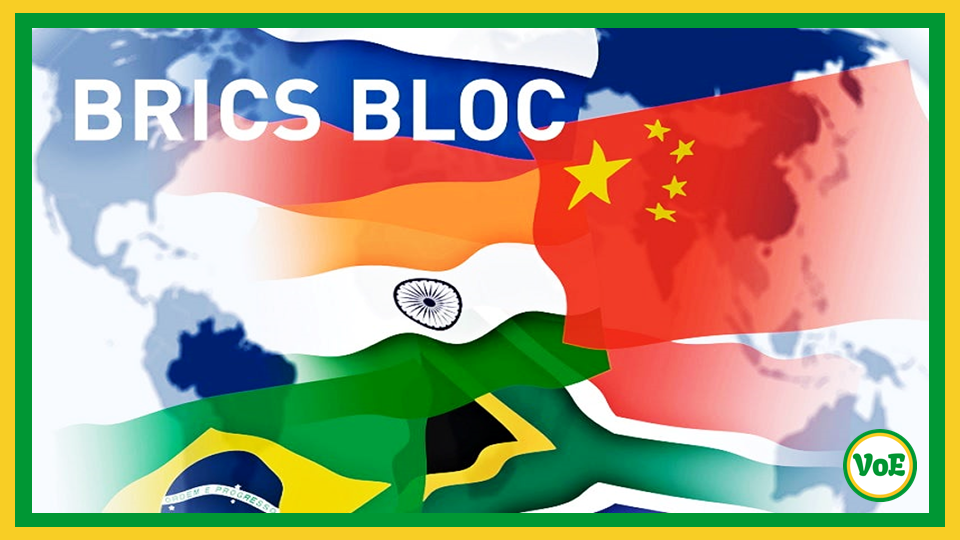
Sergey Ryabkov, who serves as both Deputy Foreign Minister and BRICS Sherpa, recently clarified that “I would like to remind you that BRICS is not a military union and not a collective security organization with collective defence commitments. It has never been planned as such, and there are no plans to transform it for the purpose.” He also confirmed that “As far as the recent naval exercise in South Africa is concerned, BRICS members participated in it as sovereign nations. It was not a BRICS event.”
The first part refers to the speculation that BRICS will turn into a security bloc, the goal of which isn’t just absent from its statements but is also very difficult to achieve due to the membership of rival pairs like Egypt-Ethiopia and Iran-UAE. Nevertheless, Foreign Minister Sergey Lavrov’s friend Pepe Escobar passed off as fact in an article for publicly financed Sputnik last September that “BRICS/SCO will eventually merge in the long term”, thus misleading many folks into thinking that BRICS has SCO-like security goals.
As for the second part of what he said, this relates to the spree of false reports about January’s drills off the South African coast, which many wrongly described as “BRICS naval drills” due to those being the only countries invited to participate. As was explained here, “South Africa allowed this false perception to spread as a symbolic act of defiance against Trump given his hatred of BRICS and to signal to the domestic audience that their country has friends across the world amidst its tensions with the US.”
Ryabkov is one of Russia’s top diplomats, its point man for BRICS, and a potential replacement for Lavrov whenever he retires, so his words about Russian foreign policy carry immense weight. This is especially relevant as regards BRICS, the portrayal of which within Russia’s “global media ecosystem” has hitherto been inordinately shaped by the soft power approach known as “Potemkinism”, or the creation of alternative realities for strategic purposes.
Sputnik arguably allowed Pepe to pass off as fact his speculation about BRICS eventually merging with the SCO for precisely this reason since the perceived authority associated with declaring this on one of Russia’s publicly financed international media flagships would lead to many assuming that it’s true. After Rybakov’s official clarification that no such plans exist nor ever have, however, it’s very possible that this aspect of “Potemkinism” – the creation of alternative realities about BRICS – might soon end.
That might not be an arbitrary decision, but a strategic one given the context. Trump threatened 100% tariffs on BRICS states in November 2024 and again in January 2025 due to his threat perception of the group. The US has since resumed talks with Russia and even begun mediating between it and Ukraine, but Trump is infamously capricious, so he might abandon these efforts if his threat perception of BRICS is once again exacerbated. Russia therefore has an interest in preemptively assuaging his fears.
To that end, it’s even reportedly considering a limited return to the dollar system as part of a grand compromise with the US, but Kremlin spokesman Dmitry Peskov said that any such scenario requires the US to lift its prohibition on Russia’s use of that currency and it would then have to compete with others. In any case, the takeaway is that BRICS isn’t radically de-dollarizing nor turning into a security bloc, and Russia’s latest clarification of the latter reality is likely designed to placate temperamental Trump.
Disclaimer: The views expressed in this article are author’s own and do not necessarily reflect the editorial policy of Voice of East.
Discover more from Voice of East
Subscribe to get the latest posts sent to your email.
Categories: Analysis, Geopolitics, International Affairs
Related Articles
-
 Slovakia And Hungary Shouldn’t Be Fooled By America’s Feigned Friendship
-
 Who Really Leads NATO Now? The Strategic Risks Of America’s Half‑Exit From Europe
-
 Rubio’s Munich Manifesto: Civilizationalism And The Architecture Of Trump 2.0’s World Order
-
 Brazil-Russia Nuclear Diplomacy Challenges Washington’s Hemispheric Dominance
 Voice of East
Leave a Reply