The Hawk vs. The Pragmatist: Whose Advice Will Putin Follow?
He can either escalate as far as accidentally sparking World War III, compromise at the cost of leaving some of his stated objectives unfilled, or keep everything about the special operation the same but at the risk of a series of latent crises spiralling out of control if they’re not soon adequately addressed.
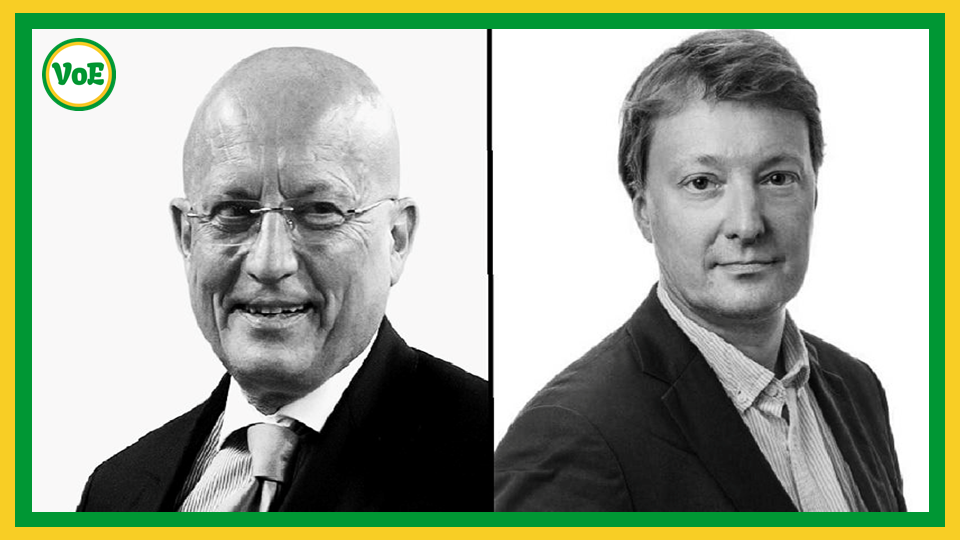
Sergey Karaganov and Timofei Bordachev are two of Russia’s most esteemed experts. Both are members of the Valdai Club, Karaganov as a founder and Bordachev as a Programme Director, and they each believe that the US is in decline. Another commonality between them is their belief that lasting peace with Ukraine, and thus by extension its Global Western and especially Western European patrons, isn’t possible. Where they differ, however, is in their advice about what Russia should do.
Karaganov has become famous for arguing that Russia should outright nuke Europe in a first strike or, more recently, begin with a conventional strike to make its elites truly fear Russia and then follow up with nukes if they retaliate. By contrast, Bordachev argued in a recent analysis for Vzglyad that was translated and republished by RT (just as Karaganov’s aforementioned article was less than a week prior) that Russia should “take advantage of [the US’] temporary willingness to compromise” and strike a deal.
If Putin takes Karaganov’s advice, then the same Third World War that he’s done his utmost to avert could quickly follow given the unbelievability that Trump would let Russia nuke NATO without retaliating, especially since that would doom his cherished legacy by making him the president who “lost Europe”. If he takes Bordachev’s advice, then perhaps there’d be “peace for our time” like Chamberlain infamously hoped for after Munich, but the terms might place Russia at a disadvantage if there’s another conflict.
The middle ground between Karaganov and Bordachev is to carry on until more, if not all, of Russia’s maximalist goals as declared at the start of the special operation are fulfilled. While that might seem the most reasonable approach to many, the five geostrategic challenges that it now faces as outlined here might lead to a series of crises even more serious than the Ukrainian one if it’s unable to adequately address them due to the ongoing conflict. The question of what to do is thus very difficult to answer.
In the order that they were mentioned, the appeal of Karaganov’s advice is that it might indeed spook the Europeans into dumping Ukraine so long as it turns out that the US was bluffing about Article 5’s sacrosanctity all along; Bordachev’s could enable Russia to focus on adequately addressing the abovementioned five geostrategic challenges; while the middle ground might lead to the frontlines collapsing and all of Russia’s goals being fulfilled so long as NATO doesn’t intervene to avert that.
As for their risks, Karaganov’s advice could very easily lead to World War III; Bordachev’s could place Russia at a disadvantage if (or perhaps when) there’s another conflict depending on the terms that are agreed to for peace; while the middle ground could see the five geostrategic challenges that Russia now faces metastasize into a series of crises even more serious than the Ukrainian one if they’re not adequately addressed due to the ongoing conflict. Putin will have to carefully weigh their pros and cons.
He’s averse to escalation so Karaganov’s advice is likely the least attractive to him, thus leaving Bordachev’s and the middle ground between them. Putin seems to want the best of both in the sense of the compromise that Bordachev advises (incentivized by a possible resource-centric Russian-US Strategic Partnership afterwards), but at the better terms that continuing the special operation might provide, namely control over Donbass at minimum. It’s therefore difficult to predict what he’ll do.
Disclaimer: The views expressed in this article are author’s own and do not necessarily reflect the editorial policy of Voice of East.
Discover more from Voice of East
Subscribe to get the latest posts sent to your email.
Categories: Analysis, Geopolitics, Russia
Related Articles
-
 Russia Faces Five Geostrategic Challenges As The Special Operation Enters Its Fifth Year
-
 How The US-Azerbaijan Partnership Threatens Russia’s Southern Flank
-
 What Are The Odds Of Russia Agreeing To A Three-Tiered Ceasefire Enforcement Plan In Ukraine?
-
 Lavrov Exposes Europe’s Plot to Subvert Trump’s Ukraine Peace Plan
 Voice of East
Leave a Reply