Here’s How Karabakh Became The Catalyst Of Russia’s Southern Peripheral Setbacks
The previously unresolved Karabakh Conflict might in retrospect be seen as a several-decades-delayed grand strategic game-changer that revolutionized regional geopolitics.
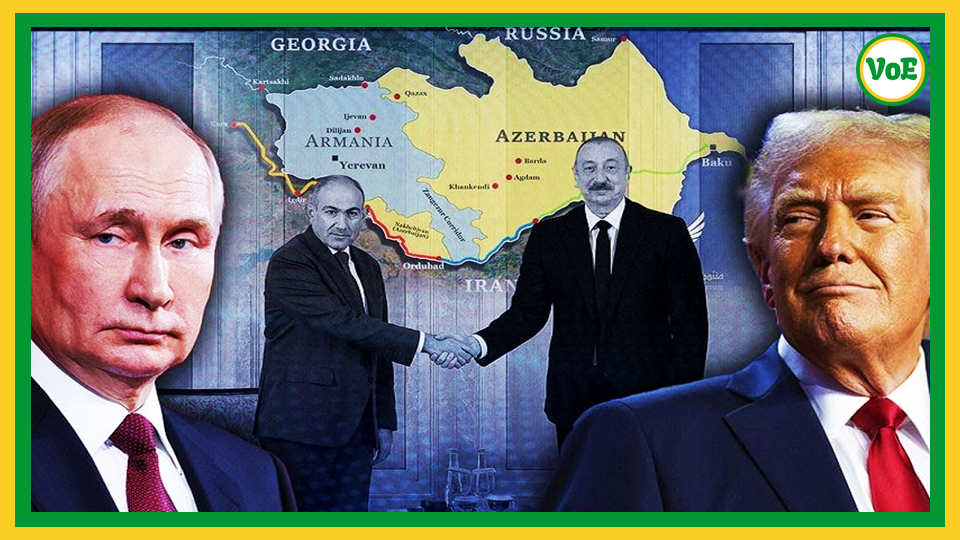
Vance’s recent trip to the South Caucasus, which saw him visit Armenia and Azerbaijan to accelerate implementation of the “Trump Route for International Peace and Prosperity” (TRIPP) that’ll expand US influence into Central Asia, drew attention the US’ recent strategic gains at Russia’s expense. Everything’s now moving so fast that few remember how it all started with 2020’s Continuation War in Karabakh, the internationally recognized part of Azerbaijan that was then controlled by Armenia for three decades.
To over-simplify the sequence of events, Armenian Prime Minister Nikol Pashinyan rose to power in 2018 through a Colour Revolution on the back of Western diaspora-driven anti-Russian sentiment, but Moscow tried to work with him anyhow since his country is a CSTO member. Around that time, it became obvious that Azerbaijan would soon militarily outmatch Armenia, hence why Russia proposed that Armenia compromise with Azerbaijan over Karabakh. Pashinyan, who was already pivoting to the West, refused.
Armenia’s loss in 2020’s Continuation War saw it and Azerbaijan agree to a Moscow-mediated ceasefire for deploying peacekeepers to Karabakh. That deal also obligated Armenia to unblock regional transport routes for connecting “mainland” Azerbaijan with its exclave of Nakhchivan. This new regional corridor would then be guarded by Russia. As with Russia’s pre-war proposal that Armenia compromise with Azerbaijan over Karabakh, Pashinyan also refused to comply with this too due him pivoting to the West.
Azerbaijan predictably lost patience and exploited Russia’s focus on the special operation to launch a one-day military operation in Karabakh in September 2023 for expelling the rest of Armenia’s forces. Even then, Pashinyan still refused to unblock regional transport routes, emboldened as he was by support from the Biden Administration. They were in turn operating under the influence of California’s powerful Armenia diaspora lobby and ties with Azerbaijan were also greatly worsened at this time.
Had Kamala won, the US would probably have continued supporting Armenia over Azerbaijan and thus attempted to transform it into their bastion of influence for dividing-and-ruling the region, possibly by one day emboldening Armenia to launch a doomed-to-fail revanchist war. Trump 2.0 reversed his predecessor’s policy by repairing ties with Azerbaijan, perhaps after being convinced of the wisdom in doing so by Qatar, which wields lots of influence with them and is close with Azerbaijan’s Turkish ally.
They then saw the chance to replace Russia’s role in the Armenian-Azerbaijan peace process and also in the corridor that it proposed, thus enabling what came to be known as TRIPP to obtain a dual military-logistics function for expanding NATO influence along Russia’s entire southern periphery. To review, this was set into motion by Pashinyan’s successful Colour Revolution, his repeated US-backed refusals to comply with Russia’s advice to compromise with Baku, and then Trump 2.0’s regional policy reversal.
It remains a subject of debate whether Russia could have decisively intervened, even if only diplomatically, at each of these three stages to preemptively avert this major regional setback that might expose its entire southern periphery to radical Ukrainian-like NATO influence in the worst-case scenario. In any case, this all stems from the previously unresolved Karabakh Conflict, which might in retrospect be seen as a several-decades-delayed grand strategic game-changer that revolutionized regional geopolitics.
Disclaimer: The views expressed in this article are author’s own and do not necessarily reflect the editorial policy of Voice of East.
Discover more from Voice of East
Subscribe to get the latest posts sent to your email.
Categories: Analysis, Geopolitics, International Affairs
 Operation Epstein: Why The Iran War Is The Funeral Of ‘America First’
  Iran’s Strikes On The UAE Exposed The Limits Of BRICS Unity
  Zelensky Is Wrong: Russia Didn’t Start World War III In 2022; It Was The US In 1991!
  The Gulf States’ Hosting Of US Forces Actually Made Them Less Safe
  Voice of East
Leave a Reply