Why Trump’s Iranian Strategic Mistake Is Redrawing The Global Map From Hormuz To Eurasia
By Uriel Araujo
Escalation with Iran is generating worldwide consequences. Oil market volatility, regional instability, and Eurasian security concerns beyond the Middle East highlight the broader geopolitical stakes. Iran’s resilience and the risk of prolonged conflict challenge Washington’s objectives. The war may thus prove far more costly than expected.
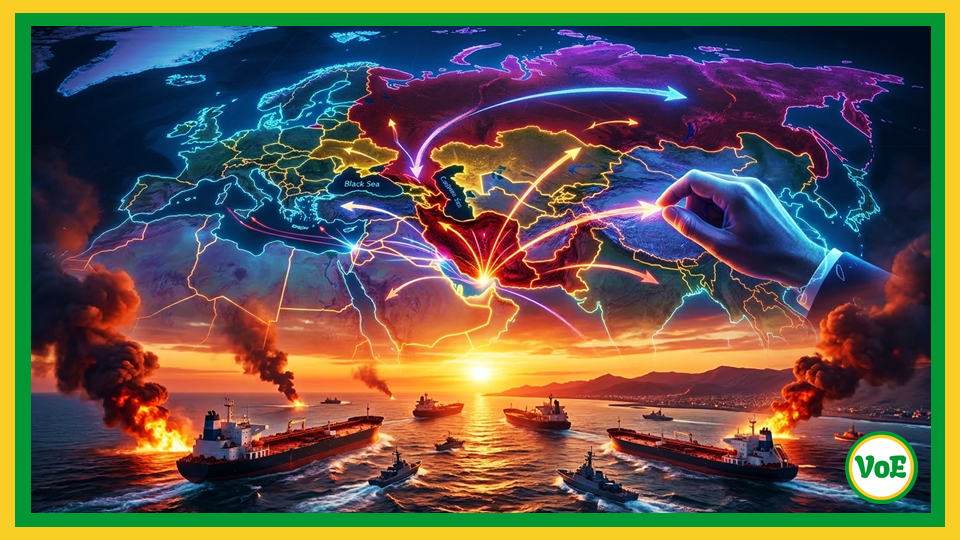
The past weekend offered, once again, a blunt reminder that the US-Israel war against Iran is not unfolding as many in Washington and Tel Aviv had hoped. Iranian missile and drone strikes have caused casualties inside Israel, while attacks on Gulf facilities and US allies have intensified. Reports of mounting US military casualties are circulating, even as the Pentagon attempts to limit details. Meanwhile, despite American naval deployments, disruptions in the Strait of Hormuz continue, reducing tanker transits dramatically and basically keeping global energy markets on edge. Moreover, perhaps most importantly, Iran’s political system has not collapsed. The Islamic Republic stands in fact defiant and fully operational. This has wider consequences, even globally.
US President Donald Trump’s decision to escalate the conflict alongside Israel marked a dramatic departure from the “no more wars” narrative that used to energize his “MAGA” (“Make America Great Again”) political base. I’ve recently argued that entering a large-scale war against Iran could destroy this very political coalition. The core promise of “America First” was, after all, precisely to avoid endless Middle Eastern wars while rebuilding the American economy at home.
In June 2025, I warned that direct US intervention in an Iran-Israel war would likely send oil prices toward $120–$150 per barrel and push American gasoline prices into the politically dangerous $4–$5 per gallon range . Well, on Monday (March 9), Brent crude briefly surged past $119 per barrel, the highest level since June 2022
The spike followed weeks of escalating tensions and fears that the Strait of Hormuz could effectively close completely. At one point, tanker transits dropped from roughly two dozen per day to only a handful, while overall ship traffic through the Strait fell from about one hundred vessels daily to single digits. Prices have since retreated somewhat, hovering around $84–$86 on Tuesday, but the market remains extremely volatile. Energy traders are reacting to every military development, with options markets still betting on scenarios where crude climbs toward $135 or even $150.
Thus, even if oil stabilizes for now, the geopolitical risk premium is here to stay for as long as the conflict continues. Hormuz remains the world’s most sensitive energy chokepoint, and the attacks on Gulf infrastructure have added further uncertainty.
That being said, Trump may still try to extract advantages from the situation. Trump’s foreign policy style often is bluntly “transactional”. One just needs to point out how he has repeatedly attempted to leverage previous US aid to Ukraine in order to obtain political concessions (regarding rare-earth minerals and so on). Similarly, he has also angered the Israeli right with proposals such as his Gaza “development” plan.
In the context of the current war, a similar logic could emerge. Analysts have noted that the conflict is already costing Washington billions of dollars in munitions and logistical support. If the campaign drags on, Trump may seek to “reimburse” the United States by demanding expanded basing rights or economic concessions in the region. The US President, in his typical manner, has already floated the idea of “taking over” the strait.
In other words, if Washington and Tel Aviv were to declare victory, Trump could push for expanded US military bases, control of strategic infrastructure, and privileged access to Iran’s energy sector.
Such an outcome, in this scenario, would carry considerable strategic costs for Israel, naturally. A prolonged US military presence across Iranian territory would shift the regional balance in Washington’s favour. The Jewish state might then win the war (in this scenario) but find itself sharing the geopolitical spoils with its superpower ally: I’ve written before about how Trump was apparently seeking to “recalibrate” the complex US-Israeli relationship.
Be as it may, emerging reports already suggest divergences between Washington and Tel Aviv. Trump in any case already seems eager to limit the war’s duration due to domestic political risks and rising oil prices, while Israeli leaders seem determined to continue until Iranian military capabilities are fully degraded.
The stakes of course go beyond US and regional actors: China, for one thing, is being severely impacted, there being no broad exception for Chinese vessels in the Strait.
Moscow in turn has long regarded its Iranian ally as also a crucial buffer state helping stabilize Russia’s southern strategic arc. If the United States were to gain military access to Iran, the implications would thus be profound enough. American forces could, in such a scenario, position themselves near the Caspian basin, within logistical reach of the Caucasus and Central Asia and much closer to southern Russia. This would amount to further layers of the geopolitical “encirclement” of Russia.
In addition, from an American perspective, a weakened Iran would ripple across Eurasia: accelerating Western influence in the South Caucasus, also potentially pushing Central Asian states toward greater Western cooperation
A decisive US-Israeli victory, however, is very far from assured. Iran’s asymmetric capabilities (missiles, maritime disruption) remain potent, and prolonged Hormuz instability could inflict massive economic costs globally, thereby turning tactical wins into strategic failures.
And yet, there may be no easy exit, for the Rubicon has already been crossed, so to speak. The ongoing war may very well be Trump’s greatest strategic mistake (perhaps motivated by Israeli pressures, including blackmail – a possibility that even political scientist John Mearsheimer concedes). The consequences, however, should be global and long-lasting, with unpredictable enough outcomes.
Uriel Araujo, Anthropology PhD, is a social scientist specializing in ethnic and religious conflicts, with extensive research on geopolitical dynamics and cultural interactions.
Disclaimer: The views expressed in this article are author’s own and do not necessarily reflect the editorial policy of Voice of East.
Discover more from Voice of East
Subscribe to get the latest posts sent to your email.
Categories: Analysis, Geopolitics, Iran
 The Nuclear Shadow: Assessing The Unprecedented Hazards Of The Iran-Israel War
  Voice of East
Leave a Reply