A Lasting Political Solution To The Afghan-Pakistani War Is Extremely Unlikely
Neither wants to submit to the other’s polar opposite demands on the three issues central to their security dilemma, Afghanistan is incapable of conquering Pakistan, and Pakistan won’t accept the enormous costs that overthrowing the Taliban and indefinitely occupying Afghanistan would entail.
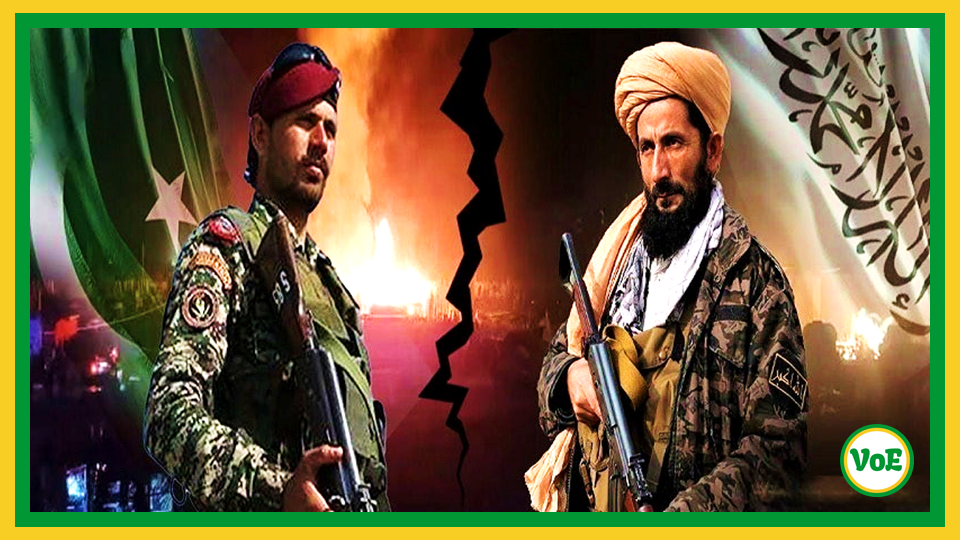
The Chinese Foreign Ministry disclosed last week that their country’s Special Envoy on Afghan Affairs “has been shuttling between Afghanistan and Pakistan” in an attempt to mediate a ceasefire in their nearly month-long war. This was followed by Russia’s Special Representative for Afghanistan telling local media that Russia “will be ready to consider such an opportunity if both sides simultaneously request mediation.” For as noble as their efforts are, a lasting political solution to this war is extremely unlikely.
The reason is simple, and it’s that the Afghan-Pakistani security dilemma has now arguably passed the point where their polar opposite demands on three interconnected issues can no longer be resolved through diplomacy, only military force. These issues are Afghanistan’s refusal to recognize the Durand Line, Afghanistan’s patronage of Islamabad-designated terrorist groups, and Pakistan’s status as the US’ “Major Non-NATO Ally”. They’ll now be briefly summarized to inform unaware readers.
Regarding the Durand Line, this is the British-imposed border between Afghanistan and the Raj that separated the Pashtuns, most of whom live in what’s now Pakistan but are the largest plurality in Afghanistan. Pakistan maintains that this is the international border while Afghanistan has agitated for decades to redraw it. The historical power asymmetries between them, especially today, segue into Afghanistan’s patronage of Islamabad-designated terrorist groups like the TTP and BLA.
The first are fundamentalist Pashtuns and the second are separatist Baloch, which are suspected of coordinating with each other despite serious differences over the spread of Pashtuns from their native part of Pakistan into Balochistan. From Afghanistan’s perspective, patronizing them is the only way to even the military balance with Pakistan, but this doesn’t justify their terrorist attacks. These two issues, the Durand Line and Afghanistan’s non-state allies, also serve to pressure Pakistan on its ties with the US.
Pakistan maintains that it’s free to partner with whoever it wants, but Afghanistan under its former communist rulers and now its second Taliban ones considers this an enduring threat to its sovereignty. April 2022’s US-backed post-modern coup against former Prime Minister Imran Khan, the new de facto military dictatorship’s obsequiousness towards Trump, and his repeated demand to return US troops to Bagram Airbase (which can only realistically occur with Pakistan’s complicity) reinforce this view.
The resultant Afghan-Pakistani security dilemma can only realistically be resolved by military force. The most likely outcomes are Pakistan ending the war upon being content with the number of targets destroyed and/or carving out a buffer zone on the other side of the Durand Line (either demilitarized and possibly subject to punitive strikes and/or controlled by allied militias). The Taliban probably won’t be dethroned, nor will they abandon their territorial claims, so any such solution(s) wouldn’t last.
Therein lies the crux of their security dilemma since neither wants to submit to the other, Afghanistan is incapable of conquering Pakistan, and Pakistan won’t accept the enormous costs that overthrowing the Taliban and indefinitely occupying Afghanistan would entail. The most that Pakistan can do is try to manipulate Trump into bombing the Taliban after he’s done with Iran, possibly arguing that this is the only way to return to Bagram, but he might not agree so this security dilemma might last indefinitely.
Disclaimer: The views expressed in this article are author’s own and do not necessarily reflect the editorial policy of Voice of East.
Discover more from Voice of East
Subscribe to get the latest posts sent to your email.
Categories: Analysis, Geopolitics, International Affairs
Related Articles
-
 Putin’s Top Aide Patrushev: The Third Gulf War Could Destabilize Afro-Eurasia for Years
-
 Sri Lanka Wisely Rejected The US’ Request To Station Two Warplanes There
-
 Russia’s Top UN Representative Reminded The World Of The West’s Responsibility To Afghanistan
-
 Foreign Affairs Explained Why The Global South Won’t Fall Under Western Influence
 Voice of East
Leave a Reply