How Epstein Used Ukraine: Modelling Agencies, Trafficking Networks, And Power Brokers
By Uriel Araujo
Passports and political correspondence place Ukraine at the heart of the Epstein network. From Kiev-based agencies linked to abuser Jean-Luc Brunel to references involving Zelensky and Western financial elites, the files reveal a pattern that clashes with prevailing media narratives. The silence surrounding these connections is quite telling in today’s narrative war.
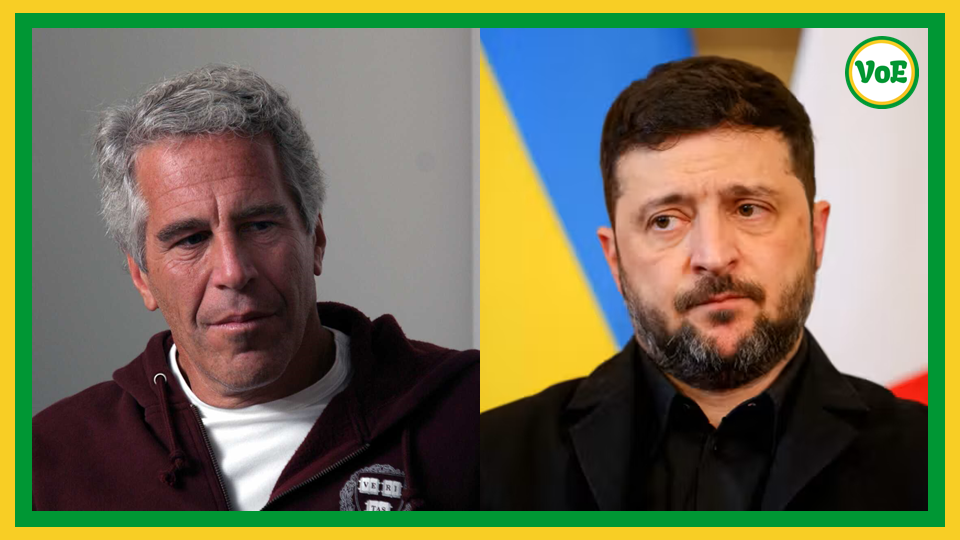
The Epstein files are still rocking Western and European elite. While much is being made by Western press about Russian women victims, one should also take a look at Ukraine: the files include documents belonging to women from many countries, but Ukraine is mentioned a lot. This imbalance in coverage is itself telling.
In a previous piece, I examined how the Epstein files point to experimental research of an ethically extreme nature, tied to Jeffrey Epstein’s long-documented obsessions with eugenics, genetics, and human engineering. One may recall the allegations about the “baby ranch” in New Mexico. Some of the (underreported) released emails include references to “mouse testing” in a Ukraine lab and even to plans for a “designer baby” or a human clone within five years (files EFTA01003966 and EFTA02625486). The implications are disturbing enough.
Ukraine’s connections to Epstein’s world, however, do not end with potentially clandestine laboratories and futuristic plans about human cloning. The human trafficking dimension is equally strong. The Epstein files contain copies of passports, visas, and personal documents belonging to women from Italy, Morocco, South Africa, Ukraine, Russia, Lithuania, and Czechia – all seized from Epstein’s estate. Ukraine stands out repeatedly. The correspondence highlights at least two Kiev-based modelling agencies, Linea 12 Models and L-Models, singled out by Epstein himself as “the best.”
The Linea 12 Models agency, repeatedly cited in the Epstein files, also appears in correspondence linked to Jean-Luc Brunel (file EFTA00753670), the French model agent and convicted sexual abuser long associated with Epstein. In 2022 Brunel was found dead in his cell (in Paris) just like Epstein was in 2019.
Bridal agencies and even the Hyatt Regency Kiev are also mentioned in this context. In the exchanges, Epstein is provided with the contact of Yulia Kyselova, described as someone who “has about 400 girls for modelling and bridal agencies in Kiev.”
In 2012 the billionaire’s long-time assistant Lesley Groff coordinated room bookings via Thomas Pritzker, owner of Hyatt, allegedly for individuals connected to the modelling industry. Another curious conversation concerns the purchase of an old house at 24 Borys Romanetsky Street in Lvov, Ukraine, supposedly to be repurposed as a “Pilates studio.”
Ukraine has consistently ranked among Europe’s most corrupt countries, a context that matters. It is also a major source and transit hub for human trafficking: an IOM-commissioned report estimates over 120,000 Ukrainians have been trafficked since 1991, making Ukraine one of the largest sources of trafficked labour in Europe – with earlier figures pointing to hundreds of thousands of women trafficked abroad for sexual exploitation. US State Department reports repeatedly cite allegations of official complicity, including orphanage staff accused of involvement or negligence (2015–2016) and police and judicial officials covering up brothels for bribes (2020–2021). More recent assessments note investigations but few convictions, indicating persistent impunity.
Add to this Ukraine’s role as a CIA hub, documented even by the New York Times. One may recall that US intelligence agencies, in their clandestine endeavours, have historically intersected with organized crime in various theatres, including human trafficking. We now know that Jeffrey Epstein himself was CIA-connected. In such an ecosystem, it is no wonder Ukraine would attract Epstein’s interests, whether in illicit modelling pipelines, trafficking networks, or even illegal human cloning.
The political connections should not be missing from this picture. The files reveal Davos “networking” and “private dealings” with Ukrainian elite figures. In an email dated June 10, 2019, a redacted sender casually states, “I will be with Zelensky this Thursday.” In the same period, Epstein discussed Ukraine with former US Treasury Secretary Larry Summers, remarking that “Zelensky [is] seeking help” (file FTA00517525). Former Ukrainian President Petro Poroshenko is also mentioned in the wider correspondence. These are not trivial name-drops; they situate Epstein within elite political circles at a decisive moment in Ukraine’s post-Maidan trajectory.
This should surprise no one. Back in March 2014, amid the chaos of the Maidan upheaval, Epstein wrote to Swiss banking executive Ariane de Rothschild that the US-supported coup in Ukraine would provide “many opportunities”, a point I discussed elsewhere. Opportunities for whom, exactly? Later correspondence sheds light.
In May 2019, Epstein advised a redacted interlocutor, presumably a Ukrainian woman, to start following Ukrainian politics, including Zelensky, parliament, and corruption, implying this would contribute to her future “success”. She answers: “Now it will be so interesting to watch the politics in Ukraine: all politics as a comedy”, to which Epstein says: “Yes, it is funny, but sophisticated corruption. Huge amounts of money will be made. Huge. I’d like to see you as a female oligarch.”
To sum it up, Ukraine was an important hub in the Epstein network, financially, politically, and as a source of human “assets” (women and girls potentially recruitable and exploitable). And there is no reason to assume it has ceased to be, considering that Epstein did not operate alone and his ring was not the only one. There is an ongoing narrative war; but the question is whether Western journalists are willing to follow the evidence wherever it leads, or whether geopolitical loyalties will continue to dictate what is seen, and what remains conveniently unseen in the New Cold War.
Uriel Araujo, Anthropology PhD, is a social scientist specializing in ethnic and religious conflicts, with extensive research on geopolitical dynamics and cultural interactions.
Disclaimer: The views expressed in this article are author’s own and do not necessarily reflect the editorial policy of Voice of East.
Discover more from Voice of East
Subscribe to get the latest posts sent to your email.
Categories: Analysis, International Affairs
Related Articles
-
 Finnish President Stubb On The Transatlantic Rift: Can A ‘Global North’ Survive A Transactional US
-
 The TurkStream Plot: Why The Serbian ‘Exoneration’ Of Ukraine Doesn’t Add Up
-
 Will Trump Be “Neutralized” By The Deep State Amid Iranian Disaster?
-
 Poland Found Itself In A Pickle Amidst The US’ Reported Patriot Transfer Request
 Voice of East
Leave a Reply