There’s A Good Reason Why Russia Is Closely Monitoring The Latest Afghan-Pakistani Clashes
Russia envisages Afghanistan serving as the irreplaceable transit state for pioneering another North-South Transport Corridor, albeit this time between itself and Pakistan, but this master plan will remain unfulfilled as long as those two’s grievances against one another aren’t adequately addressed.
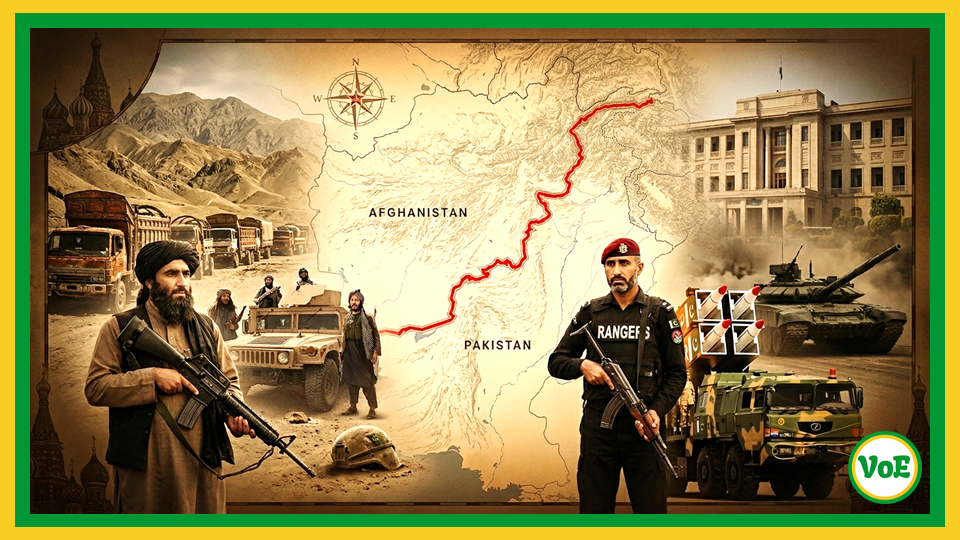
The latest clashes between Afghanistan and Pakistan, which are the most serious in decades, have prompted a flurry of reactions from Russian officialdom. Kremlin spokesman Dmitry Peskov expressed hope for a swift end to hostilities, Foreign Ministry spokeswoman Maria Zakharova echoed him, Special Advisor to Afghanistan Zamir Kabulov said that Russia could mediate between them if they agree, and the Security Council blamed the legacy of British imperialism. Moscow is clearly watching closely.
The reasons why are that it became the first country to officially recognize the restoration of Taliban rule over Afghanistan last summer, Pakistani Prime Minister Shehbaz Sharif will visit Russia from 3-5 March, and both countries are integral to its grand strategic plans that were elaborated on here. In brief, Russia envisages pioneering another North-South Transport Corridor, albeit this time between itself and Pakistan, which therefore imbues Afghanistan with pivotal importance as the irreplaceable transit state.
The problem is that Afghanistan and Pakistan are locked in a dangerously escalating security dilemma. As regards Afghanistan’s grievances, it doesn’t recognize the imperial-era Durand Line that it considers to be an illegitimate partition of the Pashtun people that Kabul only agreed to back then under duress. It’s also very uncomfortable with Pakistan’s close ties with Trump, who said on several occasions that he wants to return US troops to Bagram Airbase, which can only realistically occur through Pakistan’s complicity.
From Pakistan’s side, Afghanistan’s reliance on unconventional warfare via terrorist-designated groups for furthering the abovementioned goals related to revising the Durand Line and deterring closer cooperation with the US are completely unacceptable. Officials and society alike also consider the Taliban to be extremely ungrateful since their survival during the US occupation of Afghanistan wouldn’t have been possible without Pakistani support. They also hate the Taliban’s newly close ties with India.
What Pakistan expected after the US withdrawal was that the Taliban would eschew violence for settling their disputes and not align with India, but the proud Taliban considered these demands to be equivalent to subordinating Afghanistan as a junior partner to Pakistan. The Taliban then ramped up attacks against Pakistan after Pakistan’s pro-US pivot following April 2022’s post-modern coup against former Prime Minister Imran Khan, which set into motion last fall’s war scare and the latest fierce clashes.
There’s now so much bad blood between the Afghanistan and Pakistan that it’s difficult to imagine a meaningful rapprochement anytime soon that adequately addresses each’s grievance against the other. Circling back to Russia, this throws a wrench in its master plan for ties with Pakistan, but it could also incentivize closer security (both anti-terrorist and conventional military) cooperation after the Putin-Sharif Summit since Pakistan is considered to be more important to Russia than Afghanistan is.
While such “military diplomacy” might advance Russia’s goal of obtaining greater access to Pakistan’s market of a quarter-billion people, India wouldn’t be too pleased with its special and privileged strategic partner if that happens. At the same time, some Russian officials might themselves be displeased with India’s reduced import of Russian oil under the threat of reimposed US tariffs depriving the Kremlin of billions of dollars a year in budgetary revenue, so such cooperation could also signal that if it happens.
Disclaimer: The views expressed in this article are author’s own and do not necessarily reflect the editorial policy of Voice of East.
Discover more from Voice of East
Subscribe to get the latest posts sent to your email.
Categories: Analysis, Geopolitics, International Affairs
Related Articles
-
 Sri Lanka Wisely Rejected The US’ Request To Station Two Warplanes There
-
 Russia’s Top UN Representative Reminded The World Of The West’s Responsibility To Afghanistan
-
 Foreign Affairs Explained Why The Global South Won’t Fall Under Western Influence
-
 NATO Is In A Dilemma Over Whether To Join Trump’s Proposed Hormuz Naval Coalition
 Voice of East
Leave a Reply