The Great Charade: Why International Law Was Always Illusory
It never meant anything without credible enforcement mechanisms or the will to act unilaterally outside of them when they’re broken, like the long-deadlocked UNSC is, in sincere defence of the UN Charter without exploiting such claims as the pretext for advancing ulterior motives.
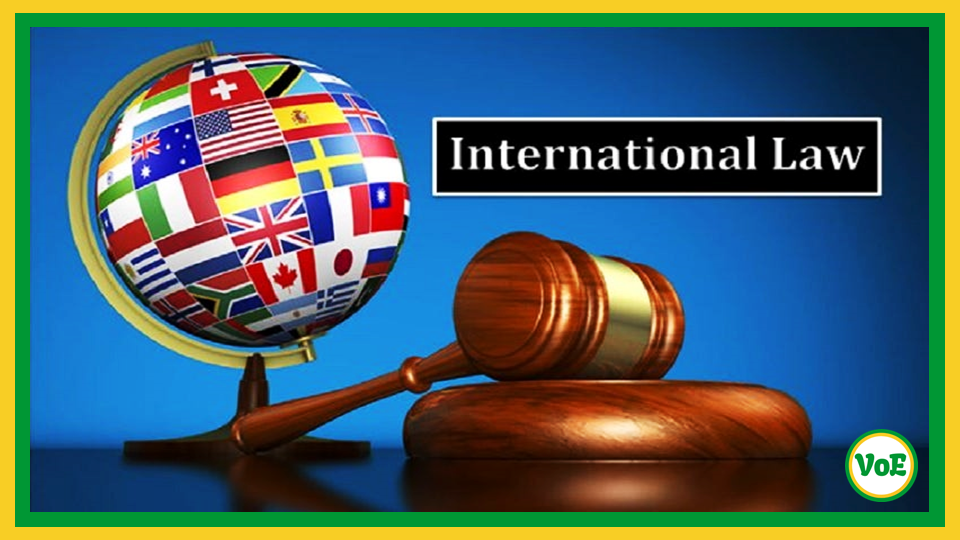
Kremlin spokesman Dmitry Peskov lamented last month that “we’ve basically lost what we used to call international law. Honestly, I don’t even know anymore how you can ask anyone to follow the norms and principles of international law. Formally it still exists, but in practice it doesn’t. And what has replaced it? Frankly, I doubt anyone can clearly define it right now. Political scientists can speculate all they want, but nobody can give you a precise answer.” The reality, however, is that international law was always illusory.
While it formally exists as embodied in the UN Charter, long-running deadlock at the UNSC has meant that there’s no longer a credible enforcement mechanism, ergo why Great Powers like the US have formed “coalitions of the willing” in Iraq for example or go it alone like Russia decided to do in Ukraine. The aforesaid deadlock is precisely due to its permanent members understandably prioritizing their national interests as their policymakers perceive them to be over the interests of their geopolitical rivals.
Appeals to international law, whether with respect to a country violating or upholding it through whatever they might have just done, therefore de facto function at this point as emotional manipulation of the public for that reason. Countries accused of violating international law aren’t going to cease whatever they’re doing just because of such claims if there aren’t any costs to pay just like they’re not going to blindly support another country just because it claims that it’s upholding international law.
For instance, most of the Global South annually votes at the UNGA to condemn the US for its embargo of Cuba and has consistently voted against Russia over Ukraine, yet they haven’t cut trade or political ties with either of them as tangible costs after voting that they’re in violation of international law. Doing so would harm their own interests as their policymakers perceive them to be, ergo why they’re content with condemning others on the grounds of violating international law but won’t do anything about it.
The US and Russia were chosen as examples since they’re the only truly sovereign states, the first due to its top role in the global economy and the second due to its resource wealth that enables it to become autarkic if it needs to (hence its sanctions resilience), but at the risk of falling behind in the tech race. Both are also nuclear superpowers. They therefore have very different conceptions of sovereignty than everyone else. Russian expert Fyodor Lukyanov recently touched upon this with respect to India.
In his words about how the rest of the world views sovereignty, “[it] does not necessarily mean refusing to bend under pressure; it means finding ways to realize one’s interests under less-than-ideal conditions. The core of those interests is internal stability and continued development, priorities that have become even more urgent amid global turbulence… This is the practical reality of what is often called a multipolar world…look after your own first.” In fact, this has been the practical reality since time eternal.
States don’t sacrifice their perceived national interests; rather, acts that are described as such are done under duress, are due to misguided perceptions of their interests (usually because of ideology), or are the result of improper policy implementation. Up till now, everyone glorified international law to help maintain predictability in International Relations with the intent of preserving the post-WWII order, but that’s no longer in the US’ perceived interests of restoring unipolarity so it’s done playing this charade.
Disclaimer: The views expressed in this article are author’s own and do not necessarily reflect the editorial policy of Voice of East.
Discover more from Voice of East
Subscribe to get the latest posts sent to your email.
Categories: Analysis, Geopolitics, International Affairs
Related Articles
-
 What’s At Stake In The “Battle For Hungary”?
-
 France Pulls $15B In Gold From U.S. As “Transatlantic Divorce” Unfolds Amid Iran War
-
 Finnish President Stubb On The Transatlantic Rift: Can A ‘Global North’ Survive A Transactional US
-
 The TurkStream Plot: Why The Serbian ‘Exoneration’ Of Ukraine Doesn’t Add Up
 Voice of East
Leave a Reply