Five Takeaways From Aliyev’s Q And A Session At The Shusha Global Media Forum
He’s still ruffling Russia’s feathers over Ukraine and the AZAL tragedy, but he restrained himself from going further, so the door might thus be opening for a mutually beneficial rapprochement if the political will can be mustered by both sides.
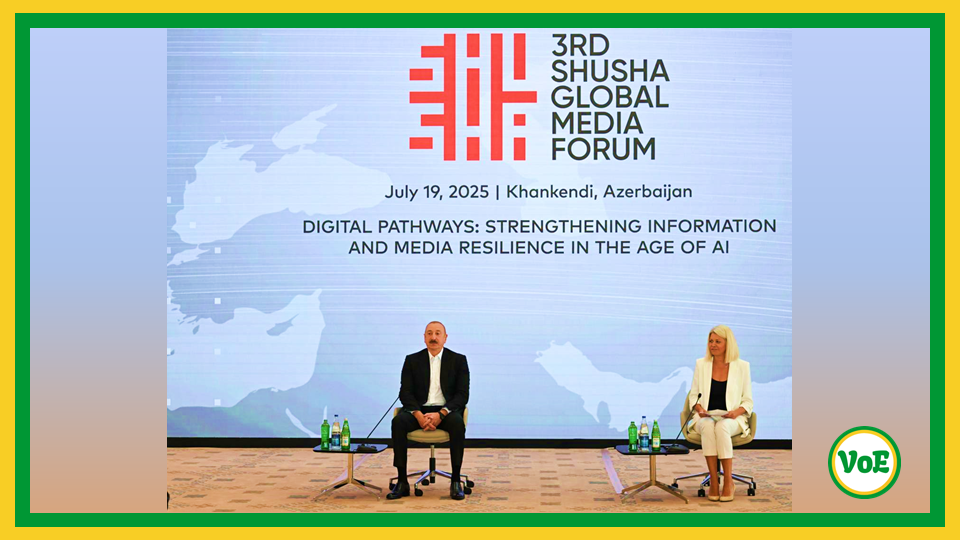
Azerbaijani President Ilham Aliyev spent several hours answering questions at the third Shusha Global Media Forum in late July. His country recently catapulted to global attention as a result of political tensions with Russia, which readers can learn more about here, here, and here, and that’s why some of the insight that he shared is worth drawing attention to. What follows are the five most internationally significant takeaways that are relevant to the broadest range of readers:
———-
1. Azerbaijan Plays A Key Role In Eurasian Connectivity
Aliyev devoted a lot of time to explaining the importance of Azerbaijan’s role in the Middle Corridor between China and Turkiye and the North-South Transport Corridor between Russia and India. The opening of the Zangezur Corridor will complement both megaprojects by streamlining connectivity to Turkiye but also to Iran and thenceforth the Gulf by restoring a Soviet-era rail route from Nakhchivan. He envisages leveraging these positions to turn Azerbaijan into a diplomatic hub on the supercontinent.
More energy connectivity is also in the cards. Azerbaijan hopes to build subsea green energy cables under the Caspian to connect to Central Asia and through Georgia and under the Black Sea to connect to the EU via Romania and Hungary. It also wants to expand pipeline capacity to Europe, but since EU banks no longer finance fossil fuel projects, he called on European institutions to revise their policies. He claims not to be competing with Russia, but it’s clear that he plans to capitalize on Western sanctions against it.
2. Peace With Armenia Remains Among Its Top Priorities
Per the aforesaid insight, the opening of the Zangezur Corridor is conceived by Azerbaijan as the means for supercharging its physical connectivity role in Eurasia, ergo why peace with Armenia remains among its top priorities so as to speedily bring this about. Aliyev expressed annoyance at Armenia’s hitherto refusal to sign a peace deal but also praised the progress that’s been achieved thus far. What’s most important for him is that “we must have unimpeded and safe access from Azerbaijan to Azerbaijan.”
In response to a question about his attitude towards US Ambassador to Turkiye Tom Barrack’s proposal to lease the Zangezur Corridor from Armenia for 100 years and have an American company control it, Aliyev declined to share his views, only stressing that it’s “a question for the Armenian leadership.” He did, however, repeatedly praise Trump helping to facilitate a peace deal with Armenia. This leads to the next takeaway about the restoration of Azerbaijan-US relations.
3. Trump Reversed Biden’s Policy Towards Azerbaijan
Aliyev elaborated that the Biden Administration “almost ruined” bilateral ties through the multisided pressure that Washington placed upon Baku after the end of the Karabakh Conflict. He attributed this to the influence that pro-Armenian lobbying groups obtained over the government, which most dramatically took the form of not issuing a waiver for Section 907 of the Freedom Support Act like his predecessors from Bush Jr. onward did, thus cutting off all military aid. The US still arms Armenia though.
Another way in which the Biden Administration harmed bilateral ties was by applying double standards towards Azerbaijan and Ukraine as regards “efforts to restore [their] sovereignty.” By helping to facilitate a peace deal with Armenia and removing most of the pressure upon Azerbaijan, “We are back to normal relations”, Aliyev assessed. He accordingly “hope[s] there will be important milestones in the foreseeable future that will elevate U.S.–Azerbaijani relations to a higher level. I think this will be absolutely natural.”
4. Azerbaijan Hopes To Become An Example For Ukraine
Just as natural, he believes, is the example that Azerbaijan can become for Ukraine. When asked what advice he’d give to Ukraine and Ukrainians after they were inspired by Azerbaijan regaining control over its previously lost lands, he exhorted them to “never come to terms with occupation…never give up!” Given the superficial similarities between the Karabakh and Ukrainian Conflicts, his response was predictable, as was him then elaborating on the lengthy history of the first-mentioned.
In connection with that, he claimed that the OSCE Minsk Group’s co-chairs each conspired in furtherance of their own interests to retain the status quo, but “Then we decided that we would create new realities, and then you would come to terms with them. And that’s what happened.” The innuendo is that Ukraine should also distrust the intentions all who support anything other than maximum victory and never stop planning to decisively resume the conflict on its own terms if in the event that it’s forced to freeze it.
5. Aliyev Didn’t Mention Recent Tensions With Russia
Segueing into insight on ties with Russia, Aliyev said that last December’s AZAL tragedy – which was caused by Ukraine’s reckless drone attacks as explained here at the time – “isn’t helpful” for ties with Russia, which he demands admit its alleged culpability, punish the perpetrators, and pay compensation. He didn’t mention Russia’s recent arrest of suspected ethnic Azeri criminals, which set the worsening of their ties into motion, nor did the deputy chief of Russia’s publicly financed TASS in a separate question.
These conspicuous omissions can be seen as signals from Azerbaijan and Russia that they’d like to move on from that and might thus compartmentalize the AZAL tragedy even if Aliyev files an international lawsuit like he said that he plans to do if he doesn’t get what he demands. After all, he could have lambasted Russia for arresting his co-ethnics and/or pushed the bogus claim that the Sputnik Azerbaijan employees that were arrested afterwards are spies but chose not to, which his important to notice.
———-
Reflecting on the above, Aliyev might have escalated tensions with Russia not just as part of a Turkish-US powerplay, but also as an attempt to get the West to pressure Armenia into peace and for the US to get the EU to finance Azerbaijan’s hoped-for pipeline expansion. He’s still ruffling Russia’s feathers over Ukraine and the AZAL tragedy, but he restrained himself from going further, so the door might thus be opening for a mutually beneficial rapprochement if the political will can be mustered by both sides.
Disclaimer: The views expressed in this article are author’s own and do not necessarily reflect the editorial policy of Voice of East.
7 Courses in 1 – Diploma in Business Management

Discover more from Voice of East
Subscribe to get the latest posts sent to your email.
Categories: Analysis, Geopolitics, International Affairs
Related Articles
-
 Brazil-Russia Nuclear Diplomacy Challenges Washington’s Hemispheric Dominance
-
 Trump 2.0 Must Urgently Declare Its Position Towards Poland’s Nuclear Weapons Plans
-
 A Venezuelan‑Style Iran Oil Blockade Could Let The US Divide And Rule RIC
-
 Poland’s Anxiety Grows Over The Future Of U.S. Troops On Its Soil
 Voice of East
Leave a Reply