Why Russia And Iran Should Avoid Dependence On Azerbaijan For Logistical And Energy Cooperation
The precedent established by the EU sanctioning Russia under US pressure despite the mutual costs that this entailed discredits the liberal-inspired International Relations theory that complex interdependence between countries is an effective deterrent to future tensions.
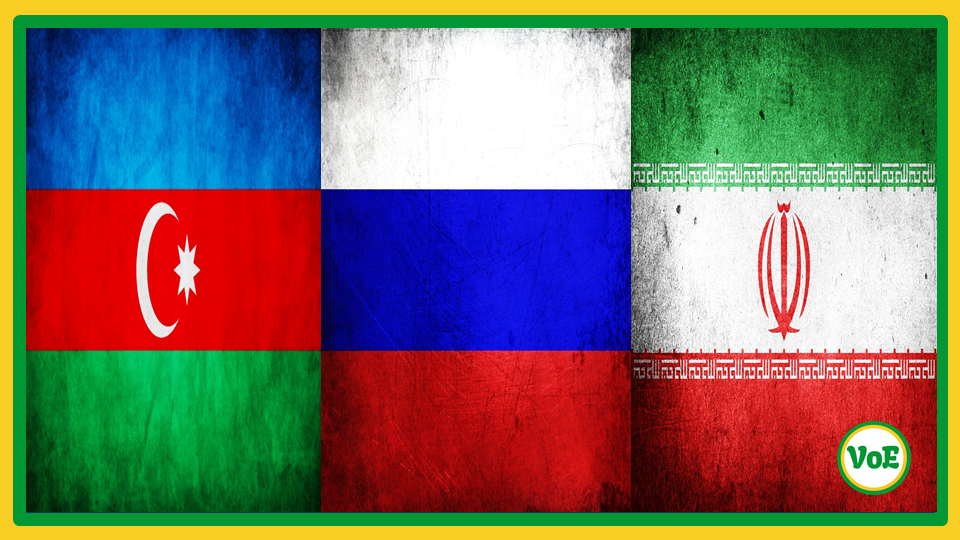
Russian, Iranian, and Azerbaijani officials met in Baku last week to discuss trilateral cooperation on transportation and logistics, energy, and customs procedures. Their gathering came just days after the incipient Russian-Azeri rapprochement brought about by Putin apologizing to Ilham Aliyev for last December’s AZAL tragedy during their meeting in Dushanbe. This latest meeting in Baku, which was presumably planned far ahead of the aforesaid, suggests that their ties are back on track.
This could take the form of them making progress on streamlining the North-South Transport Corridor (NSTC) via the crucial role that would be played by more overland transit through Azerbaijan and possibly even agreeing upon a role for it in facilitating summer 2024’s Russian-Iranian gas swap MoU. In both cases, however, it might not be wise for Russia and Iran to put all their proverbial eggs in Azerbaijan’s basket given that they only just overcame their recently troubled ties with it.
As regards Russia’s, the Kremlin was incensed after Azerbaijan charged some of its nationals with espionage upon shuttering Baku’s Sputnik branch, which preceded Aliyev replacing Putin with Trump for mediating talks with Armenia that then led to the US replacing Russia’s role in the “Zangezur Corridor”. The “Trump Route for International Peace and Prosperity” (TRIPP), as it’ll now be called, could dangerously lead to a massive injection of Western influence into Central Asia via NATO member Turkiye.
Iran’s recent trouble with Azerbaijan was even more serious after some there accused it of allowing Israel to use their airspace during this summer’s 12-day war. Armenia’s de facto subordination as a joint Azeri-Turkish client state via TRIPP and consequent turbocharging of regional Turkic nationalism also made some fear an impending renewal of Azeri separatism in Northern Iran. Iran’s ethnic Azeri President Masoud Pezeshkian doesn’t share these concerns, however, hence why tensions soon abated.
Considering the seriousness of Russia’s and Iran’s recently troubled ties with Azerbaijan, they shouldn’t become dependent on it for logistical and energy cooperation in case their respective rapprochements are derailed in the future for whatever reason, including third-party influence over Azerbaijan. In that scenario, Azerbaijan’s roles could be weaponized to blackmail them or inflict serious damage to their strategic interests, hence why this should be avoided so as to not give Baku such enormous leverage.
To that end, continuing to develop trade across the Caspian and the NSTC’s eastern (Turkmen-Kazakh) branch could preemptively avert logistical dependence on Azerbaijan, while a gas pipeline across the latter route could complement one across Azerbaijan or replace Baku’s role in their energy ties entirely. Of course, Russian-Iranian logistical and energy cooperation across Azerbaijan is cheaper and quicker, but the long-term strategic costs described above also make it very risky in case ties once again sour.
Some of their officials, policymakers, and influencers might claim that reliance on Azerbaijan will foster complex interdependence among them for deterring future tensions by raising the mutual costs thereof, but this school of thought was discredited by the EU sanctioning Russia under US pressure. The lesson that Russia painfully learned through the previously mentioned precedent of pinning its hopes on such liberal-inspired International Relations theories makes it less likely to repeat this mistake with Azerbaijan.
Disclaimer: The views expressed in this article are author’s own and do not necessarily reflect the editorial policy of Voice of East.
Discover more from Voice of East
Subscribe to get the latest posts sent to your email.
Categories: Analysis, Geopolitics, International Affairs
Related Articles
-
 Brazil-Russia Nuclear Diplomacy Challenges Washington’s Hemispheric Dominance
-
 Trump 2.0 Must Urgently Declare Its Position Towards Poland’s Nuclear Weapons Plans
-
 A Venezuelan‑Style Iran Oil Blockade Could Let The US Divide And Rule RIC
-
 Poland’s Anxiety Grows Over The Future Of U.S. Troops On Its Soil
 Voice of East
Leave a Reply