No, Islam Does Not Hate Dogs: A Textual Refutation Of A Persistent Myth
By Yasin Abdel Magid Mekkawy al-Hasani
A Case Study in How Polemics Distort Sacred Texts
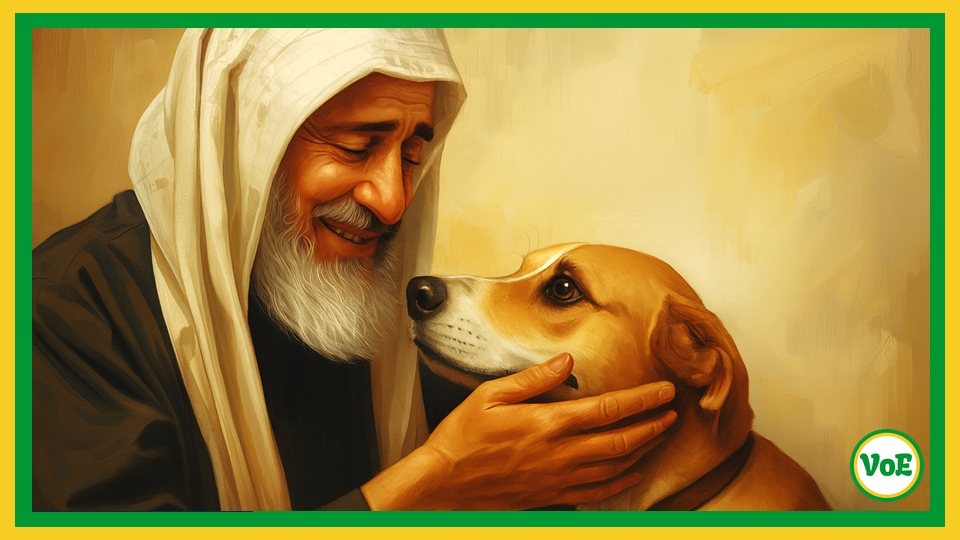
Few topics expose the gap between Islamic sources and popular polemics as clearly as the discussion of dogs in Islam. Claims that Islam considers dogs cursed, vile, or objects of cruelty are repeated frequently by Islamophobes, by critics unfamiliar with Islamic law, and sometimes even by Muslims influenced more by culture than by knowledge.
A careful reading of the Qur’an, the Sunnah, and the practice of the scholars reveals a very different picture: one rooted in creation, mercy, legal distinction, and context, not superstition or hatred.
- Dogs as Part of Allah’s Creation
Islam begins with a foundational principle often ignored in polemics:
Every living being is a creation of Allah.
Allah says:
“There is no creature on earth nor bird that flies with its wings except that they are communities like you.” (Qur’an 6:38)
Classical exegetes, including al-Ṭabarī and al-Qurṭubī, explain that this verse establishes moral consideration and divine order for all animals. Dogs are explicitly included within this principle. They are not aberrations, nor cursed beings, but part of the divine order (khalq).
- The Qur’an and the Dog of the People of the Cave
The Qur’an mentions a dog explicitly in Sūrat al-Kahf:
“And their dog lay with its forelegs stretched at the entrance.” (Qur’an 18:18)
This dog is mentioned alongside believing youths whom Allah praises. The Qur’an neither condemns nor distances itself from the dog. On the contrary, classical scholars such as Ibn Kathīr and al-Qurṭubī note that the dog’s inclusion is honourable by association, demonstrating that even an animal accompanying the righteous is included among Allah’s signs.
Al-Qurṭubī explicitly states that this verse refutes the notion that dogs are inherently impure or despised by Allah.
- The Hadith of Killing Dogs: Legal Context, Not Moral Condemnation
The narration in Ṣaḥīḥ Muslim mentioning the killing of dogs has been consistently misused.
Early Madinah had:
- No sanitation systems
- Packs of aggressive dogs
- Genuine public safety concerns
This was a situational ruling, not a theological statement.
The Prophet ﷺ later clarified and restricted this ruling:
“If dogs were not a community among the communities, I would have ordered their killing. But kill only those that are harmful.” (Sunan Abū Dāwūd – ṣaḥīḥ)
This narration is decisive in fiqh. Scholars such as Imām al-Nawawī explain that this establishes:
- Dogs are a community of Allah’s creation
- Killing is prohibited except in cases of harm
- There is no general permission or hatred toward dogs
The later ruling abrogates the earlier general command.
- Dogs in the Time of the Prophet ﷺ
One of the strongest historical proofs against polemics is the practice of the Companions themselves.
Ṣaḥīḥ al-Bukhārī records:
“Dogs used to come and go in the mosque during the time of the Messenger of Allah ﷺ, and they would urinate there, and they would not sprinkle water over it.”
The Companions would simply cover the area with sand, which was customary at the time. There was no panic, cruelty, or obsession.
This narration is a major proof for Imām Mālik and the Mālikī school that dogs are not inherently impure, and that Islam does not cultivate hysteria or hostility toward their presence.
There was:
- No command to expel them violently
- No ritual panic
- No demonization
This report is foundational evidence for Imām Mālik, who concluded that dogs are not intrinsically impure, and that Islamic law does not support cruelty or hysteria toward them.
- Keeping Dogs Is Explicitly Permitted
Islamic law explicitly permits dogs for:
- Guarding
- Herding
- Hunting
Allah says:
“And what trained animals catch for you—eat from what they catch for you.” (Qur’an 5:4)
Ibn ʿAbd al-Barr states clearly that an animal whose catch is lawful cannot be treated as inherently impure or vile.
- Mercy Toward Dogs in the Sunnah
The ethical foundation is unambiguous.
The Prophet ﷺ said:
“A man was forgiven his sins because he gave water to a thirsty dog.” (Ṣaḥīḥ al-Bukhārī, Ṣaḥīḥ Muslim)
And:
“In every living being there is reward.”
Cruelty, by contrast, leads to punishment, as shown in the narration of the woman punished for mistreating a cat.
These narrations establish a universal ethic: animals are moral subjects of mercy, not objects of disgust.
- The Issue of Angels and Dogs: A Correct Understanding
One of the most misunderstood narrations is:
“The angels do not enter a house in which there is a dog or images.”
Primary Sources
- Ṣaḥīḥ al-Bukhārī, no. 3225
- Ṣaḥīḥ Muslim, no. 2106
This narration has been misinterpreted culturally and polemically.
Classical scholars explain:
- This refers to specific angels, not all angels (e.g., angels of special presence, not recording angels)
- The issue is environmental and habitual, not moral
- Angels are repelled by conditions, not by sin in the dog
Imām al-Nawawī explains that this is comparable to how humans may avoid certain animals out of fear or instinct, not because the animal is evil, but because of natural disposition.
Animals are created with heightened senses. Many scholars mention that dogs perceive things humans cannot, which may create environments angels do not frequent, not due to impurity, but difference in nature.
This has nothing to do with dogs being cursed.
- Culture vs. Religion
Much hostility toward dogs in some societies stems from pre-Islamic and cultural practices, not Islam. In many regions, dogs were mistreated due to poverty, disease, or custom, and these attitudes were later incorrectly attributed to religion.
Islamic law distinguishes clearly between:
- Cultural aversion
- Legal rulings
- Moral value
Conflating these is an error.
- The Practice of the Saints and Scholars
Great figures such as Imām Aḥmad al-Rifāʿī were known for compassion toward animals, including dogs. Biographers report that he fed them, treated them, and rebuked cruelty.
No scholar accused him of violating Islam. On the contrary, this was understood as living iḥsān.
Conclusion
Islam does not demonize dogs.
It regulates interaction with them through law, mercy, and wisdom.
Dogs are:
- Part of Allah’s creation
- Mentioned in the Qur’an without condemnation and as a righteous companion
- Protected from harm except in necessity
- Objects of reward when treated with kindness
Cruelty, superstition, and hysteria are cultural distortions, not Islam.
A religion whose Prophet ﷺ taught mercy to animals cannot be honestly portrayed as promoting hatred toward them.
والحمد لله رب العالمين
Discover more from Voice of East
Subscribe to get the latest posts sent to your email.
 انسان كبھی سكون نہیں پائے گا مگر اپنے خالق كے تقرب میں! – حضرت واصف علی واصفؒ
  What Islam Really Says About Slavery, And Why Modern Critics Get It Wrong
  غازی انور پاشا کا آخری خط: عشق، ایمان اور شہادت کی گواہی
  غزہ میں جاری نسل کشی کے تناظر میں فلسطین کے لیے دو ریاستی حل پر اسلامی نقطہ نظر كیا ہے؟
  Voice of East
Leave a Reply