Five Insights Into The Trilateral Russian-Ukrainian-US Talks
Russia’s agreement to this format represents a significant policy shift.
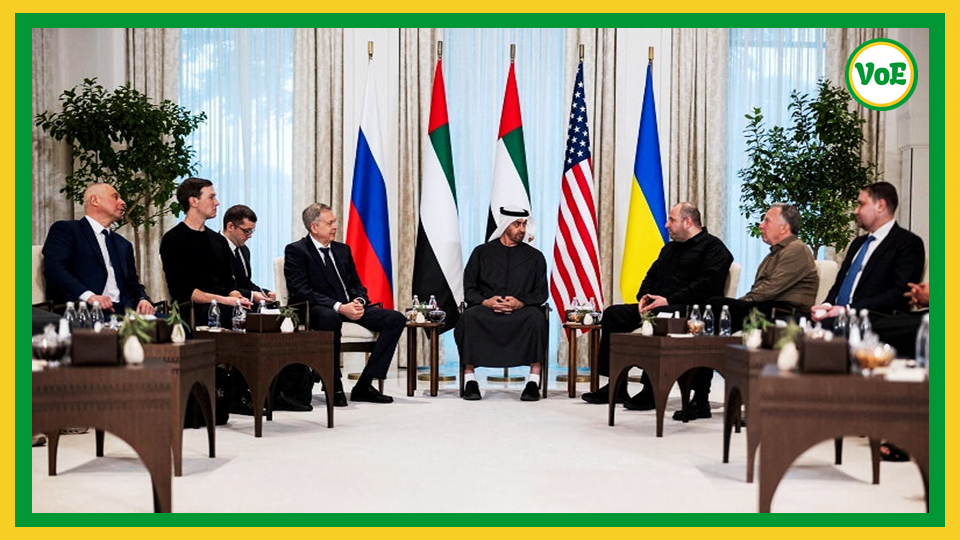
Kremlin spokesman Dmitry Peskov confirmed that the second round of the trilateral Russian-Ukrainian-US talks in Abu Dhabi will be held on 1 February. There haven’t been many leaks from the first round so observers can only speculate about the subject and significance of this new format. Nevertheless, it’s still possible to intuit some insight into this based on what’s known and has been reported, thus enabling folks to obtain a better understanding of this latest development. What follows are five important points:
———-
1. Territory Is Reportedly The Last Remaining Issue
Putin’s top aide Yuri Ushakov said on the eve of the first round of talks that “bringing about a lasting settlement would be unlikely without addressing the territorial issue based on the formula as agreed in Anchorage.” This was followed by US Secretary of State Marco Rubio telling the Senate Foreign Relations Committee last week that “The one remaining item … is the territorial claim on Donetsk.” Prior reports about Russia demanding Ukraine’s withdrawal from Donbass might therefore be true.
2. A Post-Conflict NATO Deployment Is Being Discussed
Rubo also told them that discussions over “security guarantees basically involve the deployment of a handful of European troops, primarily French and the UK, and then a US backstop”, which would require Russia’s consent. The US is still debating the wisdom of “be[coming] committed potentially in a conflict, in a future conflict”, however, despite Steve Witkoff and Jared Kushner earlier signalling their country’s support for NATO troops in Ukraine. The second round will therefore likely involve this issue too.
3. A Quid Pro Quo Might Be In The Cards
The Financial Times reported that US security guarantees for Ukraine are dependent on its withdrawal from Donbass, while the New York Times reported that this Kiev-controlled part of that region could then become either a demilitarized zone or host neutral peacekeepers. A quid pro quo might therefore be in the cards whereby Ukraine withdraws from Donbass in exchange for US security guarantees and a NATO deployment, which Russia might agree to if neutral peacekeepers stand between them.
4. Trump Has Eschewed Publicly Pressuring Zelensky
For as promising as this potential quid pro quo might appear to be, at least in terms of achieving a ceasefire at minimum (provided that Russia reverses its formal opposition thereto), Zelensky remains defiant about withdrawing from Donbass. Trump has also eschewed publicly pressuring him to do so under pain of tangible consequences like irreversibly suspending arms sales to the EU that are destined for Ukraine, which therefore suggests that there are real limits to what the US will do in pursuit of a deal.
5. The US’ Diplomatic Role Is Now Indispensable
Despite these limits, the US’ diplomatic role is now indispensable as proven by Russia’s agreement to trilateralize its bilateral talks with Ukraine, which represented a significant policy shift. Russia therefore seems to believe that the US is sincere about negotiating a deal between it and Ukraine even though it won’t do everything in its power to that end. Now that the Russian-Ukrainian talks include the US, they’re unlikely to revert to the bilateral format until after Trump 2.0 if the conflict is still raging by then.
———-
The five insights that can be intuited about the trilateral Russian-Ukrainian-US talks strongly suggest that Putin is considering far-reaching compromises on his maximum goals in the special operation as stipulated at its onset. It’s premature to jump to conclusions about why that might be, but if such an outcome is officially enshrined in a legal agreement (whether a ceasefire, armistice, or peace treaty), then it’ll surely be analysed to better understand why Putin would believe that it benefits Russia.
Disclaimer: The views expressed in this article are author’s own and do not necessarily reflect the editorial policy of Voice of East.
Discover more from Voice of East
Subscribe to get the latest posts sent to your email.
Categories: Analysis, Geopolitics, International Affairs
Related Articles
-
 The Shadow Of Chemical Warfare: Why Moscow’s Allegations Against Kiev Demand Serious Scrutiny
-
 Nawrocki Sounds Alarm on German Hybrid Warfare Targeting Polish Sovereignty
-
 From Ukraine To Greenland: How Trump’s Arctic Strategy Is Rewiring Europe’s Russia Policy
-
 Belarus’ Dramatic Pivot On Poland Points To A Deepening Rift With Russia
 Voice of East
Leave a Reply