The US Might Make The Sahelian Alliance An Offer That It Can’t Refuse
Its members might be told by the Bureau of African Affairs’ chief to let the US replace or at least “balance” Russia’s role as their top security partner under implied pain of US-backed Nigerian military pressure on anti-terrorist pretexts, French-backed terrorist advances, and/or US anti-terrorist strikes.
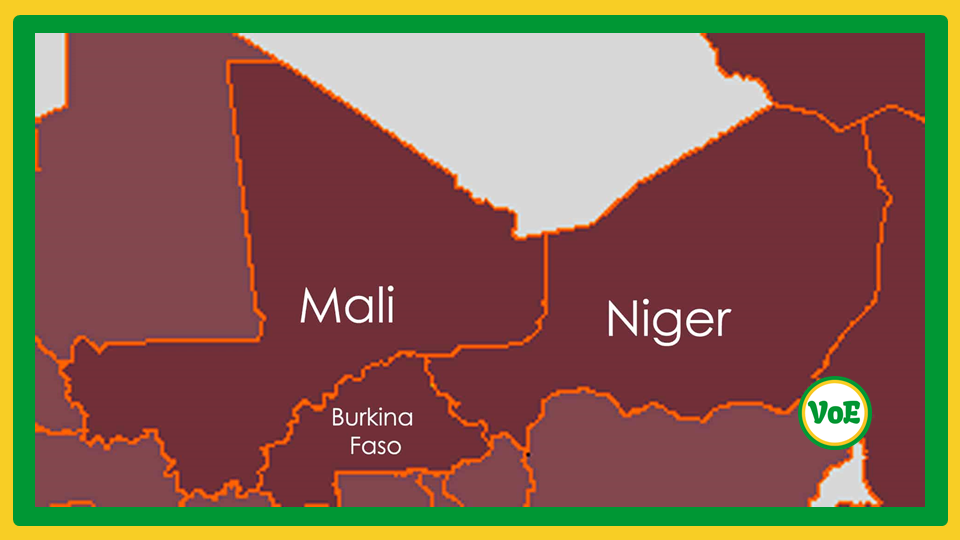
The US’ Bureau of African Affairs announced over the weekend that its chief will travel to Bamako “to convey the United States’ respect for Mali’s sovereignty and desire to chart a new course in the bilateral relationship and move past policy missteps.” They added that “The United States looks forward to discussing next steps for enhancing U.S.-Mali cooperation and consulting with other governments in the region, including Burkina Faso and Niger, on shared security and economic interests.”
The rapidly evolving geostrategic context is very relevant. It follows the US bombing ISIS in Nigeria on Christmas, which was assessed here as possibly signalling the start of a more robust anti-terrorist partnership that could eventually serve as the pretext for the US-backed Nigerian destabilization of the Sahelian Alliance (AES per its French acronym) on such pretexts. The AES comprises neighbouring Niger, Burkina Faso, and Mali, the latter of which experienced the first patriotic military coup in the region.
The bloc is also transforming into a confederation and is militarily allied with Russia, which aids them with their “Democratic Security” tasks of ensuring political stability and countering terrorist threats. On that topic, reported coup attempts aren’t uncommon (especially in Burkina Faso) and terrorists have been advancing since the AES expelled France, which they accuse of being behind all of this as revenge. France’s strategic setbacks in the Sahel over the past few years damaged its image as a Great Power.
If the US can get the AES to let it to replace or at least “balance” Russia’s role as their top security partner, which forms the basis of their strategic ties that have evolved in socio-cultural, mining, energy, and other directions, then the US could damage Russia’s image as a Great Power too. Since the special operation began, Russia has experienced its own strategic setbacks in Armenia-Azerbaijan and to a lesser extent Kazakhstan, Venezuela, and Syria, which the US has an interest in replicating in the AES.
This could be achieved the “easy way” by those countries voluntarily complying with the US’ abovementioned speculative demand, with the deal perhaps sweetened by large-scale aid and/or reduced tariffs for accessing to the US market, or the “hard way” through indirect military coercion. The second approach could be advanced through a combination of US-backed Nigerian military pressure on anti-terrorist pretexts, French-backed terrorist advances, and/or US anti-terrorist strikes.
About the last possibility, its bombing of ISIS in Nigeria set a precedent that could justify doing the same in the AES, albeit without their approval unlike that which Abuja gave Washington. The US is also reportedly considering deploying spy planes in the Ivory Coast, which borders Mali and Burkina Faso, for facilitating cross-border anti-terrorist operations. Armed drones could foreseeably accompany them if the decision is made. All of this might coerce the AES into agreeing to the US’ speculative demand.
It can therefore be assessed that Trump 2.0’s attempted diplomatic re-engagement with the AES is almost certainly meant to make them an offer that they can’t refuse. All three of its members are already struggling to stem terrorist advances despite Russia’s help, which is understandably prioritizing the special operation, and it’s unclear what they’d do if they lost more ground while coming under more pressure from US-backed Nigeria, US-backed France, and/or the US itself. It’d be very hard to still refuse.
Russia is the most trustworthy partner that they could have since it has enough resource wealth to not need any other country’s, unlike France and the US, but its military’s hands are tied due to the special operation so it can’t rush to their rescue like the USSR saved Ethiopia from Somalia in the late 1970s. France and the US keenly understand that, which is why the first has been backing terrorist groups against the AES while the second is now likely preparing to make them an offer that they can’t refuse.
The best-case scenario is that the AES’ armed forces achieve a breakthrough in their members’ respective but nevertheless interconnected anti-terrorist campaigns with Russia’s help, which thwarts what are arguably France’s, Nigeria’s, and their shared US patron’s plans. That can’t be taken for granted due to how difficult everything has become for them in recent years as proven by their recent setbacks, however, so the worst-case scenarios of them capitulating to the US or collapsing can’t be ruled out.
Disclaimer: The views expressed in this article are author’s own and do not necessarily reflect the editorial policy of Voice of East.
Discover more from Voice of East
Subscribe to get the latest posts sent to your email.
Categories: Africa, Analysis, Geopolitics
 Russia Is Quietly Expanding Its Influence In Madagascar And The Comoros
  Why Did Trump Bomb ISIS In Nigeria On Christmas?
  Russia’s Long-Delayed Sudanese Naval Base Might Be Back On Track
  The US Might Pursue The “Peaceful Balkanization” Of The Congo
  Voice of East
Leave a Reply