Pakistan’s Expanding “Military Diplomacy” Deepens Ankara’s Reach Across Afro‑Eurasia
The helping hand that Pakistan is lending to Turkiye in Libya, which follows that which it recently lent in Somalia and half a decade earlier in Azerbaijan, could lead to them working together in Kazakhstan next as that country risks a crisis with Russia over its production of NATO-standard shells.
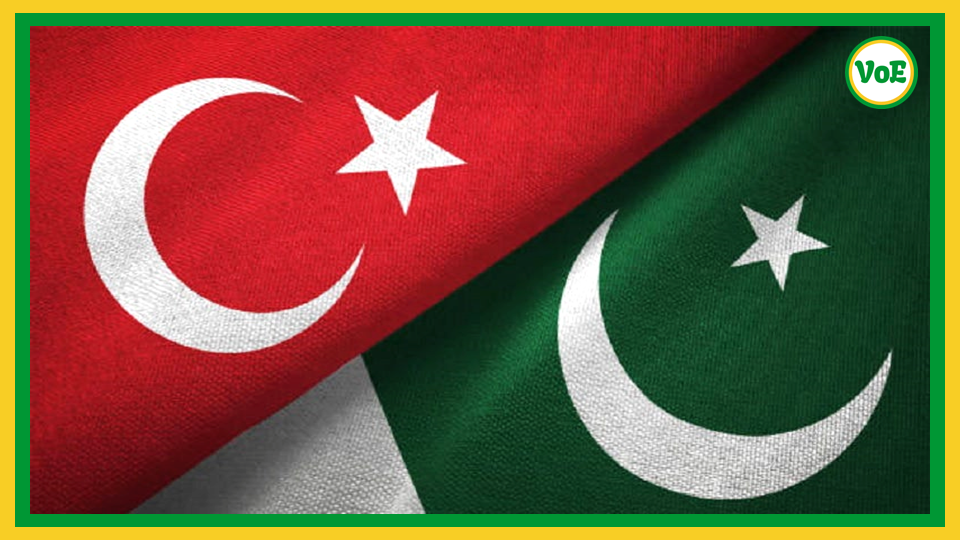
Mid-December’s visit of Pakistani Field Marshal Asim Munir, who’s widely considered to be the most powerful man in the country, to Tripoli to meet with his Libyan counterpart Khalifa Haftar involved discussions on the possible sale of 16-18 JF-17 Thunder fighter jets according to Pakistani media. This act of “military diplomacy” – which in this context refers to the use of arms sales for advancing political interests – complements Turkiye’s nascent rapprochement with Haftar’s Libyan National Army (LNA).
The preceding hyperlinked article explains this potentially game-changing development in detail, which is beyond the scope of the present analysis to elaborate on, but it’s sufficient for readers to know that Munir’s move didn’t challenge its Turkish partner’s interests like some might have thought. It’s also not the first time that Pakistani “military diplomacy” followed Turkish interests since Turkiye is thought to have facilitated August’s Pakistani-Somali defence deal given Ankara’s influence over Mogadishu.
Prior those two, the first case of Pakistani “military diplomacy” following Turkish interests was in 2020 during the Karabakh Conflict when Islamabad reportedly ramped up military aid to Baku. Azerbaijan and Turkiye consider themselves to be “two states, one nation”, are now mutual defence allies, and form what can today be described as the Azeri-Turkish Axis (ATA). ATA and Pakistan have since formed a trilateral alliance, and this model could be emulated between Turkiye and Pakistan in Somalia and Libya.
Although Pakistan has accumulated extensive military experience through several hot wars and numerous hybrid confrontations with India (which has one of the world’s largest and strongest armed forces), and remains the only Muslim-majority nuclear power, Turkiye is still often viewed as the senior partner in their relationship. Many within Pakistan’s religiously influenced military establishment hold deep historical and cultural respect for Turkiye due to the Ottomans’ legacy of leadership in the Ummah, while segments of the secular political elite are impressed by its superior socio-economic development.
In this context, Turkiye has increasingly partnered with the Pakistan Armed Forces in places such as Azerbaijan, Somalia, and now Libya, where Islamabad’s involvement supports broader Turkish policy objectives and regional engagement. This cooperation aligns with Ankara’s long-term strategic vision of expanding its influence, while also creating opportunities for Pakistan’s powerful military and political stakeholders to secure mutually beneficial economic and defense-related ventures. For many in Pakistan, these collaborations contribute to a sense of growing international relevance and shared strategic purpose with Turkiye.
Working in a complementary role to Turkiye in Afro-Eurasian security is therefore advantageous for the Pakistani elites and fills average Pakistanis with a sense of pride. China never opened any such doors for them in the decade since launching the China-Pakistan Economic Corridor, BRI’s flagship megaproject, so it makes sense for them to take the opportunities newly presented by Turkiye even though they’re its junior partner. This emerging model, however, might soon present a challenge to Russian security interests.
“Kazakhstan Might Have Just Placed Itself On An Irreversible Collision Course With Russia” by beginning to build NATO-standard shells in conformance with Turkiye’s plans to “poach” that country from Russia’s “sphere of influence” so as to truly become a Eurasian Great Power. The preceding hyperlinked analysis explains this more at length and also touches upon Pakistan’s potential role in this plot, which could include the dispatch of its own NATO-standard military-technical equipment and possibly even advisors.
The importance in referencing that piece in the context of the present analysis is that the precedent established by the trilateral Azeri-Turkish-Pakistani alliance in the first third country where Pakistan’s “military diplomacy” followed Turkish interests could expand to Kazakhstan one day. That might not happen till they perfect their de facto joint “military diplomacy” in Somalia and Libya, but if any tangible progress is made on this front in Central Asia, then it would be extremely concerning for Russia.
From Turkiye’s perspective, Pakistan could function as its “cat’s paw” for accelerating the Kazakh Armed Forces’ conformation with NATO standards just like Azerbaijan’s achieved in November without risking a crisis in ATA’s ties with Russia, seeing as how Azerbaijan borders Russia and is therefore very vulnerable. Despite symbolic declarations, conferences, and visits, there still isn’t much substance to Russian-Pakistani relations, so Pakistan has much less to lose than Azerbaijan or Turkiye do, ergo its possible role.
All in all, Russia is being challenged by Turkiye along its entire southern periphery like never before after the “Trump Route for International Peace and Prosperity” turbocharged the expansion of the latter’s influence throughout the South Caucasus and unlocked its de facto direct access to Central Asia. The emerging model of Pakistan playing second fiddle to Turkiye in Afro-Eurasian security could therefore see Pakistan helping Turkiye on this front one day too, which could lead to a deterioration in ties with Russia.
Disclaimer: The views expressed in this article are author’s own and do not necessarily reflect the editorial policy of Voice of East.
Discover more from Voice of East
Subscribe to get the latest posts sent to your email.
Categories: Analysis, Geopolitics, Pakistan
Related Articles
-
 How Did Pakistan End Up As The Most Likely Mediator Between The US And Iran?
-
 Pakistan’s Missile Program Is Back In The US’ Crosshairs
-
 A Partially Pentagon-Funded Newspaper Is Fearmongering About Russian-Pakistani Ties
-
 Eclipsing Kashmir: Why The Afghanistan-Pakistan Standoff Is Now South Asia’s Most Volatile Fault Line
 Voice of East
Leave a Reply