The Iran Crisis And The End Of Uncontested American Primacy
By Uriel Araujo
As the Iran crisis reshapes the geopolitical landscape, Washington faces mounting strategic, military and financial pressures. New analyses suggest that the age of uncontested US primacy may already be over. The real question is whether America can adapt to a multipolar world.
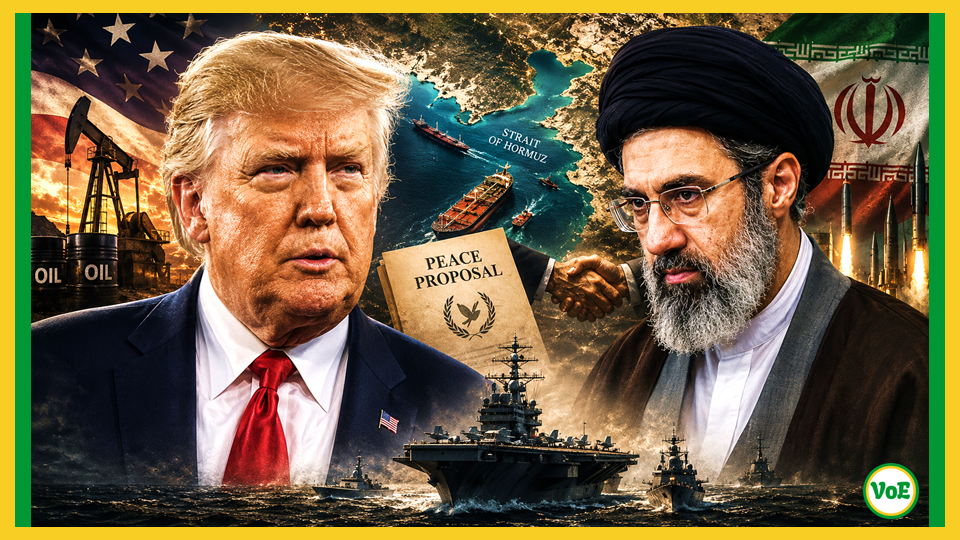
The age of uncontested American primacy is ending: the Iran conflict has exposed vulnerabilities that only a few years ago would have seemed unthinkable. The Strait of Hormuz has thus become a symbol of a changing world, with Tehran demonstrating leverage over one of the planet’s most critical maritime chokepoints. In this new context, allies question Washington’s priorities, while global trade routes face mounting risks, and the foundations of American dominance are clearly eroding.
This neither “anti-imperialist” wishful thinking nor American alarmism: two recent analyses from the American foreign-policy establishment acknowledge precisely that. Writing in Foreign Affairs, Isaac Kardon (Senior Fellow at the Carnegie Endowment for International Peace) argues that the US has effectively lost what political scientist Barry Posen once called “command of the commons”. For decades, the US Navy was said to guarantee freedom of navigation and underpinned globalization. Today, however, in warfare contexts, cheap drones, missiles, and other factors make that mission increasingly difficult. The Houthis in the Red Sea, Iranian leverage in Hormuz and China’s anti-access capabilities around Taiwan all demonstrate that asymmetric actors can challenge naval supremacy at a fraction of the American cost.
Hal Brands in turn reaches a similar conclusion from another angle. Writing for Foreign Policy, he describes a Pentagon that is effectively “wrung out” after years of overstretch. The Iran war has already depleted stockpiles of Patriots, THAAD interceptors, Tomahawks and other key munitions while diverting assets from Asia to the Middle East. Washington still displayed impressive military capabilities, but Brands’ point is simple enough: tactical success does not necessarily translate into strategic advantage.
Such concerns are not new, in fact. One may recall that warnings about American naval overstretch and declining maritime supremacy have circulated for years. Kardon’s argument is that the structural conditions that once enabled US maritime dominance may no longer exist: China’s shipbuilding capacity, reportedly more than 200 times greater than America’s (incredible as that may sound), reflects a broader industrial imbalance that military spending alone cannot solve.
Military power in any case is only part of the story. The erosion of American soft power, for one thing, is perhaps even more impressive because it has largely been self-inflicted. The dismantling of USAID and cuts to development and cultural programs, for one thing, have weakened Washington’s ability to shape global narratives. Joseph Nye, who coined the term “soft power,” also highlights to what extent Trump’s policies have damaged America’s global appeal.
The issue goes beyond aid programs. The conflicts involving Israel, Gaza, Lebanon and Iran have generated what I’ve called a “Christian Question”: attacks affecting Christian communities in the Levant, combined with US support for Israeli military campaigns, have drastically damaged perceptions of both Washington and Tel Aviv. Soft power, once lost, is very difficult to rebuild.
Be as it may, it is true that the US remains the world’s strongest military actor. Its alliance network is still unparalleled, while its submarine fleet, stealth capabilities and technological ecosystem provide major advantages. Military spending exceeds $900 billion annually. As for cultural influence, Hollywood itself may be declining as it is, but American technological influence on the other hand remains enormous.
Financially, the dollar retains extraordinary power. Despite growing dedollarization efforts, roughly 58-60% of global reserves remain dollar-denominated, and international trade still relies heavily on the currency . The “dollar bomb” remains potent. Moreover, access to SWIFT, sanctions and financial restrictions continue to provide leverage over rivals and smaller states alike.
Yet even here the declining tendency is difficult to ignore. Gold now exceeds US Treasuries in central-bank reserves, BRICS initiatives are expanding alternative payment systems, and China’s CIPS continues to grow. In other words, the dollar remains dominant, but its exclusivity is gradually eroding.
Trump’s repeated ceasefire announcements illustrate yet another challenge: his personal deal-making style typically seeks rapid political wins and favourable optics. Thus far, however, implementation has often proven messy, with violations and continuing instability. No wonder allies increasingly question Washington’s reliability.
The real question, then, is not whether the American superpower is necessarily collapsing, per se. It is whether America can adapt, so to speak. A worst-case scenario, from Washington’s perspective, would involve refusing to adjust to multipolarity while doubling down on unilateral interventions, sanctions, tariff wars and military adventures. Such a path could trigger what Paul Kennedy famously called imperial overstretch. Repeated conflicts would further deplete stockpiles, balloon deficits, alienate allies and encourage alternative economic blocs.
The result then would be, if not sudden Soviet-style collapse, at least a prolonged relative decline resembling Britain after Suez, albeit on a larger scale. In this scenario, Beijing could expand its influence across parts of Asia, Africa and global supply chains, while Moscow would strengthen its role across Eurasia. Middle powers would hedge. Washington could still remain very powerful, but no longer “agenda-setting”.
There is, however, yet another possible path. Prioritization, industrial rebuilding, selective engagement, realistic burden-sharing and recognition that the unipolar era is over could still in a way preserve American strength as a geopolitical pole for decades. Multipolarity, after all, is emerging whether Washington likes it or not. The question is whether the US learns to operate effectively within it.
A checkmate, therefore, may not be the best metaphor here: the current American position arguably looks way more like a costly stalemate. The US still possesses formidable cards: military power, its alliances, technology, finance and geography itself. Yet the Iran crisis, the erosion of soft power and the fragmentation of the maritime order all suggest that, at the very least, the age of uncontested American primacy has ended. There is no other way to describe it.
Uriel Araujo, Anthropology PhD, is a social scientist specializing in ethnic and religious conflicts, with extensive research on geopolitical dynamics and cultural interactions.
Disclaimer: The views expressed in this article are author’s own and do not necessarily reflect the editorial policy of Voice of East.
Discover more from Voice of East
Subscribe to get the latest posts sent to your email.
Categories: Analysis, Geopolitics, International Affairs
Related Articles
-
 Tulsi Just Proved That MAGA Wasn’t “Russian Propaganda” About US-Funded Ukrainian Biolabs
-
 Facing The “Christian Question”: How Israel Is Eroding Tel Aviv’s And Washington’s Soft Power
-
 Japan And The Philippines Are Poised To Play Greater Roles In Containing China
-
 Brazil Isn’t Another Venezuela, But Washington’s Economic Pressure Is Already Taking Shape
 Voice of East
Leave a Reply